Can You Re-Stucco Over Existing Stucco? The Rules of Resurfacing
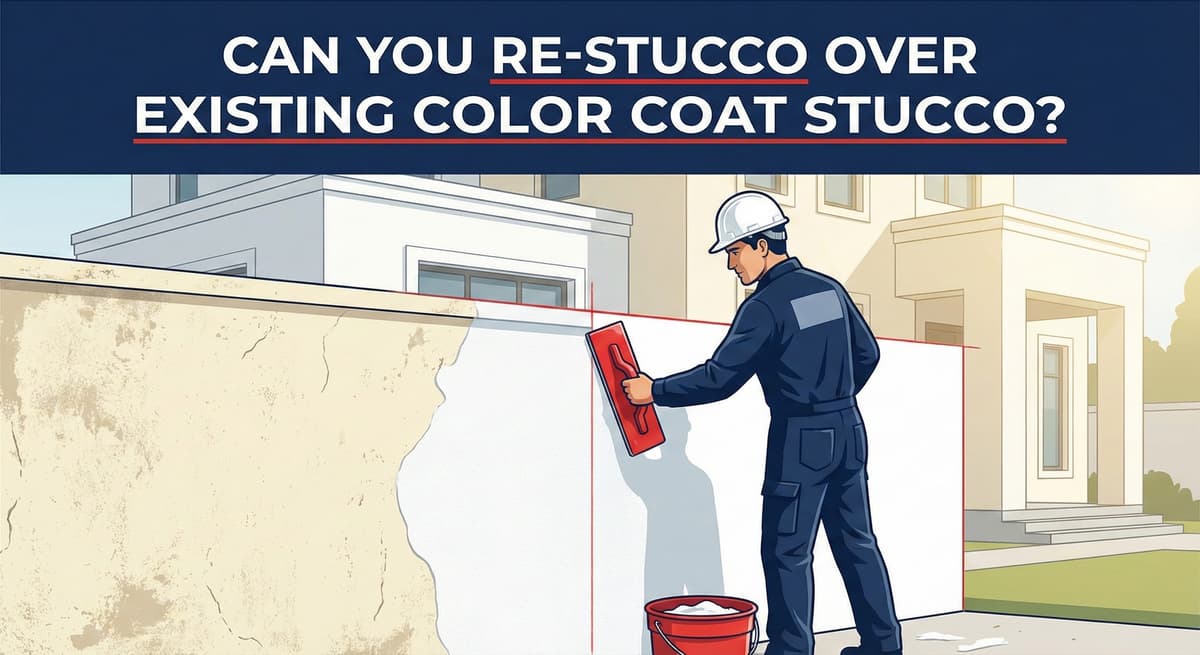
One of the most frequent questions we receive from Southern California homeowners during renovations is: "Can I apply new stucco directly over my old stucco without tearing it all off to the studs?"
The short answer is Yes, but with very significant technical conditions. You cannot simply trowel fresh cement over an old, dirty, or painted wall and expect it to stick. The bond between the new coat and the old substrate is the difference between a 20-year finish and a catastrophic delaminating failure. This guide explains the mechanical requirements for a successful re-stucco overlay.
1. The "Bond" Challenge: Prep is Everything
New wet stucco needs a rough, open-pore surface to grip onto (known as a "mechanical key"). If your existing wall is painted or sealed, it is as slick as glass to new cement.
Free Assessment
Noticing Stucco Damage?
Get a free on-site assessment from a licensed contractor. $0 deposit, no obligation.
GET FREE ASSESSMENTScenario A: Unpainted Stucco (Rare)
If your home has original, highly porous stucco that has never been painted, we can often pressure wash it aggressively (to remove dirt and oxidation) and apply a Bonding Agent. This chemical glue-like primer ensures the new finish adheres to the old.
Scenario B: Painted Stucco (The Standard)
Most homes in SoCal have been painted at least once. You cannot apply traditional cement stucco directly over exterior paint. The cement will only stick to the paint film; when the paint eventually peels, the heavy stucco will peel right off with it in massive chunks.
- The Protocol: We must Sandblast the entire exterior to strip the paint and expose the raw aggregate of the original brown coat. This is the only professional way to guarantee a structural mechanical bond that meets ASTM standards.
2. Material Selection: Cement vs. Acrylic
When resurfacing, you generally want to match the chemistry of the new layer to your performance goals.
- Cement-Based Finish: Best for authentic Spanish or Tuscan styles. It breathes well and creates a natural, mottled look that ages gracefully. However, it is rigid and may develop hairline cracks if the underlying old wall has movement issues.
- Acrylic (Synthetic) Finish: Best for modern homes or crack-prone old walls. It is a highly flexible (elastomeric) polymer. It naturally bridges minor existing cracks and holds dark colors beautifully without fading. If you are going over a 1960s wall that has settled, Acrylic is the superior choice for hiding flaws.
3. The "Brown Coat" Resurface (Leveling)
If you want to change the texture significantly (e.g., going from a heavy "Spanish Lace" to a "Santa Barbara Smooth"), we cannot just apply a thin 1/8" finish coat. The heavy bumps of the old lace will poke right through.
The Fix: We must apply a new Polymer-Modified Brown Coat first. This levels out the peaks and valleys of the old texture, creating a perfectly flat canvas for the new smooth finish. Skipping this step will result in the old texture "telegraphing" (showing through) the new coat.
4. Critical Details: Windows and Weeps
Adding a new layer of stucco thickens the wall by 1/8" to 1/4". You must consider how the wall transitions to other elements.
If your existing windows are currently flush (flat) with the old stucco, adding more material will physically bury the window frame. We may need to install new metal trim or plaster stops around the windows to create a clean, watertight termination point before applying the new material.
Weep Screeds: Never bury the weep screed at the foundation line. The new stucco must stop cleanly at the drainage line to prevent trapping water inside the wall.
Conclusion: A Fresh Start Without Demolition
Re-stuccoing over existing walls is highly efficient and cost-effective, provided the prep work (sandblasting) is done correctly. It avoids the massive labor cost of stripping the house down to the wood framing while giving you a brand-new, structurally sound exterior.
Frequently Asked Questions About Stucco
How much does stucco repair cost in Orange County and Los Angeles?+
Stucco repair typically ranges from $500 for minor crack patching to $5,000+ for full re-stucco of a single elevation. The exact cost depends on the damage type (hairline cracks, water damage, delamination, weep screed failure), the square footage involved, and whether the original three-coat or one-coat stucco system needs to be matched. Stucco Champions provides fixed-price written estimates after a free on-site assessment — no hourly billing, no surprise change orders. See our stucco repair cost guide for detailed pricing by repair type.
How long does stucco last in Southern California?+
Properly installed three-coat stucco lasts 50-80+ years in Southern California's climate. The most common failure points aren't the stucco itself — they're the supporting components: corroded weep screed, deteriorated building paper behind the stucco, and improperly sealed window flashing. Most "stucco failures" are actually moisture-intrusion failures that start at one of these points. Annual visual inspection catches problems before they spread, which is why we offer free weep screed assessments for homeowners in our service area.
Can I repair stucco myself, or do I need a contractor?+
Hairline cracks under 1/8 inch wide can be sealed with elastomeric caulk by a homeowner. Anything larger — pattern cracks, delamination (where stucco pulls away from the wall), water-damaged areas, or chimney/window leak repairs — requires a licensed contractor. Improper DIY repair on these is the #1 cause of repeat failures because the underlying cause (usually moisture) isn't addressed. California's CSLB requires a license for any stucco work over $500. Looking for a highly-rated stucco contractor in Southern California? We are a CSLB-licensed and insured team ready to help.
How do I know if I need stucco repair vs. full re-stucco?+
If less than 30% of an elevation has visible damage, repair is the right call. If you see large areas of cracking, multiple zones of delamination, or the underlying paper and lath have rotted across an entire wall, full re-stucco of that elevation is more cost-effective long-term. Our free assessment includes a moisture survey and lath inspection so you get a defensible recommendation either way — not just a quote pushing whichever option costs more.
Do you offer warranties on stucco work?+
Approved stucco repair work includes a 1-year written workmanship warranty. The applicable terms are documented with the approved scope. Stucco Champions is CSLB licensed and insured; verify license #1122006 through the official state lookup. Request a free estimate to review the scope and warranty terms before you sign.
How long does a stucco repair take?+
Most patch repairs are completed in 1-2 days, including a 24-hour cure time before texture matching and color application. Full re-stucco of a single elevation runs 5-7 working days because each coat (scratch, brown, finish) needs to cure properly before the next is applied. We schedule around weather — California stucco needs daytime temperatures above 50°F with no rain forecast for at least 24 hours after each coat. Our crew shows up on time, every time.
Stucco Diagnostics & Calculators
Diagnose specific wall damage symptoms or estimate job scope with our free guides and calculators.
Related Professional Services
A licensed assessment identifies the cause before the finish is opened or replaced.