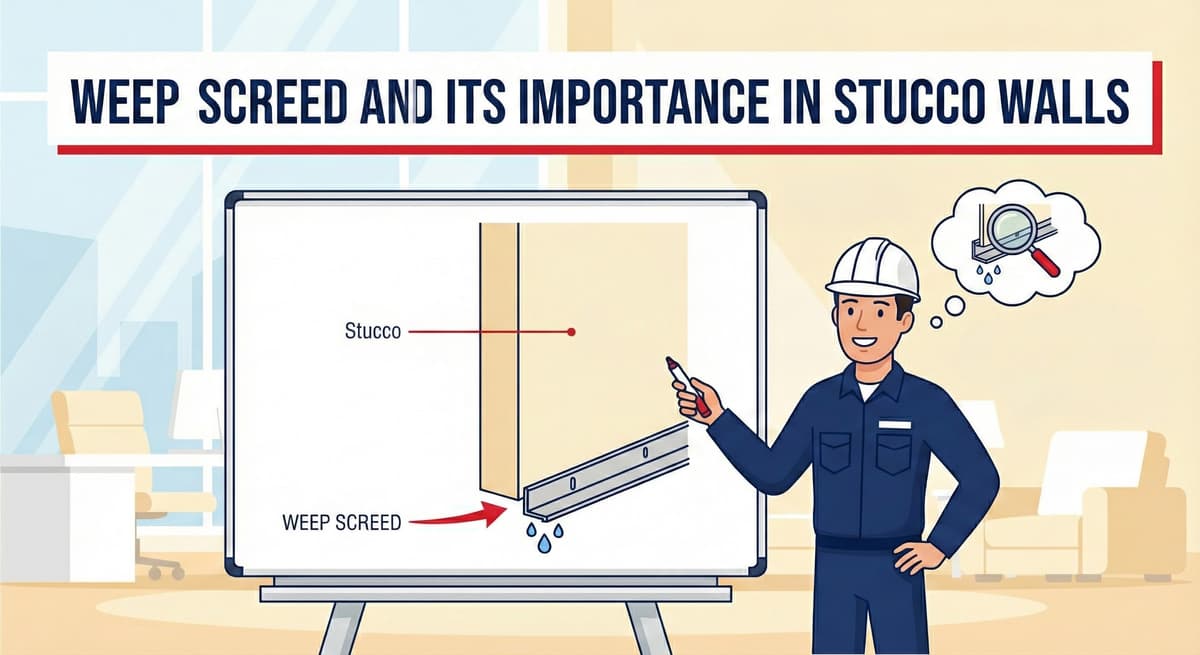
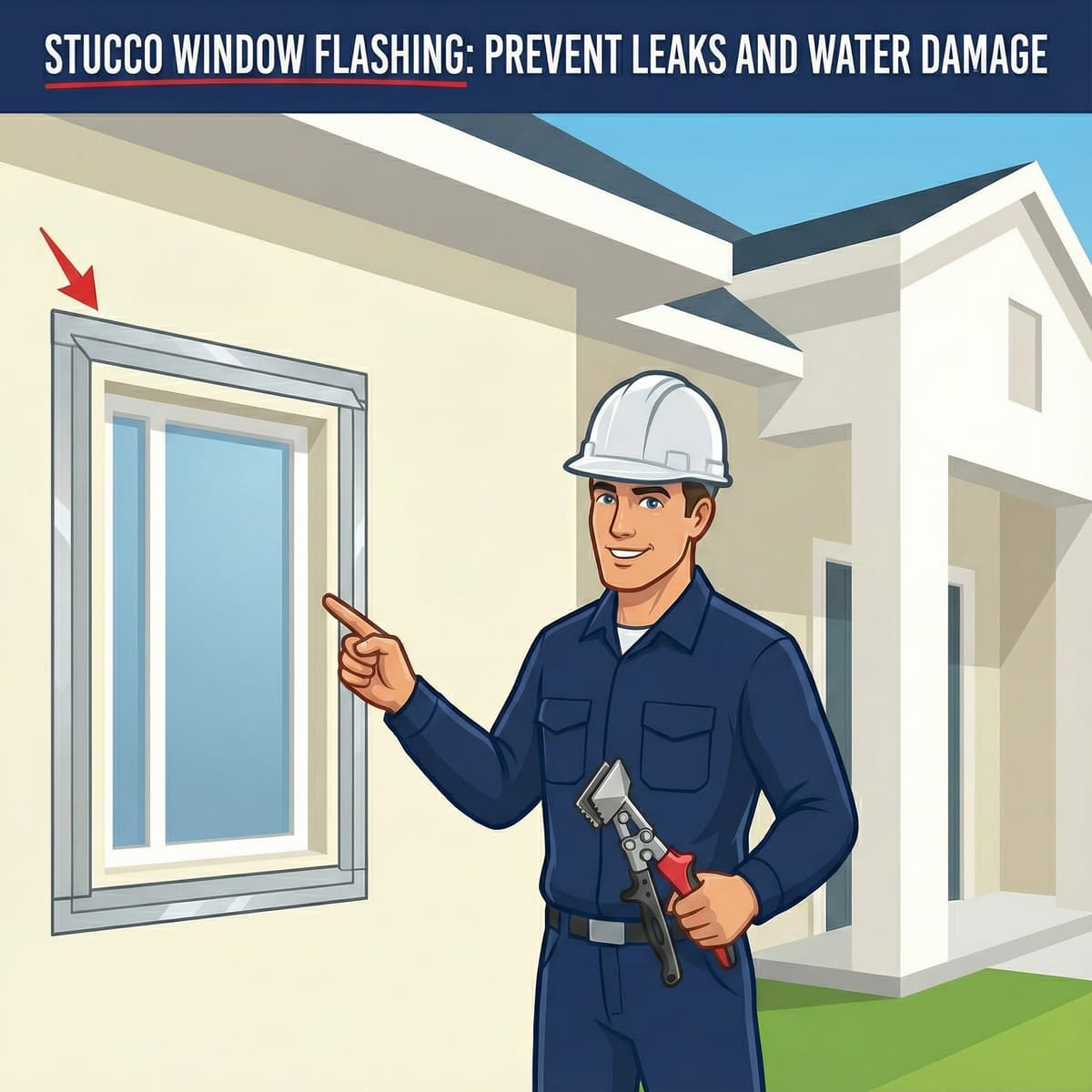
Stucco Window Flashing: WRB Laps, Head Flashing & Leak Prevention
Written by Stucco Champions — Southern California’s Authority on Exterior Plastering.
Window leaks are a common source of hidden stucco damage, especially on framed walls where the window, water-resistive barrier, flashing, lath, and plaster accessories were not integrated correctly. The stucco surface may look solid while water is entering at the opening and traveling behind the wall finish.
The technical goal of stucco window flashing is simple: any incidental water that gets behind the plaster should be redirected downward and outward, not into the sheathing, framing, or interior drywall. That requires shingle-style laps, compatible flashing materials, and careful coordination between the window installer, lather, and plasterer.
This guide explains how stucco window flashing works, what commonly fails, and why a surface caulk repair is usually not enough when the drainage plane is wrong.
1. Stucco is water-resistant, not a complete waterproofing system
Cement plaster is highly water-resistant, but exterior stucco walls are still designed with backup water management. On framed walls, small amounts of incidental water can enter at penetrations, terminations, cracks, or openings. The water-resistive barrier, flashing, and weep paths are there to keep that moisture moving back to the exterior.
Technical plaster guidance treats flashing as vital because it redirects water to the building exterior. Around windows and doors, the flashing and WRB must be detailed so water does not collect inside the wall. If water is retained, it can contribute to rusted lath, stained plaster, delamination, soft sheathing, framing decay, or interior damage.
Free Assessment
Noticing Stucco Damage?
Get a free on-site assessment from a licensed contractor. $0 deposit, no obligation.
GET FREE ASSESSMENT2. The core rule: shingle-fashion laps
The most important principle is the same as roof shingles: upper layers must lap over lower layers so water sheds outward. In stucco work, that means the WRB, flashing, window flanges, sill flashing, head flashing, and lath paper must be sequenced correctly.
A reverse lap happens when an upper layer is tucked behind a lower layer. That can direct water into the wall instead of out of it. SMA guidance specifically calls for WRB sheet goods to be installed shingle-fashion and integrated with flashings, with no reverse laps.
3. What proper stucco window flashing includes
Exact details vary by window type, wall assembly, manufacturer instructions, and local code, but a durable framed-wall stucco opening usually considers these parts:
| Component | Purpose | Common mistake |
|---|---|---|
| Sill flashing or pan | Collects and directs water at the bottom of the opening outward. | Flat sill with no drainage path or end dams where needed. |
| Jamb flashing | Protects the sides of the opening and ties into the sill flashing. | Jamb flashing installed before the sill or reverse-lapped. |
| Head flashing/drip cap | Helps shed water over the top of the window assembly. | Missing head flashing or WRB trapped behind the flashing. |
| Water-resistive barrier | Backup drainage layer behind the stucco and lath. | Paper cut, torn, or patched without shingle laps. |
| Lath and accessories | Support the plaster and establish correct thickness at the opening. | Lath fastened through flashing in ways that compromise drainage. |
| Sealant joints | Protect exposed joints where sealant is the intended exterior joint treatment. | Using caulk as a substitute for missing flashing. |
4. Why caulking alone does not fix most stucco window leaks
Exterior sealant can help maintain exposed joints, but it is not a substitute for concealed flashing. If the WRB is reverse-lapped, the sill has no drainage path, or the head flashing is missing, caulk only covers the symptom. Water can still enter behind the stucco and move into the wall assembly.
Surface-only repairs are most risky when there are interior stains, swollen trim, musty odors, soft drywall, rust staining, recurring cracks at window corners, or hollow stucco near the opening. Those signs suggest the problem may be behind the plaster, not only at the exterior bead of sealant.
5. Common failure points around stucco windows
- Reverse-lapped WRB: paper or membrane layers direct water behind the flashing instead of over it.
- No head flashing: water above the window is not properly directed over the opening.
- Weak sill drainage: water collects at the bottom of the window instead of draining outward.
- Cut or patched paper: remodel work damages the WRB and does not rebuild it shingle-fashion.
- Improper lath tie-in: paper-backed lath is not lapped paper-to-paper and metal-to-metal.
- Blocked weep paths: sealant, foam, paint, or finish material traps water at the opening or wall base.
- Wrong repair order: stucco is patched before the window flashing and WRB are corrected.
6. How a professional repair should approach the opening
A proper repair starts by finding the water path. That may include checking the window perimeter, sill, head condition, interior staining, exterior cracks, wall base drainage, and the condition of the stucco around the opening.
If the leak is only an exterior maintenance joint, cleaning and resealing may be enough. If the concealed flashing or WRB is wrong, the stucco around the opening usually has to be opened enough to rebuild the layers correctly. The repair should restore the drainage plane first, then rebuild lath, base coat, texture, and finish.
- Inspect visible stains, cracks, sealant joints, and drainage paths.
- Identify whether the issue is surface maintenance or concealed flashing failure.
- Remove only enough stucco to expose the failed layers and sound surrounding material.
- Repair sill, jamb, and head flashing according to the window and wall assembly.
- Integrate WRB shingle-fashion with no reverse laps.
- Reinstall compatible lath and accessories without blocking drainage.
- Patch the stucco to proper thickness, then texture and finish after suitable cure.
7. Framed walls versus masonry walls
Most stucco window flashing problems discussed here apply to framed walls with sheathing, WRB, lath, and cement plaster. Masonry or concrete walls may use different moisture-management methods, and direct-applied plaster may not have the same concealed WRB drainage plane. The repair detail should match the actual wall assembly.
Bottom line
Stucco window flashing is not one strip of metal and it is not just caulk around the frame. It is a layered water-management detail. The window, sill flashing, jamb flashing, head flashing, WRB, lath, accessories, and plaster must work together so incidental moisture drains outward.
If a stucco window leak keeps returning, the issue is often behind the surface. Treat it as a flashing and drainage problem first, then patch the stucco finish.
Frequently Asked Questions About Stucco
How much does stucco repair cost in Orange County and Los Angeles?+
Small stucco patches start at $650, larger repairs start at $1,200, and re-stucco of a single elevation up to about 400 sq ft runs about $1,400 - $5,900+. The exact cost depends on the damage type (hairline cracks, water damage, delamination, weep screed failure), the square footage involved, and whether the original three-coat or one-coat stucco system needs to be matched. Stucco Champions provides fixed-price written estimates after a free on-site assessment — no hourly billing, no surprise change orders. See our stucco repair cost guide for detailed pricing by repair type.
How long does stucco last in Southern California?+
Properly installed three-coat stucco lasts 50-80+ years in Southern California's climate. The most common failure points aren't the stucco itself — they're the supporting components: corroded weep screed, deteriorated building paper behind the stucco, and improperly sealed window flashing. Most "stucco failures" are actually moisture-intrusion failures that start at one of these points. Annual visual inspection catches problems before they spread, which is why we offer free weep screed assessments for homeowners in our service area.
Can I repair stucco myself, or do I need a contractor?+
Hairline cracks under 1/8 inch wide can be sealed with elastomeric caulk by a homeowner. Anything larger — pattern cracks, delamination (where stucco pulls away from the wall), water-damaged areas, or chimney/window leak repairs — requires a licensed contractor. Improper DIY repair on these is the #1 cause of repeat failures because the underlying cause (usually moisture) isn't addressed. California's CSLB requires a license for any stucco work over $500. Looking for a highly-rated stucco contractor in Southern California? We are a CSLB-licensed and insured team ready to help.
How do I know if I need stucco repair vs. full re-stucco?+
If less than 30% of an elevation has visible damage, repair is the right call. If you see large areas of cracking, multiple zones of delamination, or the underlying paper and lath have rotted across an entire wall, full re-stucco of that elevation is more cost-effective long-term. Our free assessment includes a moisture survey and lath inspection so you get a defensible recommendation either way — not just a quote pushing whichever option costs more.
Do you offer warranties on stucco work?+
Approved stucco repair work includes a 1-year written workmanship warranty. The applicable terms are documented with the approved scope. Stucco Champions is CSLB licensed and insured; verify license #1122006 through the official state lookup. Request a free estimate to review the scope and warranty terms before you sign.
How long does a stucco repair take?+
Most patch repairs are completed in 1-2 days, including a 24-hour cure time before texture matching and color application. Full re-stucco of a single elevation runs 5-7 working days because each coat (scratch, brown, finish) needs to cure properly before the next is applied. We schedule around weather — California stucco needs daytime temperatures above 50°F with no rain forecast for at least 24 hours after each coat. Our crew shows up on time, every time.
Stucco Diagnostics & Calculators
Diagnose specific wall damage symptoms or estimate job scope with our free guides and calculators.
Related Professional Services
A licensed assessment identifies the cause before the finish is opened or replaced.