Why Your Retrofitted Window is Leaking and Why It Is Not a Stucco Problem
Written by Stucco Champions Southern California Authority on Exterior Plastering.
Why Your Retrofitted Window is Leaking and Why It Is Not a Stucco Problem
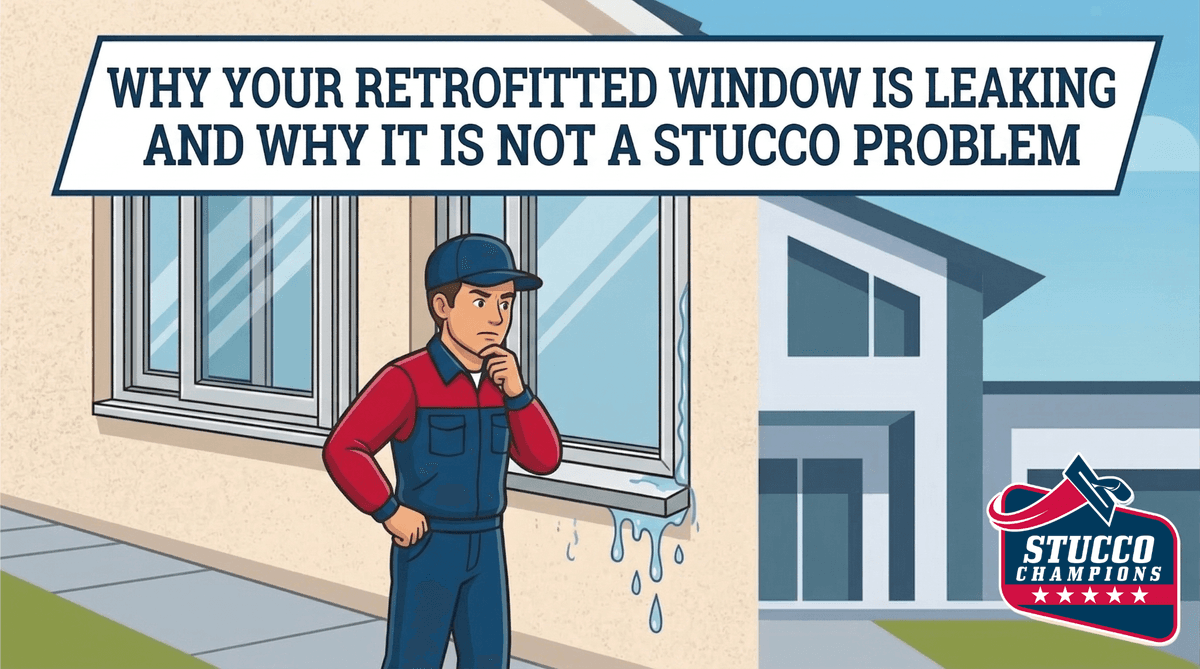
When a storm hits Southern California and water pools on your windowsill, the first instinct is to blame the exterior plaster. You see water coming through the wall, so you assume the wall has failed. However, if you have retrofitted windows, the stucco is almost never the issue. The window installation itself is the real culprit.
Homeowners frequently call us for water damage repairs thinking they have massive cracks letting rain inside. Once we inspect the property, we usually find perfectly intact plaster surrounding a poorly sealed replacement window. To understand why this happens, we need to look at how different windows interact with your home.
1. The Misconception About Water and Walls
Stucco is actually a porous material by design. It is meant to absorb water during heavy rains and let it drain out the bottom through the weep screed. The true waterproofing of your home is not the cement on the outside. The real protection comes from the weather resistive barrier hidden underneath.
We advocate for two layers of Grade D 60 minute building paper underneath the metal lath. When a window is installed correctly, it is physically integrated into these layers of paper to create a continuous waterproof envelope. When a window is installed incorrectly, that envelope is broken.
Free Assessment
Noticing Stucco Damage?
Get a free on-site assessment from a licensed contractor. $0 deposit, no obligation.
GET FREE ASSESSMENT2. Retrofitted Windows vs New Construction Windows
There are two primary ways to replace a window, and they yield very different results.
New Construction Windows
These units have a nailing fin attached to the outside. To install them, you must cut away the exterior plaster down to the wood framing. The window is nailed directly to the studs. Then, the 60 minute paper is carefully layered over the nailing fin, followed by the ASTM C1063 compliant metal lath. This creates a shingle effect. Water rolls down the wall, over the paper, over the fin, and away from your house. It physically cannot get inside.
Retrofitted Windows
These are designed purely for speed and lower costs. The installer leaves your old aluminum window frame completely buried in the wall. They cut out the old glass and slide the new plastic window right over the old frame. Because they do not cut the wall open, they cannot integrate the new window into your building paper. Instead, they rely entirely on a thick bead of caulking to seal the gap between the new window and the old exterior surface.
The Southern California sun is relentless. It bakes caulking until it shrinks, hardens, and eventually cracks. Once that temporary sealant fails, water slips right behind the retrofit frame and bypasses your weather resistive barrier entirely. From there, it rots your wood framing and pools inside your home.
3. The Advantages and Disadvantages Let You Decide
We believe in transparency, so here is the honest breakdown of both options.
Advantages of Retrofitted Windows
- They are much less expensive upfront.
- The installation is very fast, often taking just a few hours.
- You do not need to hire a plastering expert to patch the exterior afterward.
Disadvantages of Retrofitted Windows
- Extremely high failure rate for water leaks.
- They reduce your visible glass area because you have a new thick frame sitting inside an old frame.
- You are trusting your biggest investment to temporary sealants.
Advantages of New Construction Windows
- Ultimate waterproofing that integrates seamlessly with your exterior envelope.
- A much longer lifespan without the constant worry of failing caulking.
- Maximum visible glass area for a cleaner aesthetic.
Disadvantages of New Construction Windows
- Higher upfront cost for the windows and the labor.
- The project takes more time to complete.
- Requires cutting the wall and professional patching afterward.
4. Why We Suggest Doing It Right The First Time
While the decision is ultimately yours, we highly recommend taking the new construction route. Relying on caulking to protect your home from water intrusion is a massive risk. While retrofitting seems like a fantastic deal initially, the future water damage repair costs will easily erase any money you saved.
If you currently have a leaking window, do not just smear more silicone over the cracks. The trapped moisture needs to be addressed before it causes structural rot. We have to cut back the damaged area, help you prepare the opening for a proper new construction window, and then patch the exterior flawlessly so it matches your current texture. Typical patches for these types of repairs run between $650 and $1000, depending on the damage.
Book an appointment with Stucco Champions today to secure your exterior, or contact us to discuss your repair needs.
If you are seeing interior water stains and are unsure of the source, check out our Expert Guide to Identifying Window Leaks to help you find the root cause.