How to Check If Your Stucco Project Needs an Inspection (Orange County & Los Angeles)
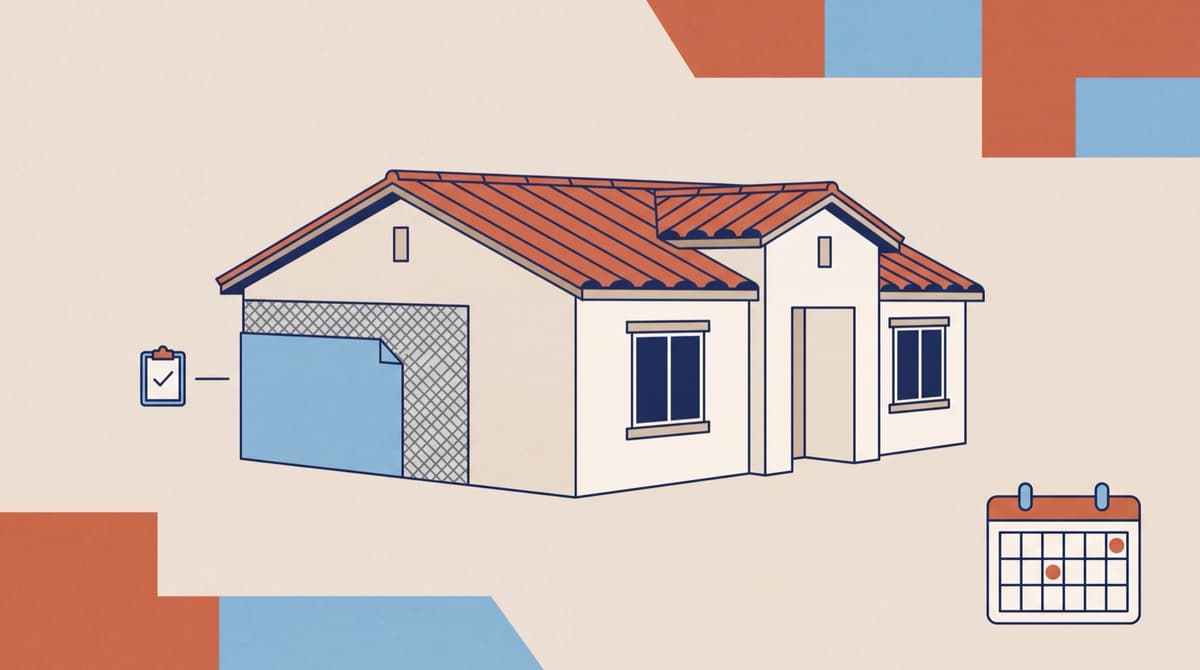
Most homeowners find out about a stucco inspection the same way: the crew stops mid-job, and someone explains that nothing can be covered until an inspector signs off. The work is fine. The scheduling is not.
Inspections are a normal part of permitted exterior work, and they are not something to avoid. But they do change how a job runs — they add a hold point, and a hold point can add trips, days, and coordination that nobody planned for if it was not discussed up front.
Requirements differ by jurisdiction, and they change. So rather than telling you what your city requires, this guide shows you how to check for yourself, and what to ask your contractor before the first trowel touches the wall.
A permit and an inspection are not the same thing
These get used interchangeably, and it causes confusion when scheduling.
- A permit is the authorization to do the work. It is pulled before the job starts.
- An inspection is a visit during or after the work, where a building official looks at specific stages before they get covered up.
A permitted job usually carries one or more inspections attached to it. That is the part that affects your calendar, because an inspection has to be scheduled, and the crew generally cannot proceed past that stage until it happens.
If you are still working out whether your project needs a permit at all, start with our guide on whether stucco repair requires a permit in Southern California. This article assumes you have got that far and want to understand the inspection side.
Free Assessment
Noticing Stucco Damage?
Get a free on-site assessment from a licensed contractor. $0 deposit, no obligation.
GET FREE ASSESSMENTStep 1: Find out who actually regulates your address
This is the step people skip, and it is the one that causes the most wasted searching.
Your mailing address does not always match your permitting jurisdiction. A home with a Los Angeles mailing address may sit in an unincorporated area governed by the county rather than the city. The same happens across Orange County.
Two ways to confirm:
- Search your county assessor or county building department site for a parcel or address lookup tool. These usually state the governing jurisdiction directly.
- Call the building department you think covers you and read them the address. They will tell you quickly if it is not theirs.
Get this right first. Everything after it depends on knowing which department's rules apply.
Step 2: Find the building department page
Once you know the jurisdiction, search for the department directly rather than browsing the homepage:
[your city] building and safety permits
[your city] building division inspection scheduling
You are looking for an official government domain — usually ending in .gov or .org. Skip the third-party permit-service sites that rank alongside them. Those resell information and are not authoritative.
Once on the site, the pages worth finding are:
- Permit types or fee schedule — often lists what categories of exterior work are permitted
- Inspection scheduling — tells you how inspections are requested and how much notice is required
- Required inspections or inspection checklist — the stages an inspector needs to see
- Handouts or information bulletins — many departments publish short PDFs by work type
Step 3: Read for the timing, not just the rules
When you find the inspection page, the details that affect your project are the logistical ones:
- How far in advance must an inspection be requested?
- Are inspections scheduled for a window or a specific time? A half-day window means a crew may be waiting.
- Does someone need to be on site? Some departments require access to specific areas.
- What happens on a correction notice? If something needs adjusting, that usually means a re-inspection, which is another scheduled visit.
These are the mechanics that turn into extra days. A department that needs 48 hours notice and gives a four-hour window is a very different scheduling problem than one that takes same-week requests.
Why an inspection can add trips to your job
On exterior work, inspections tend to land at points where something is about to be covered — most commonly after the weather-resistive barrier and lath go up, and before the first coat of stucco is applied. Once cement covers that assembly, nobody can see it again without opening the wall.
That creates a natural hold point, and it has knock-on effects:
- The wall sits open. The crew cannot proceed past the inspection stage, so a job that would have run continuously now pauses.
- Crews return rather than wait. A plastering crew is not going to stand by for a four-hour inspection window, so they leave and come back — that is an additional mobilization.
- Weather enters the picture. A pause with an open wall means the exposed assembly needs protecting if conditions change.
- A correction notice restarts the loop. If something needs adjusting, that is a fix plus a second inspection request.
None of this is a reason to skip the process. It is a reason to have it scheduled and priced honestly from the start, instead of discovering it mid-job.
What to ask your contractor before you sign
This is the shortest path to a clear answer, because a licensed contractor working in your area deals with these departments regularly. Ask directly:
- "Does the scope you are proposing require a permit in my jurisdiction?" If the answer is no, ask what would change that — usually it is opening the wall assembly.
- "Which inspections come with it, and at what stages?" You want the hold points named.
- "Who pulls the permit and who schedules the inspections?" Get it in writing. This should not be ambiguous.
- "How many days does the inspection add to the schedule?" A realistic answer accounts for notice periods and the possibility of a re-inspection.
- "Are permit fees and inspection time included in the quote, or billed separately?" Both are legitimate approaches. Knowing which one applies prevents a surprise.
A contractor who answers these clearly is telling you they have done permitted work in your area. Vagueness is worth noticing.
A note on pushing for unpermitted work
It is sometimes tempting to avoid the process to save time. Worth weighing before you do:
- Unpermitted structural or envelope work can surface during a future sale or appraisal.
- The inspection exists to look at the layer that gets covered — which is also the layer that determines whether water stays out of your wall.
- A contractor willing to skip a required permit is telling you something about how they handle the parts you cannot see.
Frequently asked questions
Does every stucco repair need an inspection?
No. Requirements depend on the scope of work and your jurisdiction. Small cosmetic patching is generally treated very differently from work that opens the wall assembly. Confirm with your building department or contractor for your specific project.
How do I know if my address is in a city or an unincorporated area?
Use your county's parcel or address lookup tool, or call the building department you believe covers you and read them the address.
Can my contractor schedule the inspection for me?
In most cases, yes — and on permitted work it is common for the contractor to handle both the permit and the inspection scheduling. Confirm in writing who is responsible before work begins.
What happens if the inspection does not pass?
Typically a correction notice is issued listing what needs adjusting. The work is corrected and a re-inspection is requested. Build this possibility into your expectations rather than treating it as a failure.
Should I look up the requirements myself if my contractor already knows?
It is worth ten minutes. Not because you are checking up on anyone, but because understanding the hold points in your own project makes the schedule conversation much easier.
The short version
Confirm which jurisdiction governs your address, find that department's building and inspection pages on their official site, read for notice periods and scheduling windows rather than just the rules, and ask your contractor to name the hold points before work starts.
Inspections do not make a project worse. Unplanned inspections make a schedule worse. The difference is a conversation you can have in advance.
If you would like the scope of your own project explained before anything is committed, we provide a written assessment across Orange County and Los Angeles that states what the work involves — including whether it is the kind of scope that typically triggers a permit in your area.
Frequently Asked Questions About Stucco
How much does stucco repair cost in Orange County and Los Angeles?+
Stucco repair typically ranges from $500 for minor crack patching to $5,000+ for full re-stucco of a single elevation. The exact cost depends on the damage type (hairline cracks, water damage, delamination, weep screed failure), the square footage involved, and whether the original three-coat or one-coat stucco system needs to be matched. Stucco Champions provides fixed-price written estimates after a free on-site assessment — no hourly billing, no surprise change orders. See our stucco repair cost guide for detailed pricing by repair type.
How long does stucco last in Southern California?+
Properly installed three-coat stucco lasts 50-80+ years in Southern California's climate. The most common failure points aren't the stucco itself — they're the supporting components: corroded weep screed, deteriorated building paper behind the stucco, and improperly sealed window flashing. Most "stucco failures" are actually moisture-intrusion failures that start at one of these points. Annual visual inspection catches problems before they spread, which is why we offer free weep screed assessments for homeowners in our service area.
Can I repair stucco myself, or do I need a contractor?+
Hairline cracks under 1/8 inch wide can be sealed with elastomeric caulk by a homeowner. Anything larger — pattern cracks, delamination (where stucco pulls away from the wall), water-damaged areas, or chimney/window leak repairs — requires a licensed contractor. Improper DIY repair on these is the #1 cause of repeat failures because the underlying cause (usually moisture) isn't addressed. California's CSLB requires a license for any stucco work over $500. Looking for a highly-rated stucco contractor in Southern California? We are a CSLB-licensed and insured team ready to help.
How do I know if I need stucco repair vs. full re-stucco?+
If less than 30% of an elevation has visible damage, repair is the right call. If you see large areas of cracking, multiple zones of delamination, or the underlying paper and lath have rotted across an entire wall, full re-stucco of that elevation is more cost-effective long-term. Our free assessment includes a moisture survey and lath inspection so you get a defensible recommendation either way — not just a quote pushing whichever option costs more.
Do you offer warranties on stucco work?+
Approved stucco repair work includes a 1-year written workmanship warranty. The applicable terms are documented with the approved scope. Stucco Champions is CSLB licensed and insured; verify license #1122006 through the official state lookup. Request a free estimate to review the scope and warranty terms before you sign.
How long does a stucco repair take?+
Most patch repairs are completed in 1-2 days, including a 24-hour cure time before texture matching and color application. Full re-stucco of a single elevation runs 5-7 working days because each coat (scratch, brown, finish) needs to cure properly before the next is applied. We schedule around weather — California stucco needs daytime temperatures above 50°F with no rain forecast for at least 24 hours after each coat. Our crew shows up on time, every time.
Stucco Diagnostics & Calculators
Diagnose specific wall damage symptoms or estimate job scope with our free guides and calculators.
Related Professional Services
A licensed assessment identifies the cause before the finish is opened or replaced.