Mediterranean Stucco Homes: Authentic Textures and Colors
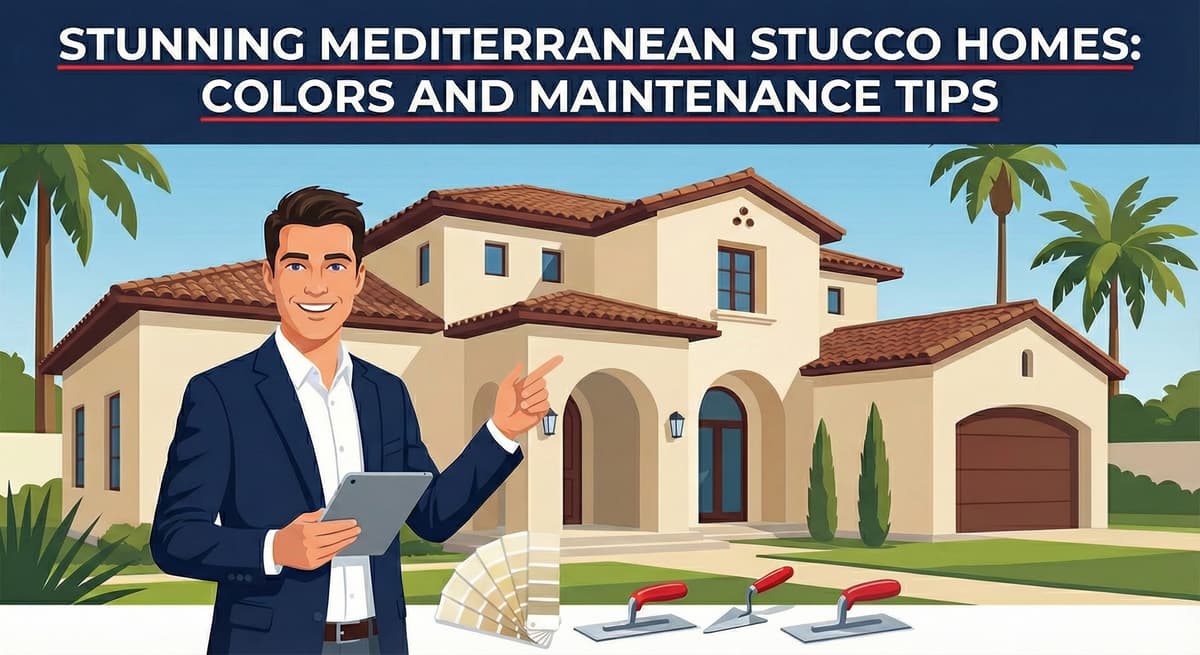
In Southern California, the Mediterranean style is significantly more than a design trend; it is our core architectural heritage. From the historic Mission Revival structures of San Juan Capistrano to the sprawling Tuscan estates of Newport Coast, this timeless style relies heavily on one specific element: Authentic Stucco.
However, achieving a true, high-end Mediterranean look is not just about painting a standard tract house beige. It requires specific artisanal textures, integral pigments, and heavy application techniques designed to perfectly mimic centuries-old aged plaster. This guide breaks down the technical specifications required to create a flawless Old World exterior.
1. The Hallmarks of Mediterranean Stucco
Unlike ultra-modern contemporary homes that prioritize laser-sharp, plumb lines and uniform monochromatic colors, authentic Mediterranean architecture actively celebrates imperfection, warmth, and mass.
- Undulating Surfaces: Walls are rarely perfectly flat. They intentionally feature a soft "pillow" or wavy effect, replicating walls built by hand over stone.
- Earthen Colors: Pigments are traditionally derived from natural iron oxide (rust, ochre, umber) to mimic natural clay and earth.
- Depth of Finish: The texture is built up in heavy, irregular layers, creating micro-shadows that shift and change beautifully throughout the day as the sun moves.
Free Assessment
Noticing Stucco Damage?
Get a free on-site assessment from a licensed contractor. $0 deposit, no obligation.
GET FREE ASSESSMENT2. Texture Selection: Cat Face vs. Smooth
The texture you choose dictates the exact historical era of the design.
Santa Barbara Smooth (The High-End Estate)
This is the most sought-after, premium finish for luxury estates.
- Technique: The master plasterer uses a steel pool trowel to violently burnish the wet finish coat, compacting the sand aggregate until the wall is nearly glass-smooth and slightly mottled.
- The Trade-Off: It is a fact of physics that smooth cement stucco will develop hairline shrinkage cracks. In Mediterranean design, these fine cracks are often considered authentic "patina" and highly desirable character, but homeowners must be prepared to see them.
Cat Face (The Rustic Hacienda)
Also known in the trade as "Montalvo" or "California Finish."
- Technique: A smooth base layer is applied, but occasional rough patches (called "inclusions" or "cat faces") of the sandy brown coat are left intentionally exposed.
- Visual: It looks exactly like an ancient adobe wall where the smooth lime plaster has slowly worn away over centuries, revealing the rough mud beneath. It is extremely forgiving, robust, and hides dirt incredibly well.
3. Color Strategy: Integral vs. Painted
A heavily painted Mediterranean home looks flat, plastic, and completely fake. An authentic home physically glows in the sunlight.
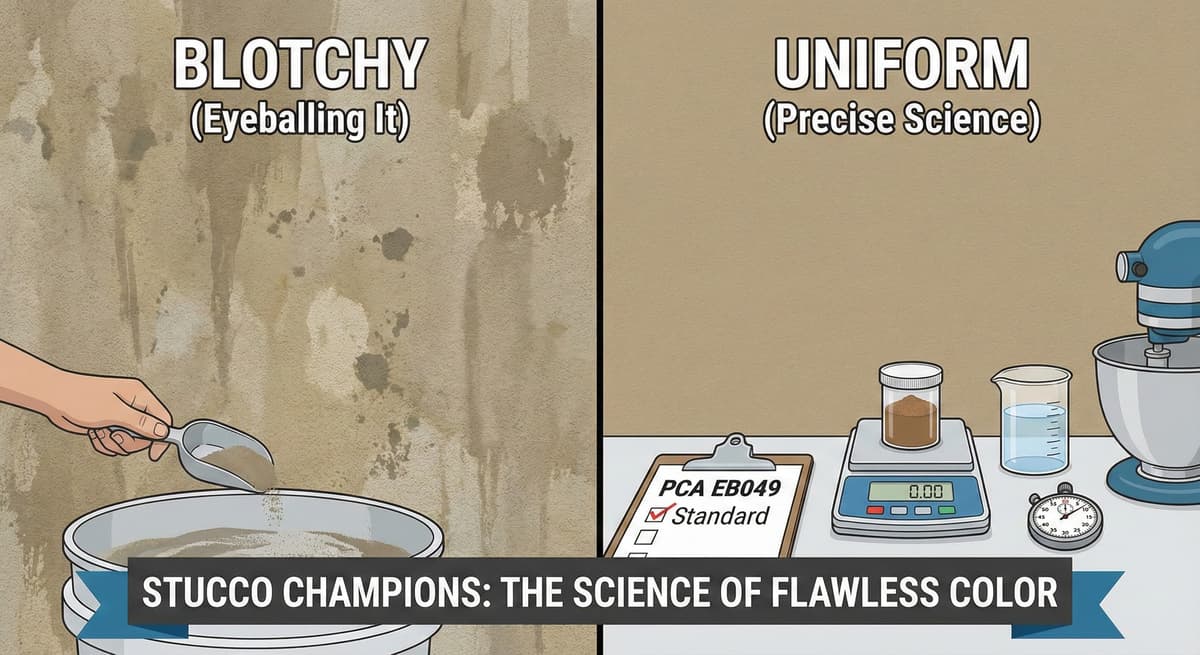
Integral Color: We mix the dry color pigment powder directly into the wet cement in the mixer. As the cement cures on the wall, moisture evaporates unevenly. This creates natural "Mottling" (a gorgeous, cloudy color variation). This natural variation gives the wall massive depth and an aged appearance instantly.
Paint: Paint is completely opaque. It covers all natural variation, sealing the wall and making the house look like a plastic model. Always choose integral color (unpainted stucco) for this specific architectural style.
4. Architectural Foam Details
To achieve the heavy, romantic look of carved stone cornices, corbels, and massive window trims without the catastrophic structural weight, modern builders use EPS Architectural Foam.
- Window Surrounds: Pre-cast, custom-cut foam shapes are glued to the brown coat before the finish is ever applied.
- Coating: We coat the foam with a heavy, polymer-modified base coat, embed it with fiberglass mesh, and finish it with the exact same texture as the wall to make it look seamlessly like monolithic carved stone.
5. The Clay Tile Connection
Your roofing material dictates your stucco color.
- Red/Terracotta Tile Roof: Use warm Cream, Almond, or soft Gold stucco. Strictly avoid cool greys or bright whites.
- Brown/Mud Tile Roof: Use stark white or off-white stucco to create stunning contrast.
- Tip: Always ensure your stucco color has a yellow or red undertone (a warm base) to harmonize with the natural clay. Blue-based undertones will clash violently with a Mediterranean roof.
Conclusion: Built to Age Gracefully
The true beauty of a Mediterranean stucco home is that, unlike vinyl siding or painted wood, it gets better with time. The integral color deepens, the texture softens, and the massive home settles naturally into the landscape. By demanding traditional materials and artisanal techniques, you ensure your home carries the authentic spirit of the coast.
Frequently Asked Questions About Stucco
How much does stucco repair cost in Orange County and Los Angeles?+
Small stucco patches start at $650, larger repairs start at $1,200, and re-stucco of a single elevation up to about 400 sq ft runs about $1,400 - $5,900+. The exact cost depends on the damage type (hairline cracks, water damage, delamination, weep screed failure), the square footage involved, and whether the original three-coat or one-coat stucco system needs to be matched. Stucco Champions provides fixed-price written estimates after a free on-site assessment — no hourly billing, no surprise change orders. See our stucco repair cost guide for detailed pricing by repair type.
How long does stucco last in Southern California?+
Properly installed three-coat stucco lasts 50-80+ years in Southern California's climate. The most common failure points aren't the stucco itself — they're the supporting components: corroded weep screed, deteriorated building paper behind the stucco, and improperly sealed window flashing. Most "stucco failures" are actually moisture-intrusion failures that start at one of these points. Annual visual inspection catches problems before they spread, which is why we offer free weep screed assessments for homeowners in our service area.
Can I repair stucco myself, or do I need a contractor?+
Hairline cracks under 1/8 inch wide can be sealed with elastomeric caulk by a homeowner. Anything larger — pattern cracks, delamination (where stucco pulls away from the wall), water-damaged areas, or chimney/window leak repairs — requires a licensed contractor. Improper DIY repair on these is the #1 cause of repeat failures because the underlying cause (usually moisture) isn't addressed. California's CSLB requires a license for any stucco work over $500. Looking for a highly-rated stucco contractor in Southern California? We are a CSLB-licensed and insured team ready to help.
How do I know if I need stucco repair vs. full re-stucco?+
If less than 30% of an elevation has visible damage, repair is the right call. If you see large areas of cracking, multiple zones of delamination, or the underlying paper and lath have rotted across an entire wall, full re-stucco of that elevation is more cost-effective long-term. Our free assessment includes a moisture survey and lath inspection so you get a defensible recommendation either way — not just a quote pushing whichever option costs more.
Do you offer warranties on stucco work?+
Approved stucco repair work includes a 1-year written workmanship warranty. The applicable terms are documented with the approved scope. Stucco Champions is CSLB licensed and insured; verify license #1122006 through the official state lookup. Request a free estimate to review the scope and warranty terms before you sign.
How long does a stucco repair take?+
Most patch repairs are completed in 1-2 days, including a 24-hour cure time before texture matching and color application. Full re-stucco of a single elevation runs 5-7 working days because each coat (scratch, brown, finish) needs to cure properly before the next is applied. We schedule around weather — California stucco needs daytime temperatures above 50°F with no rain forecast for at least 24 hours after each coat. Our crew shows up on time, every time.
Stucco Diagnostics & Calculators
Diagnose specific wall damage symptoms or estimate job scope with our free guides and calculators.
Related Professional Services
A licensed assessment identifies the cause before the finish is opened or replaced.