Sand Finish Stucco Texture vs. Smooth: 5 Key Differences
Written by Stucco Champions - Southern California's Authority on Exterior Plastering.
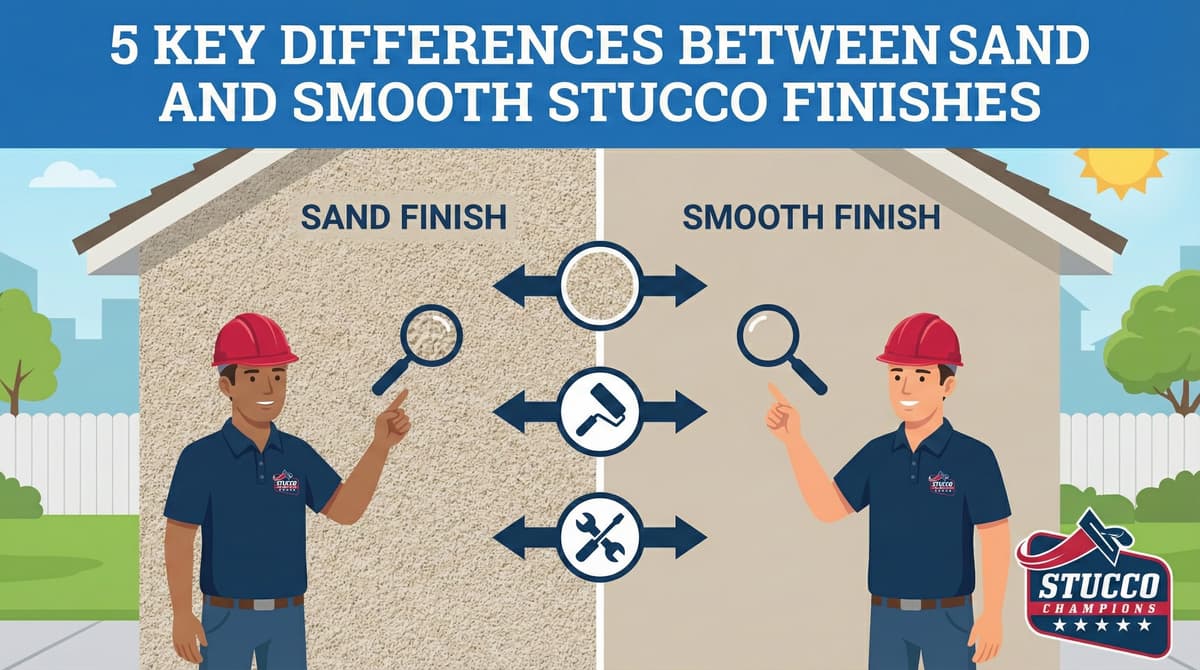
Choosing a sand finish stucco texture is one of the most practical and popular exterior decisions for Southern California homes. It gives the wall a clean, uniform grit while brilliantly hiding small surface flaws. Smooth stucco, on the other hand, offers a highly modern, glass-like look, but it requires a perfectly flat wall, more expensive prep, and much more realistic expectations about future hairline cracks.
If you are choosing between a sand finish stucco texture and smooth stucco, the right answer usually comes down to the condition of your existing wall, the architectural style of the home, your budget, and how much future maintenance you are willing to accept. A sand finish stucco texture is almost always the safer, more durable choice for older homes and remodel projects.
Quick Answer: Sand Finish Stucco Texture vs. Smooth Stucco
| Comparison Point | Sand Finish Stucco Texture | Smooth Stucco (Santa Barbara) |
|---|---|---|
| Appearance | Fine to medium grain texture with a matte, even, sandpaper-like surface. | Flat, refined, plaster-like look with very little to no visible aggregate. |
| Best Use | Traditional, Spanish, Craftsman, ranch homes, and most repair/remodel projects. | Modern, contemporary, high-end Spanish Revival, and clean architectural designs. |
| Wall Prep Needed | Moderate. The sand finish stucco texture helps hide minor wall variations. | Extreme. The brown coat must be perfectly flat because defects show instantly. |
| Patch Visibility | Easier to blend when the specific aggregate grain size and float pattern are matched. | Very hard to hide; many smooth repairs require full corner-to-corner refinishing. |
| Typical Cost | Usually lower because the float application is highly efficient. | Usually much higher because it requires more labor and extreme steel trowel work. |
Free Assessment
Noticing Stucco Damage?
Get a free on-site assessment from a licensed contractor. $0 deposit, no obligation.
GET FREE ASSESSMENTWhat Exactly Is a Sand Finish Stucco Texture?
A true sand finish stucco texture is created by "floating" the final wet cement coat so the silica sand aggregate forms an even, gritty surface. It is often called a "sand float finish" because the final texture is mechanically shaped with a coarse green sponge float, rather than being polished flat with a steel trowel.
A sand finish stucco texture can be fine (30/30 mesh), medium (20/30 mesh), or coarse (16/20 mesh) depending entirely on the physical size of the aggregate mixed into the bucket. A fine sand finish stucco texture has a tight, velvety "suede" look. A coarser sand finish stucco texture has a stronger, heavier grain pattern and is incredibly useful when the goal is to aggressively hide wavy framing or older patch jobs.
1. Light Reflection and Appearance
The biggest visual difference between a sand finish stucco texture and smooth stucco is how the wall interacts with sunlight. A sand finish stucco texture physically breaks up sunlight across thousands of tiny shadow-casting grains. That micro-texture makes small shrinkage cracks, minor trowel inconsistencies, and subtle wall waves nearly invisible from the street.
Smooth stucco reflects light evenly like a mirror. The tradeoff for that clean surface is that it reveals absolutely everything. Small wall waves, tiny hairline cracks, patch edges, and subtle color variations stand out immediately on smooth stucco.
2. Cost and Labor Differences
Applying a sand finish stucco texture is generally more budget-friendly than smooth stucco because the sponge-floating application is faster and the surface is infinitely more forgiving. It still requires a professional plasterer, but the float texture gives the crew more room to create an even finish without spending hours polishing every micro-imperfection out of the cement.
Smooth stucco costs more because it demands tighter substrate preparation, finer finish work, and more careful timing with the steel trowel.
3. Maintenance and Cleaning
A sand finish stucco texture is generally easier to live with over the decades. The grit hides light dirt, small imperfections, and normal exterior oxidation much better than smooth stucco. Normal soft washing with a garden hose is usually enough for annual maintenance.
Smooth stucco requires more visual maintenance because hard water stains, mud splashes, and hairline cracks are instantly obvious.
4. Patching and Future Repairs
Texture matching is where a sand finish stucco texture absolutely wins. A good repair still needs the right base preparation, aggregate size, float pattern, color, and cure time, but the physical grit of the texture gives the installer a massive advantage in blending the new patch into the existing wall.
With smooth stucco, even a structurally perfect repair will likely remain visible. The patch may be solid, but the edge transition or the slight difference in sheen will show in direct sunlight. That is why smooth repairs almost always require skimming the entire wall plane from corner to corner.
Conclusion: Which Should You Choose?
For most remodel projects, repairs, and full re-stucco jobs on older homes, a sand finish stucco texture is the safer, more durable, and more flexible choice. It gives the exterior a premium, professional look while effectively hiding the imperfections that come with an aging house. Smooth stucco is a stunning premium visual option, but it requires perfect wall prep and an acceptance that future repairs will be difficult to hide.
Need help choosing the right texture? Contact Stucco Champions to see physical samples of both finishes.
Frequently Asked Questions About Stucco
How much does stucco repair cost in Orange County and Los Angeles?+
Stucco repair typically ranges from $500 for minor crack patching to $5,000+ for full re-stucco of a single elevation. The exact cost depends on the damage type (hairline cracks, water damage, delamination, weep screed failure), the square footage involved, and whether the original three-coat or one-coat stucco system needs to be matched. Stucco Champions provides fixed-price written estimates after a free on-site assessment — no hourly billing, no surprise change orders. See our stucco repair cost guide for detailed pricing by repair type.
How long does stucco last in Southern California?+
Properly installed three-coat stucco lasts 50-80+ years in Southern California's climate. The most common failure points aren't the stucco itself — they're the supporting components: corroded weep screed, deteriorated building paper behind the stucco, and improperly sealed window flashing. Most "stucco failures" are actually moisture-intrusion failures that start at one of these points. Annual visual inspection catches problems before they spread, which is why we offer free weep screed assessments for homeowners in our service area.
Can I repair stucco myself, or do I need a contractor?+
Hairline cracks under 1/8 inch wide can be sealed with elastomeric caulk by a homeowner. Anything larger — pattern cracks, delamination (where stucco pulls away from the wall), water-damaged areas, or chimney/window leak repairs — requires a licensed contractor. Improper DIY repair on these is the #1 cause of repeat failures because the underlying cause (usually moisture) isn't addressed. California's CSLB requires a license for any stucco work over $500. Looking for a highly-rated stucco contractor in Southern California? We are a CSLB-licensed and insured team ready to help.
How do I know if I need stucco repair vs. full re-stucco?+
If less than 30% of an elevation has visible damage, repair is the right call. If you see large areas of cracking, multiple zones of delamination, or the underlying paper and lath have rotted across an entire wall, full re-stucco of that elevation is more cost-effective long-term. Our free assessment includes a moisture survey and lath inspection so you get a defensible recommendation either way — not just a quote pushing whichever option costs more.
Do you offer warranties on stucco work?+
Approved stucco repair work includes a 1-year written workmanship warranty. The applicable terms are documented with the approved scope. Stucco Champions is CSLB licensed and insured; verify license #1122006 through the official state lookup. Request a free estimate to review the scope and warranty terms before you sign.
How long does a stucco repair take?+
Most patch repairs are completed in 1-2 days, including a 24-hour cure time before texture matching and color application. Full re-stucco of a single elevation runs 5-7 working days because each coat (scratch, brown, finish) needs to cure properly before the next is applied. We schedule around weather — California stucco needs daytime temperatures above 50°F with no rain forecast for at least 24 hours after each coat. Our crew shows up on time, every time.
Stucco Diagnostics & Calculators
Diagnose specific wall damage symptoms or estimate job scope with our free guides and calculators.
Related Professional Services
A licensed assessment identifies the cause before the finish is opened or replaced.