Restucco Process: Benefits and When You Need It
Written by Stucco Champions — Southern California’s Authority on Exterior Plastering.
Let’s be honest: stucco repair is messy, loud, and dusty work. It isn't done with lasers; it is done with hammers, chisels, and trowels. When you hire a repair expert in Southern California, you aren't hiring a magician who can make damage vanish instantly. You are hiring a craftsman who knows how to restore the integrity of your home so it doesn't rot.
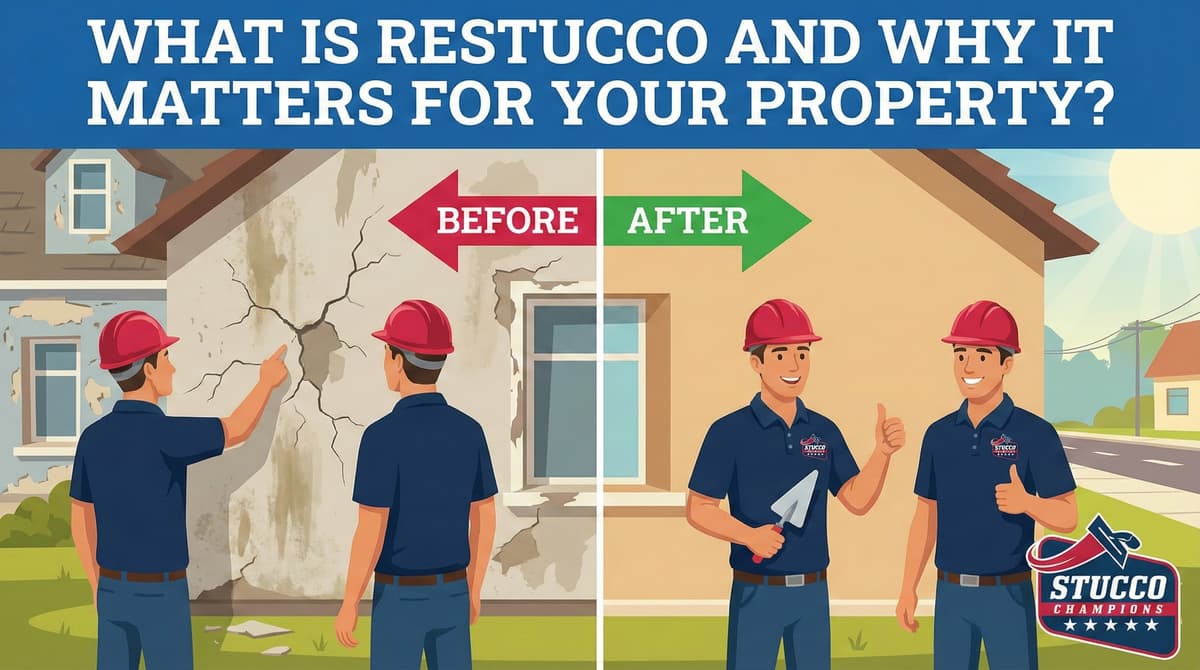
We believe in managing expectations upfront. A patched wall will never look 100% identical to the day it was built. However, there is a massive difference between a "Band-Aid" patch and a structural restoration. This guide explains our protocols for repair versus resurfacing.
1. Our Policy: Why We Don't Spot Patch Smooth or Acrylic
The most common dispute in the stucco industry is the "Visible Patch." Certain finishes are simply impossible to blend invisibly in a small area.
We do not offer spot repairs for Smooth (Santa Barbara) or Acrylic finishes.
Why? smooth stucco reflects light like glass. Any interruption in the surface creates a visible "shadow" or "hump." Acrylic stucco fades over time, making a new patch look like a different color. For these finishes, we repair the damage structurally, but we require Resurfacing the Entire Wall (corner-to-corner) to guarantee a flawless, uniform finish.
Free Assessment
Noticing Stucco Damage?
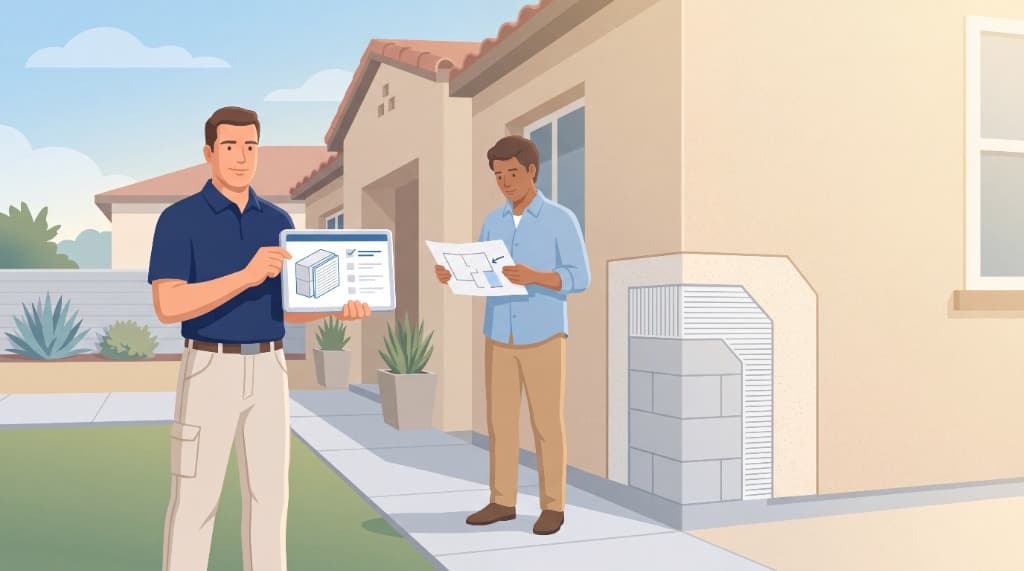
Get a free on-site assessment from a licensed contractor. $0 deposit, no obligation.
GET FREE ASSESSMENT2. When Patching Works (The Blendable Textures)
While Smooth and Acrylic require full walls, traditional textured cement is more forgiving. We confidently offer spot repairs for:
- Spanish Lace / Skip Trowel: The heavy texture hides the transition lines.
- Sand Finish (Float): The uniform grit allows us to feather the edges.
- Machine Dash: The rough, pebbled surface breaks up the eye.
For these textures, our artisans use wet sponges to "feather" the new material into the old, blurring the line so the repair becomes virtually undetectable once painted.
3. The "Cut-Out" Protocol: Structural Integrity
Homeowners often panic when they see us take a hammer to their wall. To fix a crack properly, we cannot just smear silicone over it. We have to perform "Cut-Outs" complying with ASTM C926 plastering repair standards.
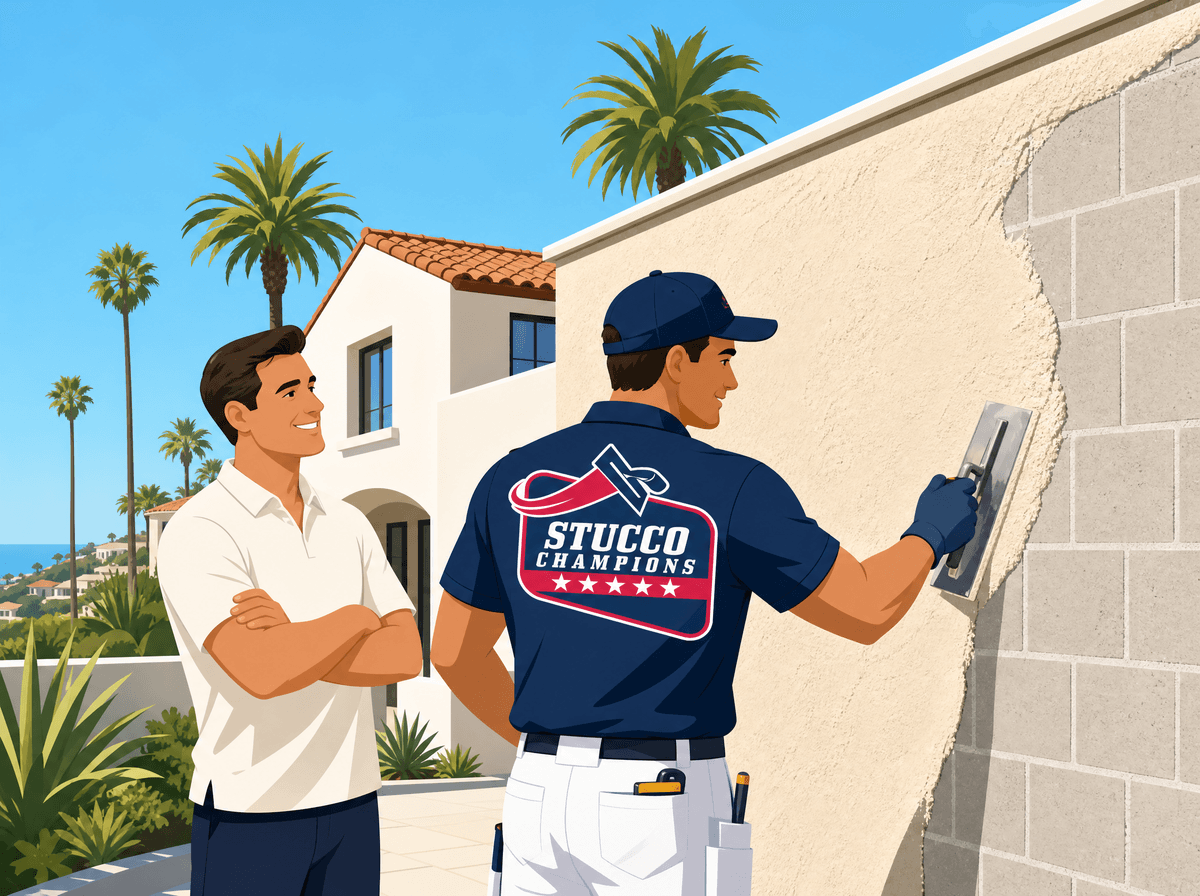
We use diamond blades to cut a square around the damage, removing the stucco down to the studs. This is the only way to expose the waterproof paper and wire lath. If we don't open the wall, we can't tie the new repair into the old system, and it will crack again in six months.
4. The "Handyman Patch" vs. The Contractor Repair
Why do our repairs cost more than a handyman? Because we follow the building code (ASTM C926 & ASTM C1063), not shortcuts.
- Handyman: Fills the hole with "stucco patch" from a tube. It looks okay for a week, then separates because there is no wire mesh holding it in.
- Stucco Champions: We install new Grade D Building Paper (lapped under the existing paper) and new galvanized wire lath per ASTM C1063. We verify the waterproofing is shingled correctly so water runs out of the wall, not into it. We also verify weep screed clearances: at least 4" above raw soil/earth and 2" above paved concrete surfaces.
5. Licensing: C-35 vs. General B
When hiring for repair, licensure matters. In California, you should look for:
- C-35 (Lathing and Plastering): The specialty license for stucco.
- General B (General Building): Allows for work involving multiple trades (framing + stucco).
Whether C-35 or General B, verify that their crews are in-house stucco specialists, not general laborers trying to do masonry. Stucco Champions operates with strict adherence to state licensing requirements to protect your property liability.
Conclusion: Function First, Aesthetics Second
Our priority is to stop the leak and save the wood framing. We take great pride in our texture blending capabilities, but we will always be honest with you: A patch is a patch. If you have a Smooth or Acrylic wall, do not waste money on a spot repair; invest in a full resurface. If you have a textured wall, trust Stucco Champions to blend it better than anyone else.
Related Resources
Last week, we shared Why We Don't Recommend Painting Stucco. Learn why paint can trap moisture and damage your stucco.
Frequently Asked Questions About Stucco
How much does stucco repair cost in Orange County and Los Angeles?+
Small stucco patches start at $650, larger repairs start at $1,200, and re-stucco of a single elevation up to about 400 sq ft runs about $1,400 - $5,900+. The exact cost depends on the damage type (hairline cracks, water damage, delamination, weep screed failure), the square footage involved, and whether the original three-coat or one-coat stucco system needs to be matched. Stucco Champions provides fixed-price written estimates after a free on-site assessment — no hourly billing, no surprise change orders. See our stucco repair cost guide for detailed pricing by repair type.
How long does stucco last in Southern California?+
Properly installed three-coat stucco lasts 50-80+ years in Southern California's climate. The most common failure points aren't the stucco itself — they're the supporting components: corroded weep screed, deteriorated building paper behind the stucco, and improperly sealed window flashing. Most "stucco failures" are actually moisture-intrusion failures that start at one of these points. Annual visual inspection catches problems before they spread, which is why we offer free weep screed assessments for homeowners in our service area.
Can I repair stucco myself, or do I need a contractor?+
Hairline cracks under 1/8 inch wide can be sealed with elastomeric caulk by a homeowner. Anything larger — pattern cracks, delamination (where stucco pulls away from the wall), water-damaged areas, or chimney/window leak repairs — requires a licensed contractor. Improper DIY repair on these is the #1 cause of repeat failures because the underlying cause (usually moisture) isn't addressed. California's CSLB requires a license for any stucco work over $500. Looking for a highly-rated stucco contractor in Southern California? We are a CSLB-licensed and insured team ready to help.
How do I know if I need stucco repair vs. full re-stucco?+
If less than 30% of an elevation has visible damage, repair is the right call. If you see large areas of cracking, multiple zones of delamination, or the underlying paper and lath have rotted across an entire wall, full re-stucco of that elevation is more cost-effective long-term. Our free assessment includes a moisture survey and lath inspection so you get a defensible recommendation either way — not just a quote pushing whichever option costs more.
Do you offer warranties on stucco work?+
Approved stucco repair work includes a 1-year written workmanship warranty. The applicable terms are documented with the approved scope. Stucco Champions is CSLB licensed and insured; verify license #1122006 through the official state lookup. Request a free estimate to review the scope and warranty terms before you sign.
How long does a stucco repair take?+
Most patch repairs are completed in 1-2 days, including a 24-hour cure time before texture matching and color application. Full re-stucco of a single elevation runs 5-7 working days because each coat (scratch, brown, finish) needs to cure properly before the next is applied. We schedule around weather — California stucco needs daytime temperatures above 50°F with no rain forecast for at least 24 hours after each coat. Our crew shows up on time, every time.
Stucco Diagnostics & Calculators
Diagnose specific wall damage symptoms or estimate job scope with our free guides and calculators.
Related Professional Services
A licensed assessment identifies the cause before the finish is opened or replaced.