Stucco Over Concrete, CMU, and Cinder Block: What Changes?
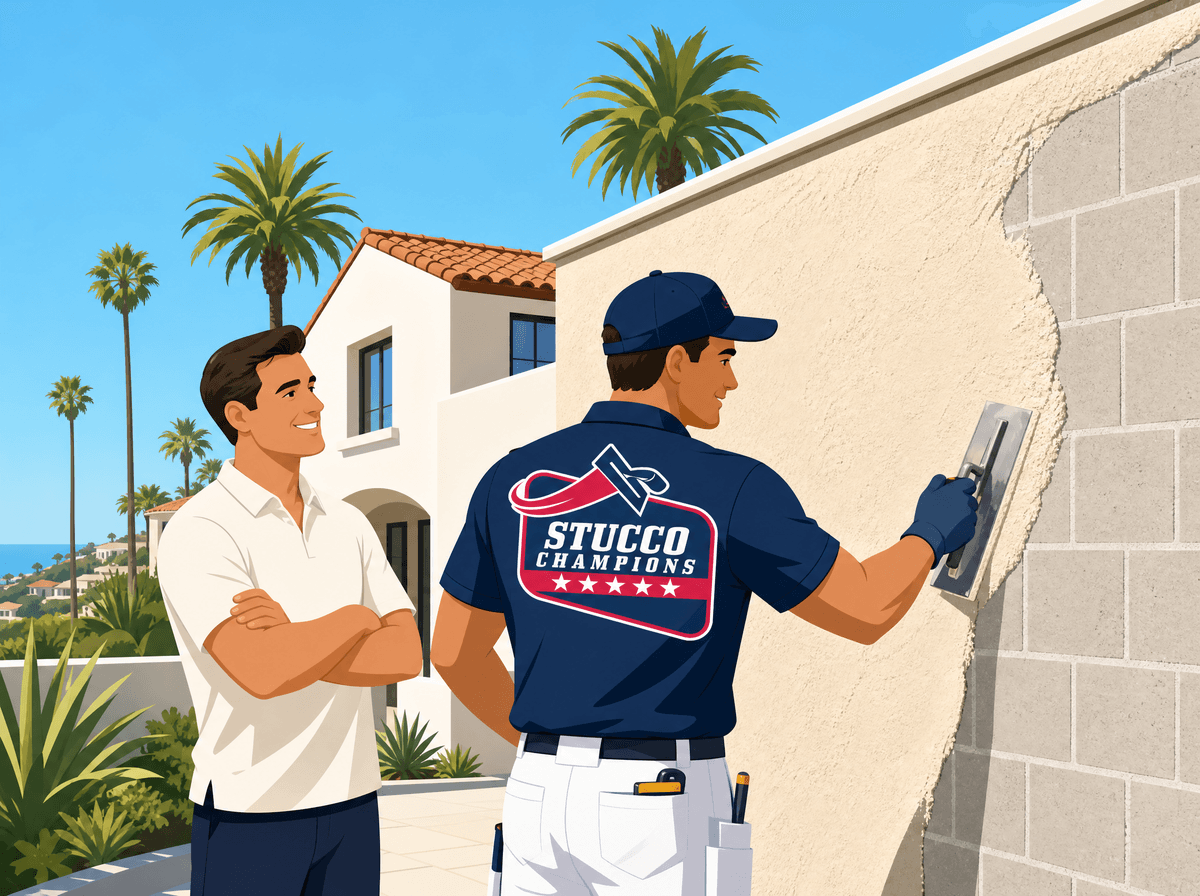
Can you apply stucco directly over concrete, CMU, and cinder block? Yes, absolutely. According to the Portland Cement Association (PCA), masonry and cast-in-place concrete are excellent solid bases for stucco. However, the application process changes depending on the substrate. To guarantee an unbreakable bond and eliminate the risk of hairline cracks, modern professional standards have evolved. Instead of traditional lath or raw plastering, the most reliable modern method uses a high-performance bonding agent, a reinforcing layer of fiberglass mesh embedded in a base coat, and a premium final coat. Ultimately, this three-step system yields an incredibly durable, monolithic, and crack-resistant finish.
The Core Difference: Wood Framing vs. Masonry Substrates
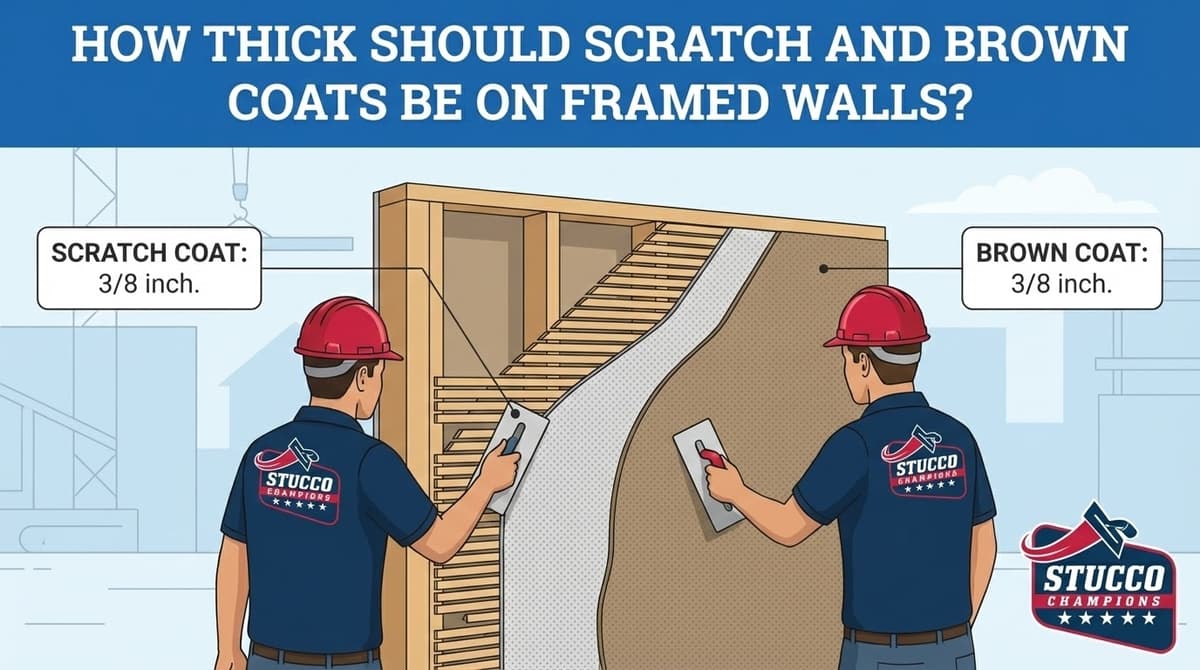
When you apply stucco over standard open-frame wood construction, you are essentially building an artificial rock layer. You must install a waterproof building paper (weather barrier) to protect the wood from moisture, and you must attach metal lath (diamond-mesh or woven wire) to give the wet stucco something to hang onto.
Masonry substrates are completely different. Because concrete and CMU are cementitious materials (just like stucco), they naturally want to bond together. When stuccoing over unpainted masonry, you typically do not need metal lath or waterproof paper. Instead, we use a modern, advanced system to seal the surface and reinforce the structure.
Free Assessment
Noticing Stucco Damage?
Get a free on-site assessment from a licensed contractor. $0 deposit, no obligation.
GET FREE ASSESSMENTThe Modern 3-Step System for Masonry & Concrete
At Stucco Champions, we follow a high-performance application process that ensures your stucco will never peel, delaminate, or crack along mortar joints. This modern polymer-modified "base-and-mesh" system provides superior crack isolation compared to traditional methods:
Step 1: High-Performance Bonding Agent
Because concrete is dense and smooth, and CMU has varying suction levels, relying on a direct plaster-to-block bond can be risky. We apply a professional-grade liquid bonding agent directly to the prepared masonry surface. This creates a powerful chemical bridge, ensuring the new stucco fuses permanently to the block without the need for mechanical scarification or heavy metal lath.
Step 2: Base Coat & Embedded Fiberglass Mesh
All masonry walls experience thermal expansion and structural settling, which leads to hairline cracks (especially along CMU mortar joints). To prevent this, we apply a high-tensile fiberglass mesh reinforcement system. We embed this fiberglass mesh directly into the wet cementitious base coat. This acts as a structural skeleton, bridging minor movements and absorbing surface stresses so cracks never reach the surface, preventing the need for frequent stucco patches.
Step 3: Premium Final Finish Coat
Once the reinforced base coat has cured, we apply the final color and texture coat (such as a smooth stucco finish, sand, or custom acrylic). This final coat acts as a durable, weather-resistant shield, protecting the underlying masonry and giving your home a premium, modern aesthetic.
Concrete vs. CMU vs. Cinder Block: What Changes?
While they look similar, these three masonry types behave very differently due to their "base suction" (porosity) levels:
- Poured Concrete (Low Suction): This is dense, solid, and typically very smooth. Wet stucco has nothing to grip, which makes the liquid bonding agent absolutely vital to prevent delamination.
- CMU (Concrete Masonry Unit - Medium Suction): These are standard modern blocks. They are uniform but prone to cracking along mortar joints, making the fiberglass mesh reinforcement essential to bridge the joints.
- Cinder Block (High Suction): Older cinder blocks act like giant sponges, rapidly sucking water out of wet stucco. In addition to a bonding agent, these blocks require careful moisture management (pre-wetting the block) so the base coat doesn't dry too quickly and weaken.
The Danger Zone: Painted or Sealed Walls
There is one absolute, unbreakable rule in plastering: Stucco will not bond to paint or sealers.
Paint, sealers, and waterproofing agents fill the pores of the masonry, blocking the bonding agent from making contact with the cement underneath.
The Solution: If your masonry wall is painted, we must either completely remove all traces of the coating (usually via high-pressure water blasting or sandblasting), or we must treat the wall like wood framing—installing metal lath securely anchored into the masonry to support the new stucco system.
Frequently Asked Questions (FAQ)
How thick should stucco be over concrete or CMU?
According to ASTM C926 and PCA standards, the nominal thickness of directly applied stucco (without metal lath) is 1/2 inch for a two-coat system and 5/8 inch for a three-coat system over unit masonry (CMU). For cast-in-place concrete, the nominal thickness is 3/8 inch for a two-coat system and 5/8 inch for a three-coat system. These represent the minimum code requirements for structural integrity and fire ratings.
Do I need a scratch coat over CMU?
Yes. The base coat (scratch/leveling coat) is required to fill the flush mortar joints, level any surface irregularities, and provide a uniform substrate for embedding the fiberglass mesh.
Can you stucco over a retaining wall?
Yes, but moisture management is critical. Retaining walls hold back earth, which is constantly damp. Without proper dampproofing or waterproofing on the dirt side of the wall, hydrostatic pressure will push moisture through the block, causing the stucco to delaminate.
Conclusion
Stuccoing over concrete, CMU, or cinder block results in one of the most durable exterior finishes possible—but only if the application process respects the physics of the wall. By using a professional bonding agent, embedding fiberglass mesh, and applying a premium final coat, Stucco Champions delivers a crack-free finish that stands the test of time.
If you're looking for professional stucco repair or to upgrade a masonry wall in Orange County or Los Angeles, trust a licensed contractor who follows the industry's strictest standards. Contact Stucco Champions today for a free on-site assessment and a written, fixed-price quote.
Frequently Asked Questions About Stucco
How much does stucco repair cost in Orange County and Los Angeles?+
Stucco repair typically ranges from $500 for minor crack patching to $5,000+ for full re-stucco of a single elevation. The exact cost depends on the damage type (hairline cracks, water damage, delamination, weep screed failure), the square footage involved, and whether the original three-coat or one-coat stucco system needs to be matched. Stucco Champions provides fixed-price written estimates after a free on-site assessment — no hourly billing, no surprise change orders. See our stucco repair cost guide for detailed pricing by repair type.
How long does stucco last in Southern California?+
Properly installed three-coat stucco lasts 50-80+ years in Southern California's climate. The most common failure points aren't the stucco itself — they're the supporting components: corroded weep screed, deteriorated building paper behind the stucco, and improperly sealed window flashing. Most "stucco failures" are actually moisture-intrusion failures that start at one of these points. Annual visual inspection catches problems before they spread, which is why we offer free weep screed assessments for homeowners in our service area.
Can I repair stucco myself, or do I need a contractor?+
Hairline cracks under 1/8 inch wide can be sealed with elastomeric caulk by a homeowner. Anything larger — pattern cracks, delamination (where stucco pulls away from the wall), water-damaged areas, or chimney/window leak repairs — requires a licensed contractor. Improper DIY repair on these is the #1 cause of repeat failures because the underlying cause (usually moisture) isn't addressed. California's CSLB requires a license for any stucco work over $500. Looking for a highly-rated stucco contractor in Southern California? We are a CSLB-licensed and insured team ready to help.
How do I know if I need stucco repair vs. full re-stucco?+
If less than 30% of an elevation has visible damage, repair is the right call. If you see large areas of cracking, multiple zones of delamination, or the underlying paper and lath have rotted across an entire wall, full re-stucco of that elevation is more cost-effective long-term. Our free assessment includes a moisture survey and lath inspection so you get a defensible recommendation either way — not just a quote pushing whichever option costs more.
Do you offer warranties on stucco work?+
Approved stucco repair work includes a 1-year written workmanship warranty. The applicable terms are documented with the approved scope. Stucco Champions is CSLB licensed and insured; verify license #1122006 through the official state lookup. Request a free estimate to review the scope and warranty terms before you sign.
How long does a stucco repair take?+
Most patch repairs are completed in 1-2 days, including a 24-hour cure time before texture matching and color application. Full re-stucco of a single elevation runs 5-7 working days because each coat (scratch, brown, finish) needs to cure properly before the next is applied. We schedule around weather — California stucco needs daytime temperatures above 50°F with no rain forecast for at least 24 hours after each coat. Our crew shows up on time, every time.
Stucco Diagnostics & Calculators
Diagnose specific wall damage symptoms or estimate job scope with our free guides and calculators.
Related Professional Services
A licensed assessment identifies the cause before the finish is opened or replaced.