Best Mixing Drills for Stucco and Mortar: A High-Torque Guide
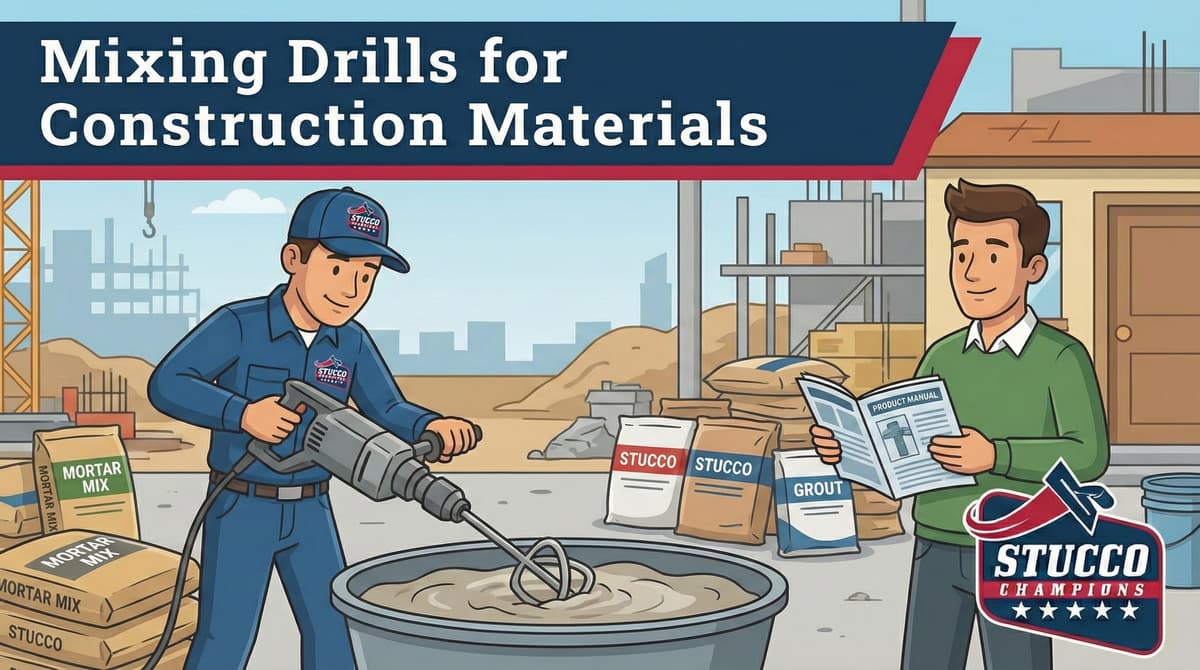
If you have ever tried to mix a 90lb bag of dry stucco with a standard cordless drill, you likely experienced a stalling motor or the smell of burning coils. Stucco, mortar, and concrete are high-viscosity, heavy materials. They require massive torque to turn, not speed.
Whether you are a homeowner patching a wall or a contractor upgrading your rig, you need a dedicated corded Mixing Drill. This guide breaks down the mechanics of high-torque mixing and why paddle selection matters.
1. The Physics: Torque vs. Speed (RPM)
Standard drills are engineered for high RPMs (revolutions per minute) to bore holes through wood and metal quickly. Mixing drills are geared down significantly to produce Low RPM and High Torque.
Do not use your standard 18v or 20v cordless drill for mixing cement-based products. The heavy sand aggregate creates massive drag. Continuous mixing will overheat the battery and destroy the motor coils rapidly. You need a dedicated, low-gear tool to turn the mud without stalling.
Crucial Tip: Never add extra water just to make the mud "easier to mix" for a weak drill. Altering the required water-to-cement ratio will severely weaken the final compressive strength of the plaster, leading to crumbling and cracking.
Free Assessment
Noticing Stucco Damage?
Get a free on-site assessment from a licensed contractor. $0 deposit, no obligation.
GET FREE ASSESSMENT2. The "Spade Handle" Workhorses
These units look like oversized standard drills with a D-handle on the back and an adjustable spade handle on the side. They are the industry standard for mixing 5-gallon buckets.
- Makita DS4011 (The Standard): Known for bulletproof reliability. This 1/2-inch drill runs at a low 600 RPM, keeping torque high enough to prevent bogging down even with stiff scratch coat mixes.
- Ridgid Heavy Duty Mud Mixer: Offers an excellent power-to-price ratio. It holds up well against job site abuse and is a favorite for apprentices and serious DIYers.
3. The "Steering Wheel" Mixers
For larger batches or particularly stiff materials (like dry-pack mortar), a spade handle drill can twist your wrists aggressively. Enter the Dedicated Paddle Mixer.
- Collomix Xo Series: You hold these units with two hands, similar to a steering wheel. The ergonomics are vastly superior, putting the load on your biceps and core rather than your wrists. While expensive, they offer electronic speed control and are essential for daily commercial use to prevent repetitive strain injuries.
4. Paddle Selection: The Right Tread
The drill is the engine; the mixing paddle is the tires. You need the right design for the material.
- Spiral / Helix Paddle: The only choice for stucco and concrete. The spiral design lifts heavy sand and aggregate from the bottom of the bucket to the top, ensuring a uniform mix without dry, unmixed pockets at the base.
- Cage Paddle: Best for paint and drywall mud. These are designed to shear thinner materials and will struggle significantly to lift heavy sand.
Frequently Asked Questions About Stucco
How much does stucco repair cost in Orange County and Los Angeles?+
Stucco repair typically ranges from $500 for minor crack patching to $5,000+ for full re-stucco of a single elevation. The exact cost depends on the damage type (hairline cracks, water damage, delamination, weep screed failure), the square footage involved, and whether the original three-coat or one-coat stucco system needs to be matched. Stucco Champions provides fixed-price written estimates after a free on-site assessment — no hourly billing, no surprise change orders. See our stucco repair cost guide for detailed pricing by repair type.
How long does stucco last in Southern California?+
Properly installed three-coat stucco lasts 50-80+ years in Southern California's climate. The most common failure points aren't the stucco itself — they're the supporting components: corroded weep screed, deteriorated building paper behind the stucco, and improperly sealed window flashing. Most "stucco failures" are actually moisture-intrusion failures that start at one of these points. Annual visual inspection catches problems before they spread, which is why we offer free weep screed assessments for homeowners in our service area.
Can I repair stucco myself, or do I need a contractor?+
Hairline cracks under 1/8 inch wide can be sealed with elastomeric caulk by a homeowner. Anything larger — pattern cracks, delamination (where stucco pulls away from the wall), water-damaged areas, or chimney/window leak repairs — requires a licensed contractor. Improper DIY repair on these is the #1 cause of repeat failures because the underlying cause (usually moisture) isn't addressed. California's CSLB requires a license for any stucco work over $500. Looking for a highly-rated stucco contractor in Southern California? We are a CSLB-licensed and insured team ready to help.
How do I know if I need stucco repair vs. full re-stucco?+
If less than 30% of an elevation has visible damage, repair is the right call. If you see large areas of cracking, multiple zones of delamination, or the underlying paper and lath have rotted across an entire wall, full re-stucco of that elevation is more cost-effective long-term. Our free assessment includes a moisture survey and lath inspection so you get a defensible recommendation either way — not just a quote pushing whichever option costs more.
Do you offer warranties on stucco work?+
Approved stucco repair work includes a 1-year written workmanship warranty. The applicable terms are documented with the approved scope. Stucco Champions is CSLB licensed and insured; verify license #1122006 through the official state lookup. Request a free estimate to review the scope and warranty terms before you sign.
How long does a stucco repair take?+
Most patch repairs are completed in 1-2 days, including a 24-hour cure time before texture matching and color application. Full re-stucco of a single elevation runs 5-7 working days because each coat (scratch, brown, finish) needs to cure properly before the next is applied. We schedule around weather — California stucco needs daytime temperatures above 50°F with no rain forecast for at least 24 hours after each coat. Our crew shows up on time, every time.
Stucco Diagnostics & Calculators
Diagnose specific wall damage symptoms or estimate job scope with our free guides and calculators.
Related Professional Services
A licensed assessment identifies the cause before the finish is opened or replaced.