The Architectural Edge: A Technical Guide to Stucco Quoins
Written by Stucco Champions — Southern California’s Authority on Exterior Plastering.
The Architectural Edge: A Technical Guide to Stucco Quoins
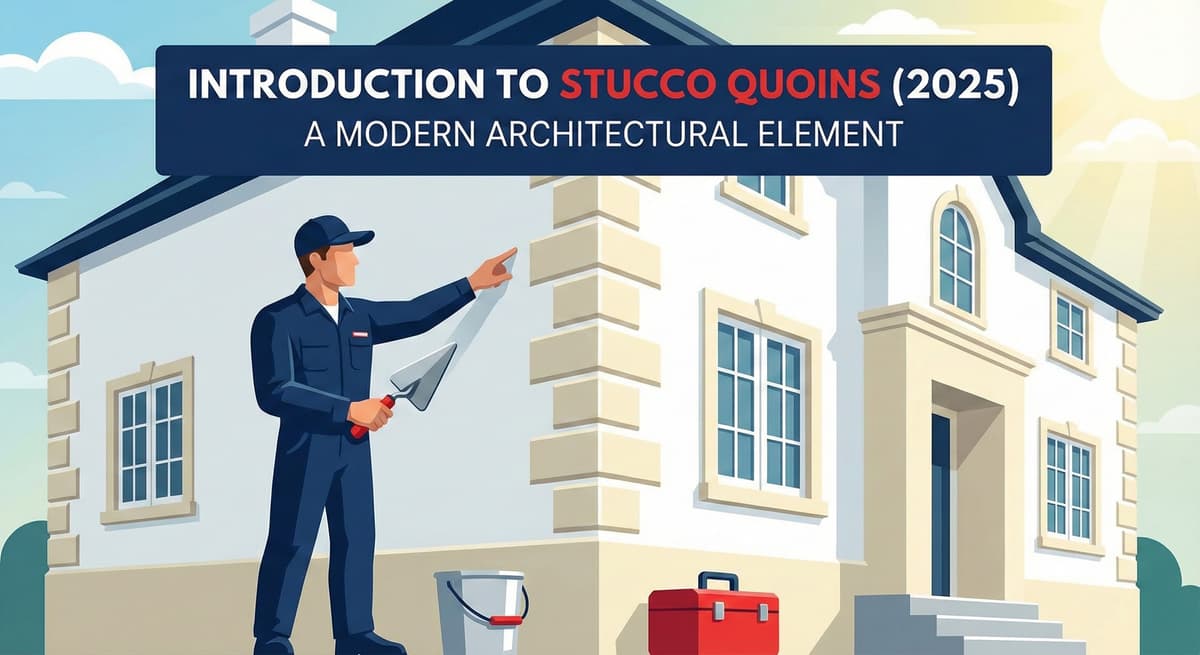
In classical masonry architecture, "Quoins" (pronounced coins) were large, structural stones placed at the corners of brick buildings to bear weight and provide strength. In modern Southern California stucco design, they are a purely aesthetic feature. However, they serve a vital visual function: framing the elevation, adding visual weight, and providing architectural definition to the corners of the home.
Whether designing a French Country estate or updating a Mediterranean facade, understanding the material composition of modern quoins—specifically the industry shift from wire lath to EPS foam—is critical for ensuring a durable, waterproof installation.
Free Assessment
Noticing Stucco Damage?
Get a free on-site assessment from a licensed contractor. $0 deposit, no obligation.
GET FREE ASSESSMENT1. The Evolution: Metal Lath vs. EPS Foam
Historically, stucco quoins were constructed by furring out the corner of the wall with heavy layers of wire lath and solid cement. Today, building technology has evolved.
The Modern Standard: EPS Foam
The vast majority of new quoins installed in Southern California are fabricated from Expanded Polystyrene (EPS) foam (typically 1lb or 1.5lb density).
Why EPS?
- Seismic Flexibility: Foam absorbs vibration. Heavy, solid cement quoins often crack at the corners during micro-tremors; foam moves cohesively with the wall assembly.
- Thermal Efficiency: EPS foam eliminates thermal bridging at the vulnerable corners of the structure.
- Design Flexibility: Foam can be CNC-milled to create complex architectural shapes that would be prohibitively expensive to build using wood framing and wire lath.
2. The Construction of a Foam Quoin
A professional quoin is not simply a piece of raw Styrofoam glued to the wall. It is an engineered composite system.
- The Core: Precision CNC-cut EPS foam.
- The Armor (Base Coat): The foam is completely encapsulated in a layer of alkali-resistant fiberglass mesh embedded in a polymer-modified cement base coat. This creates a hard, impact-resistant exterior shell.
- The Finish: An acrylic or traditional cement finish coat is applied to seamlessly match or contrast with the texture of the primary wall.
3. Installation Protocols: Chemical Adhesion
The method utilized to attach the quoin dictates the integrity of the waterproofing envelope.
The Adhesion Standard: We do not utilize mechanical fasteners (nails or screws) to attach foam quoins, as these penetrate the Water Resistive Barrier (WRB) and create potential water entry points. Instead, we utilize a specialized polymer-modified adhesive mortar (such as Foam-Tek or Primus). This adhesive creates a chemical bond between the brown coat of the wall and the back of the foam that is inherently stronger than the foam itself.
4. The Water Management Warning
Introducing foam details to an exterior wall alters the established drainage plane.
A critical failure point in improper quoin installations is terminating the foam block flush with the dirt or pavement.
The Protocol: The lowest quoin block must terminate above the foundation weep screed. If EPS foam is glued over the weep screed flange, it creates a dam, trapping bulk moisture inside the wall cavity and rapidly inducing dry rot. A minimum 2-inch clearance from paved surfaces must be maintained.
Conclusion
Stucco quoins are the "finishing touch" that elevates an exterior from standard to custom. By utilizing modern EPS foam systems installed with chemical adhesives and strict adherence to drainage clearances, these architectural details will provide lasting elegance without compromising the structural envelope.
Frequently Asked Questions About Stucco
How much does stucco repair cost in Orange County and Los Angeles?+
Stucco repair typically ranges from $500 for minor crack patching to $5,000+ for full re-stucco of a single elevation. The exact cost depends on the damage type (hairline cracks, water damage, delamination, weep screed failure), the square footage involved, and whether the original three-coat or one-coat stucco system needs to be matched. Stucco Champions provides fixed-price written estimates after a free on-site assessment — no hourly billing, no surprise change orders. See our stucco repair cost guide for detailed pricing by repair type.
How long does stucco last in Southern California?+
Properly installed three-coat stucco lasts 50-80+ years in Southern California's climate. The most common failure points aren't the stucco itself — they're the supporting components: corroded weep screed, deteriorated building paper behind the stucco, and improperly sealed window flashing. Most "stucco failures" are actually moisture-intrusion failures that start at one of these points. Annual visual inspection catches problems before they spread, which is why we offer free weep screed assessments for homeowners in our service area.
Can I repair stucco myself, or do I need a contractor?+
Hairline cracks under 1/8 inch wide can be sealed with elastomeric caulk by a homeowner. Anything larger — pattern cracks, delamination (where stucco pulls away from the wall), water-damaged areas, or chimney/window leak repairs — requires a licensed contractor. Improper DIY repair on these is the #1 cause of repeat failures because the underlying cause (usually moisture) isn't addressed. California's CSLB requires a license for any stucco work over $500. Looking for a highly-rated stucco contractor in Southern California? We are a CSLB-licensed and insured team ready to help.
How do I know if I need stucco repair vs. full re-stucco?+
If less than 30% of an elevation has visible damage, repair is the right call. If you see large areas of cracking, multiple zones of delamination, or the underlying paper and lath have rotted across an entire wall, full re-stucco of that elevation is more cost-effective long-term. Our free assessment includes a moisture survey and lath inspection so you get a defensible recommendation either way — not just a quote pushing whichever option costs more.
Do you offer warranties on stucco work?+
Approved stucco repair work includes a 1-year written workmanship warranty. The applicable terms are documented with the approved scope. Stucco Champions is CSLB licensed and insured; verify license #1122006 through the official state lookup. Request a free estimate to review the scope and warranty terms before you sign.
How long does a stucco repair take?+
Most patch repairs are completed in 1-2 days, including a 24-hour cure time before texture matching and color application. Full re-stucco of a single elevation runs 5-7 working days because each coat (scratch, brown, finish) needs to cure properly before the next is applied. We schedule around weather — California stucco needs daytime temperatures above 50°F with no rain forecast for at least 24 hours after each coat. Our crew shows up on time, every time.
Stucco Diagnostics & Calculators
Diagnose specific wall damage symptoms or estimate job scope with our free guides and calculators.
Related Professional Services
A licensed assessment identifies the cause before the finish is opened or replaced.