How to Cut Through Stucco: Tools, Dust Control, and Lath
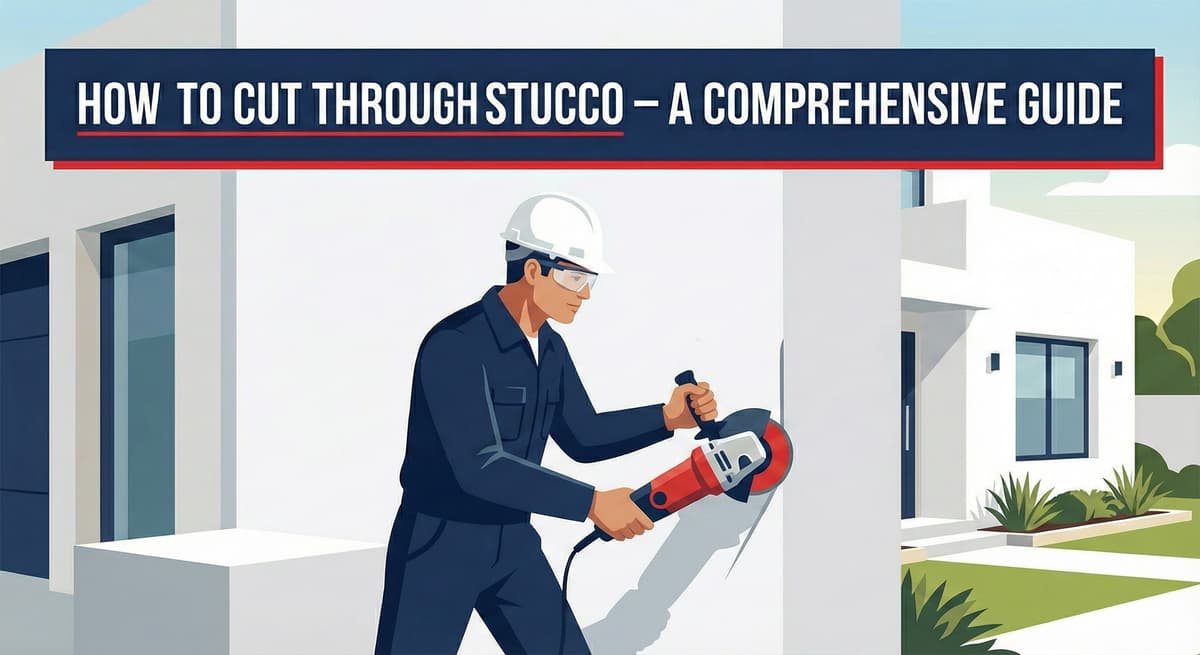
Cutting into stucco is often required for home improvement projects, such as installing a new window, vent, or running an electrical conduit. However, exterior stucco is a rigid, reinforced cladding (typically 7/8" thick for 3-coat systems) made of Portland cement plaster and metal lath.
If you use the wrong tools or techniques, you risk cracking the surrounding wall, dulling your blades, or irreversibly damaging the weather-resistant barrier (WRB) hidden underneath.
1. The Primary Tool: Angle Grinder & Diamond Blade
For most straight cuts, the 4.5" Angle Grinder is the standard tool.
- The Blade: You should use a Segmented Diamond Blade designed for masonry. The segments allow for cooling and dust ejection. A continuous rim blade (often used for tile) may overheat quickly.
- Best For: Long straight lines, square cutouts for electrical boxes, and heavier demolition.
Free Assessment
Noticing Stucco Damage?
Get a free on-site assessment from a licensed contractor. $0 deposit, no obligation.
GET FREE ASSESSMENT2. The Precision Tool: Oscillating Multi-Tool
When you need precision cuts without over-cutting the corners (such as a square vent cutout), an oscillating multi-tool is highly effective.
- The Blade: Use a Carbide Grit or Diamond Grit blade. Standard wood blades will be destroyed almost instantly against Portland cement.
- Best For: Plunge cuts, tight corners, and detailed extraction where a round grinder blade would cut too far into the adjacent plaster.
3. The Hole Maker: Diamond Core Bit
If you are installing a pipe, dryer vent, or hose bib, do not attempt to cut a perfect circle with an angle grinder.
- The Tool: Use a drill-mounted Diamond Core Bit / Hole Saw.
- Technique: Use a spray bottle to keep the cut wet. This cools the diamonds and prevents the bit from burning up. Let the grit do the work rather than forcing the drill.
Cutting dry stucco releases Silica Dust, which is a severe respiratory hazard. Always wear an approved N95 (or better) respirator. Use a dust shroud connected to a HEPA vacuum, or have a helper spray a fine mist of water on the blade to suppress the dust cloud.
4. Managing the Lath and WRB
Once you cut through the cement plaster layer, you will encounter the steel wire lath, and directly behind it, the WRB (building paper or house wrap).
The Wire Lath: Spinning grinder blades can catch the wire and violently pull it, causing massive cracking in the surrounding stucco. Cut the cement first, then stop. Use Aviation Snips to manually cut the wire mesh. This ensures a clean edge and prevents the lath from unraveling.
The WRB: The most critical element of the wall is the WRB behind the lath. When you cut through the stucco, you will invariably slice this paper. You cannot simply patch the stucco later with cement. The WRB must be carefully shingle-lapped and integrated with new flashing before applying new lath and plaster, otherwise the wall will leak.
Frequently Asked Questions About Stucco
How much does stucco repair cost in Orange County and Los Angeles?+
Stucco repair typically ranges from $500 for minor crack patching to $5,000+ for full re-stucco of a single elevation. The exact cost depends on the damage type (hairline cracks, water damage, delamination, weep screed failure), the square footage involved, and whether the original three-coat or one-coat stucco system needs to be matched. Stucco Champions provides fixed-price written estimates after a free on-site assessment — no hourly billing, no surprise change orders. See our stucco repair cost guide for detailed pricing by repair type.
How long does stucco last in Southern California?+
Properly installed three-coat stucco lasts 50-80+ years in Southern California's climate. The most common failure points aren't the stucco itself — they're the supporting components: corroded weep screed, deteriorated building paper behind the stucco, and improperly sealed window flashing. Most "stucco failures" are actually moisture-intrusion failures that start at one of these points. Annual visual inspection catches problems before they spread, which is why we offer free weep screed assessments for homeowners in our service area.
Can I repair stucco myself, or do I need a contractor?+
Hairline cracks under 1/8 inch wide can be sealed with elastomeric caulk by a homeowner. Anything larger — pattern cracks, delamination (where stucco pulls away from the wall), water-damaged areas, or chimney/window leak repairs — requires a licensed contractor. Improper DIY repair on these is the #1 cause of repeat failures because the underlying cause (usually moisture) isn't addressed. California's CSLB requires a license for any stucco work over $500. Looking for a highly-rated stucco contractor in Southern California? We are a CSLB-licensed and insured team ready to help.
How do I know if I need stucco repair vs. full re-stucco?+
If less than 30% of an elevation has visible damage, repair is the right call. If you see large areas of cracking, multiple zones of delamination, or the underlying paper and lath have rotted across an entire wall, full re-stucco of that elevation is more cost-effective long-term. Our free assessment includes a moisture survey and lath inspection so you get a defensible recommendation either way — not just a quote pushing whichever option costs more.
Do you offer warranties on stucco work?+
Approved stucco repair work includes a 1-year written workmanship warranty. The applicable terms are documented with the approved scope. Stucco Champions is CSLB licensed and insured; verify license #1122006 through the official state lookup. Request a free estimate to review the scope and warranty terms before you sign.
How long does a stucco repair take?+
Most patch repairs are completed in 1-2 days, including a 24-hour cure time before texture matching and color application. Full re-stucco of a single elevation runs 5-7 working days because each coat (scratch, brown, finish) needs to cure properly before the next is applied. We schedule around weather — California stucco needs daytime temperatures above 50°F with no rain forecast for at least 24 hours after each coat. Our crew shows up on time, every time.
Stucco Diagnostics & Calculators
Diagnose specific wall damage symptoms or estimate job scope with our free guides and calculators.
Related Professional Services
A licensed assessment identifies the cause before the finish is opened or replaced.