Smooth Stucco Finish & Texture Guide
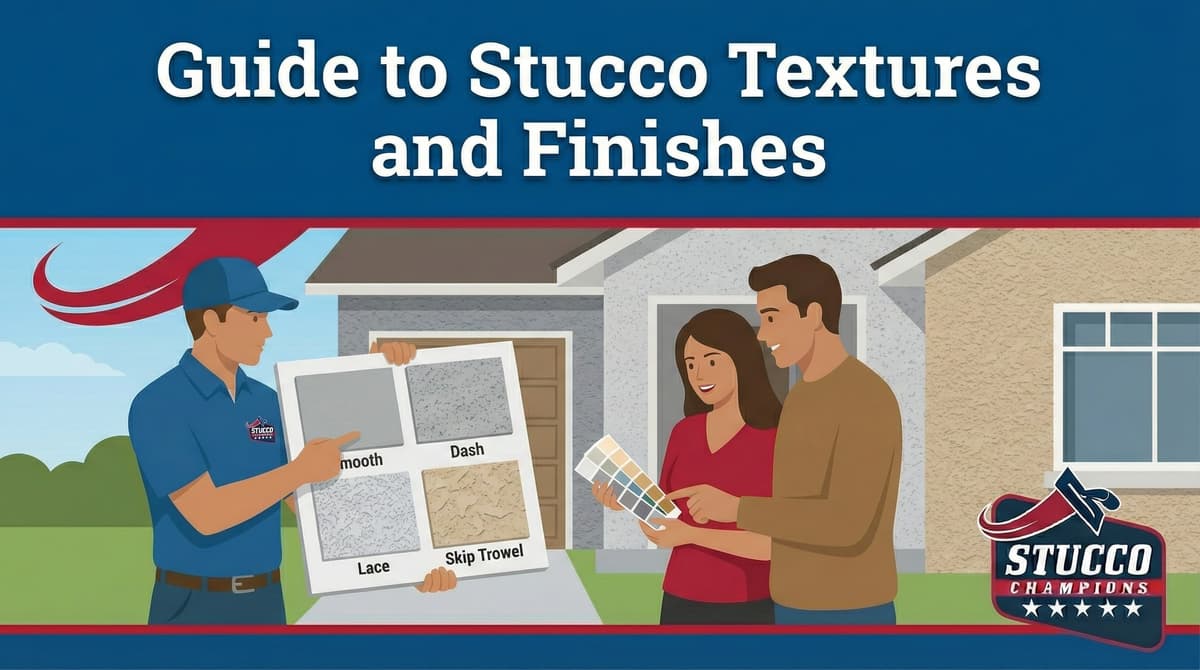
Stucco texture is created by the finish coat: the aggregate size, mix consistency, application tool, and the plasterer's finishing technique. Texture names and techniques vary by region, so final selection should be based on a sample panel using the same base, materials, and application method planned for the project.
This guide explains the most common Southern California stucco textures, with extra detail on the smooth stucco finish because it is one of the most requested and most misunderstood options. Smooth stucco can look clean and high-end, but it also requires a flatter wall, better preparation, and more realistic expectations about patch visibility.
Before Choosing a Texture: Ask for a Sample Panel
Texture names are not universal. "Lace," "Spanish," "Monterey," "knockdown," and "Santa Barbara" can mean different things depending on the crew and product line. A sample panel prevents surprises and gives everyone a physical reference for color, texture depth, and finish technique.
For a smooth stucco finish, the sample panel is even more important. A small photo online cannot show how sunlight, wall waves, trowel movement, and color variation will look on your actual home. Approving a real panel helps align the homeowner, contractor, and plasterer before the whole elevation is finished.
Free Assessment
Noticing Stucco Damage?
Get a free on-site assessment from a licensed contractor. $0 deposit, no obligation.
GET FREE ASSESSMENTCommon Stucco Textures
1. Lace / Spanish / Skip Trowel
The look: Irregular flattened islands or raised trowel texture over a base layer.
Best for: Traditional Southern California homes and projects where small wall-plane imperfections or future patches need to blend more easily.
Consideration: Heavy texture can collect dust, but it is generally more forgiving than a smooth finish.
2. Sand Float Finish
The look: Uniform sandy texture made by floating the finish coat so sand particles are brought to the surface.
Aggregate: Fine, medium, and heavy sand float finishes depend on aggregate size. Fine sand reads cleaner; heavier sand reads more traditional or commercial.
Best for: Homes that need a balanced texture: cleaner than lace but more forgiving than smooth.
3. Smooth / Santa Barbara Style Finish
The look: A flatter, refined finish with subtle hand-made movement rather than heavy texture.
Technical note: Smooth stucco is not sand-free. Finish plaster still uses fine aggregate or a manufacturer-approved finish material. The challenge is that smooth finishes reveal wall-plane imperfections, trowel marks, patch edges, and hairline cracks more than textured finishes.
Best for: High-end Spanish, Mediterranean, and modern homes where the owner accepts higher labor cost and more visible touch-up requirements.
What Makes a Smooth Stucco Finish Different?
A smooth stucco finish is less about removing texture entirely and more about controlling texture very tightly. The wall needs a well-prepared brown coat, consistent suction, skilled trowel work, and a finish material that can be worked cleanly without tearing or dragging. If the wall plane is uneven, smooth stucco will usually make those imperfections easier to see.
This is why smooth finishes usually cost more than heavier lace or dash textures. The labor is in the preparation as much as the final coat. For homes where the owner wants a clean, modern exterior, the result can be worth it, but the base wall must be ready for that level of finish.
For service-specific details, see our smooth stucco finish page. For a closer comparison between common finish styles, review the guide to sand finish vs. smooth stucco.
4. Dash / Knockdown Dash
The look: A sprayed or dashed texture, ranging from light dash to heavy dash. Knockdown dash is lightly flattened after the material has taken up.
Best for: Larger wall areas, tract homes, and projects where texture variation helps hide small imperfections.
Consideration: Matching the spray pattern and aggregate size matters for patch repairs.
5. Cat Face
The look: Mostly smoother areas interrupted by rough inclusions or open-textured cat face spots.
Best for: Mediterranean, Tuscan, and custom homes that want an aged hand-applied look.
Consideration: The size and spacing of inclusions should be agreed on with a sample panel.
6. Worm / Swirl / Putz-Type Finishes
The look: Grooved or dragged patterns created by aggregate movement under the float.
Best for: Matching older existing finishes where the home already has this texture.
Consideration: Less common on new projects, so matching existing work may require a more experienced plasterer.
Smooth Stucco Finish vs. Textured Stucco
| Finish Type | Best Use | Tradeoff |
|---|---|---|
| Smooth stucco finish | Modern, high-end, Santa Barbara, Spanish, or minimalist exteriors | Shows wall waves, patch edges, and hairline cracks more easily |
| Fine sand finish | Clean look with slightly more forgiveness than smooth | Still requires good wall preparation |
| Lace or skip trowel | Traditional homes and walls that need more texture depth | Can look busy if overused on modern architecture |
| Dash or knockdown dash | Large walls, older homes, and repair-friendly textures | Can collect more dust and feel less refined |
Cement Finish vs. Acrylic Finish
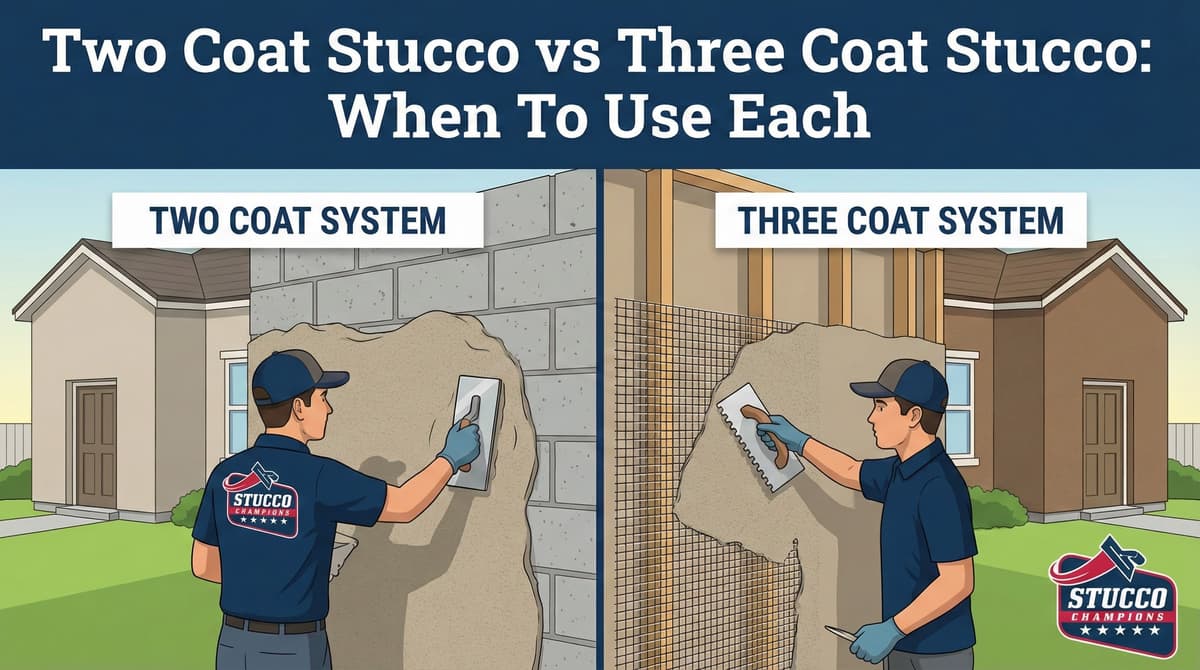
Three-coat stucco can receive a cementitious finish or an acrylic finish when compatible with the assembly. The right choice depends on the desired appearance, product system, color expectations, climate exposure, and manufacturer requirements.
- Cementitious finish: Traditional, mineral-based, and well suited to many classic textures. It can show natural color variation, which some homeowners like and others do not.
- Acrylic finish: Often offers consistent color and flexible finish options, but it must be used as part of a compatible assembly and per manufacturer instructions.
- Fog coat or color coat: Useful for color refresh or blending on suitable cement plaster surfaces, but it does not fix unsound plaster or active moisture problems.
How Texture Affects Maintenance and Repair
- Smoother finishes: Higher labor, more visible imperfections, and more difficult patch blending.
- Medium sand finishes: Cleaner look with moderate patchability.
- Lace and dash textures: More forgiving for existing framing irregularities and patch blending.
- Heavy textures: Hide defects but can collect dust and may look dated if overused.
If your existing stucco is cracked, loose, or previously patched, choose texture after the repair scope is clear. A smooth stucco finish over an uneven or damaged wall will usually make the repair history more obvious, not less.
Choosing the Right Texture
- Architecture: Spanish, Mediterranean, modern, craftsman, or commercial style.
- Patchability: How likely is future repair or texture matching?
- Wall condition: Smooth finishes require a better wall plane.
- Color expectations: Cement finishes can vary; acrylics may be more uniform.
- Sample panel: Approve the texture on a real panel before committing.
Bottom Line
The best stucco texture is not just the one that looks good in a photo. It is the one that fits the home's architecture, the condition of the wall, the finish material, and the owner's expectations for maintenance and patch visibility.
A smooth stucco finish can be beautiful on the right wall, but it is not the easiest texture to install or repair. If you want the cleanest final result, approve a sample panel and make sure the base wall is prepared for a smooth finish before the final coat is applied.
Related guide: Identifying and Repairing Stucco Cracks.
See How Different Textures Look on Your Home
Preview finishes before committing, or get a project cost estimate in 30 seconds.
Try the Stucco VisualizerA note on fog coat: Stucco Champions does not fog coat older or previously repaired walls. On aged stucco a fog coat telegraphs existing cracks, patch lines, and prior repairs, and it bonds poorly to a rough, chalky, or previously coated surface, so it can dust off or peel. Those walls get a fresh finish coat (re-stucco) instead.
Frequently Asked Questions About Stucco
How much does stucco repair cost in Orange County and Los Angeles?+
Small stucco patches start at $650, larger repairs start at $1,200, and re-stucco of a single elevation up to about 400 sq ft runs about $1,400 - $5,900+. The exact cost depends on the damage type (hairline cracks, water damage, delamination, weep screed failure), the square footage involved, and whether the original three-coat or one-coat stucco system needs to be matched. Stucco Champions provides fixed-price written estimates after a free on-site assessment — no hourly billing, no surprise change orders. See our stucco repair cost guide for detailed pricing by repair type.
How long does stucco last in Southern California?+
Properly installed three-coat stucco lasts 50-80+ years in Southern California's climate. The most common failure points aren't the stucco itself — they're the supporting components: corroded weep screed, deteriorated building paper behind the stucco, and improperly sealed window flashing. Most "stucco failures" are actually moisture-intrusion failures that start at one of these points. Annual visual inspection catches problems before they spread, which is why we offer free weep screed assessments for homeowners in our service area.
Can I repair stucco myself, or do I need a contractor?+
Hairline cracks under 1/8 inch wide can be sealed with elastomeric caulk by a homeowner. Anything larger — pattern cracks, delamination (where stucco pulls away from the wall), water-damaged areas, or chimney/window leak repairs — requires a licensed contractor. Improper DIY repair on these is the #1 cause of repeat failures because the underlying cause (usually moisture) isn't addressed. California's CSLB requires a license for any stucco work over $500. Looking for a highly-rated stucco contractor in Southern California? We are a CSLB-licensed and insured team ready to help.
How do I know if I need stucco repair vs. full re-stucco?+
If less than 30% of an elevation has visible damage, repair is the right call. If you see large areas of cracking, multiple zones of delamination, or the underlying paper and lath have rotted across an entire wall, full re-stucco of that elevation is more cost-effective long-term. Our free assessment includes a moisture survey and lath inspection so you get a defensible recommendation either way — not just a quote pushing whichever option costs more.
Do you offer warranties on stucco work?+
Approved stucco repair work includes a 1-year written workmanship warranty. The applicable terms are documented with the approved scope. Stucco Champions is CSLB licensed and insured; verify license #1122006 through the official state lookup. Request a free estimate to review the scope and warranty terms before you sign.
How long does a stucco repair take?+
Most patch repairs are completed in 1-2 days, including a 24-hour cure time before texture matching and color application. Full re-stucco of a single elevation runs 5-7 working days because each coat (scratch, brown, finish) needs to cure properly before the next is applied. We schedule around weather — California stucco needs daytime temperatures above 50°F with no rain forecast for at least 24 hours after each coat. Our crew shows up on time, every time.
Stucco Diagnostics & Calculators
Diagnose specific wall damage symptoms or estimate job scope with our free guides and calculators.
Related Professional Services
A licensed assessment identifies the cause before the finish is opened or replaced.