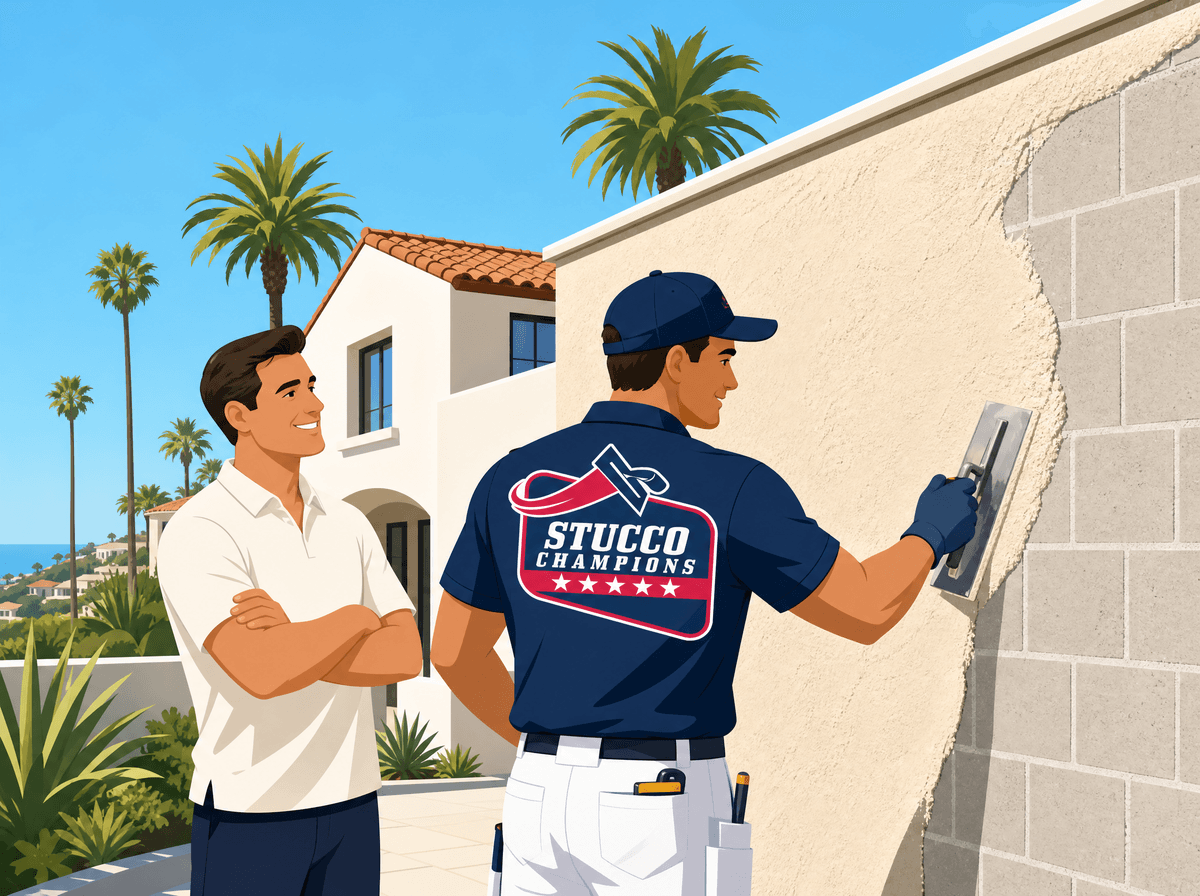
Exterior Stucco: History, Materials, and Modern Repairs

In Southern California, stucco is more than just a siding choice; it is the dominant architectural skin of our entire region. It provides the fire resistance, durability, and stylistic versatility that our unique climate and design culture demand.
Whether you own a historic 1920s Spanish Revival in Pasadena or an ultra-modern geometric cube in Newport Beach, understanding the materials and maintenance of your exterior stucco is critical to protecting your investment.
1. The Evolution of Stucco Design
Historically, the term "stucco" was used loosely in Europe to describe various lime and gypsum-based plasters used for decorative interior work or imitating stone (ashlar). However, modern exterior stucco as we know it in the United States—specifically Portland Cement Plaster—was popularized in the early 20th century.
In California, the 1915 Panama-California Exposition in San Diego sparked a massive architectural movement. Architects began using heavily textured cement stucco over wood framing to mimic the thick, solid adobe walls of early Spanish missions. This created the iconic "Spanish Colonial Revival" style that defines much of Los Angeles and Orange County today.
Free Assessment
Noticing Stucco Damage?
Get a free on-site assessment from a licensed contractor. $0 deposit, no obligation.
GET FREE ASSESSMENT2. Modern Construction: The Cement Advantage
Unlike historical European lime renders, modern exterior stucco relies on Portland Cement as its primary binder. This creates a rock-solid, weather-resistant shell.
- Fire Resistance: A standard 7/8-inch, three-coat stucco system provides a highly sought-after 1-hour fire rating, a crucial defense in California's Wildland-Urban Interface (WUI) zones.
- Impact Resistance: Cement stucco is incredibly dense. It can withstand impacts (like errant baseballs or heavy hail) far better than vinyl siding or wood clapboard.
- Breathability: Traditional cement stucco is "vapor permeable." If moisture gets into the wall cavity, the cement allows it to evaporate out as a gas, preventing dry rot.
3. Common Causes of Failure
Despite its strength, stucco is not invincible. The most common failures we see are not due to the cement itself, but rather to the underlying systems.
- Waterproofing Failure: If the building paper (WRB) behind the stucco tears or deteriorates, water will enter the wood framing, causing catastrophic dry rot and mold.
- Thermal Expansion: Because cement is rigid, the natural expansion and contraction of the wood frame during hot days and cold nights will inevitably cause hairline "shrinkage" cracking.
- Poor Flashing: Improperly installed metal flashing around windows, doors, and roof intersections is the number one cause of water intrusion in stucco homes.
4. The Approach to Repairs
When repairing exterior stucco, the cardinal rule is material compatibility.
You cannot patch a traditional, breathable cement wall with a heavy, non-breathable rubberized paint (like Tex-Cote). Doing so traps moisture and causes massive peeling. Professional repairs must address the root cause of the cracking, restore the waterproofing layers underneath, and utilize proper cementitious base coats tied into the existing wire lath.
Conclusion: A Living Cladding
Exterior stucco is a "living" cladding system. It breathes, it moves slightly with the building, and it requires periodic maintenance like washing and elastomeric crack sealing. When properly maintained, a high-quality stucco job can easily outlast the wood framing it protects.
Frequently Asked Questions About Stucco
How much does stucco repair cost in Orange County and Los Angeles?+
Stucco repair typically ranges from $500 for minor crack patching to $5,000+ for full re-stucco of a single elevation. The exact cost depends on the damage type (hairline cracks, water damage, delamination, weep screed failure), the square footage involved, and whether the original three-coat or one-coat stucco system needs to be matched. Stucco Champions provides fixed-price written estimates after a free on-site assessment — no hourly billing, no surprise change orders. See our stucco repair cost guide for detailed pricing by repair type.
How long does stucco last in Southern California?+
Properly installed three-coat stucco lasts 50-80+ years in Southern California's climate. The most common failure points aren't the stucco itself — they're the supporting components: corroded weep screed, deteriorated building paper behind the stucco, and improperly sealed window flashing. Most "stucco failures" are actually moisture-intrusion failures that start at one of these points. Annual visual inspection catches problems before they spread, which is why we offer free weep screed assessments for homeowners in our service area.
Can I repair stucco myself, or do I need a contractor?+
Hairline cracks under 1/8 inch wide can be sealed with elastomeric caulk by a homeowner. Anything larger — pattern cracks, delamination (where stucco pulls away from the wall), water-damaged areas, or chimney/window leak repairs — requires a licensed contractor. Improper DIY repair on these is the #1 cause of repeat failures because the underlying cause (usually moisture) isn't addressed. California's CSLB requires a license for any stucco work over $500. Looking for a highly-rated stucco contractor in Southern California? We are a CSLB-licensed and insured team ready to help.
How do I know if I need stucco repair vs. full re-stucco?+
If less than 30% of an elevation has visible damage, repair is the right call. If you see large areas of cracking, multiple zones of delamination, or the underlying paper and lath have rotted across an entire wall, full re-stucco of that elevation is more cost-effective long-term. Our free assessment includes a moisture survey and lath inspection so you get a defensible recommendation either way — not just a quote pushing whichever option costs more.
Do you offer warranties on stucco work?+
Approved stucco repair work includes a 1-year written workmanship warranty. The applicable terms are documented with the approved scope. Stucco Champions is CSLB licensed and insured; verify license #1122006 through the official state lookup. Request a free estimate to review the scope and warranty terms before you sign.
How long does a stucco repair take?+
Most patch repairs are completed in 1-2 days, including a 24-hour cure time before texture matching and color application. Full re-stucco of a single elevation runs 5-7 working days because each coat (scratch, brown, finish) needs to cure properly before the next is applied. We schedule around weather — California stucco needs daytime temperatures above 50°F with no rain forecast for at least 24 hours after each coat. Our crew shows up on time, every time.
Stucco Diagnostics & Calculators
Diagnose specific wall damage symptoms or estimate job scope with our free guides and calculators.
Related Professional Services
A licensed assessment identifies the cause before the finish is opened or replaced.