Integral Color Stucco: Never Paint Your House Again
Written by Stucco Champions — Southern California’s Authority on Exterior Plastering.
The Magic of Integral Color Stucco
One of the greatest advantages of choosing a traditional plaster exterior over wood siding or Hardie board is that you never actually have to paint it. This is made possible through the use of integral color stucco.
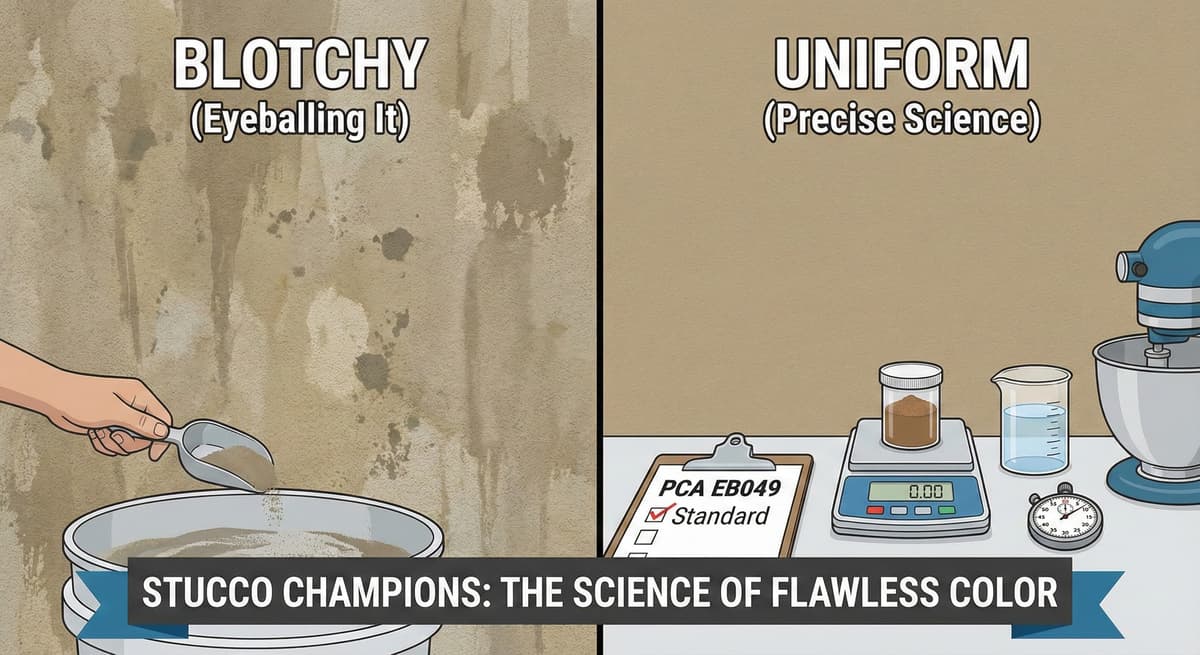
Unlike standard house paint—which sits on top of a wall as a thin, suffocating plastic film—integral color stucco is achieved by mixing dry iron oxide pigments directly into the wet cement before it is applied to the house. Because the color is mixed completely through the entire thickness of the finish coat, it cannot peel, flake, or blister off the wall like paint.
Understanding how integral color stucco is formulated requires an appreciation of the underlying cement chemistry, specifically the use of gray versus white bases.
Free Assessment
Noticing Stucco Damage?
Get a free on-site assessment from a licensed contractor. $0 deposit, no obligation.
GET FREE ASSESSMENT1. The Foundation: Gray Portland Cement
The structural base coats of a stucco system (the heavy scratch and brown coats) are predominantly dark gray. This coloration is due to the natural color of standard Portland cement, which serves as the primary binder for the wall.
Because the base of the wall is gray, a thin layer of paint will eventually fail and expose this ugly gray cement. Integral color stucco solves this by serving as a 1/8-inch thick colored cement armor layer over the gray base.
2. Formulating Integral Color Stucco: The Base Matrix
When applying a traditional, breathable cement finish coat, the final integral color stucco hue is dictated entirely by the base cement matrix you choose to mix the pigment into:
- Gray Base: Utilized for deeper, richer, and darker earth tones. The natural gray cement enhances the depth of the added pigment, perfect for deep Spanish browns and Tuscan golds.
- White Base: Composed of pure white Portland cement and bright white silica sand. This is strictly utilized for pastel, light, or exceptionally bright colors. A white base ensures the integral color stucco pigment remains pure and isn't "muddied" by gray undertones.
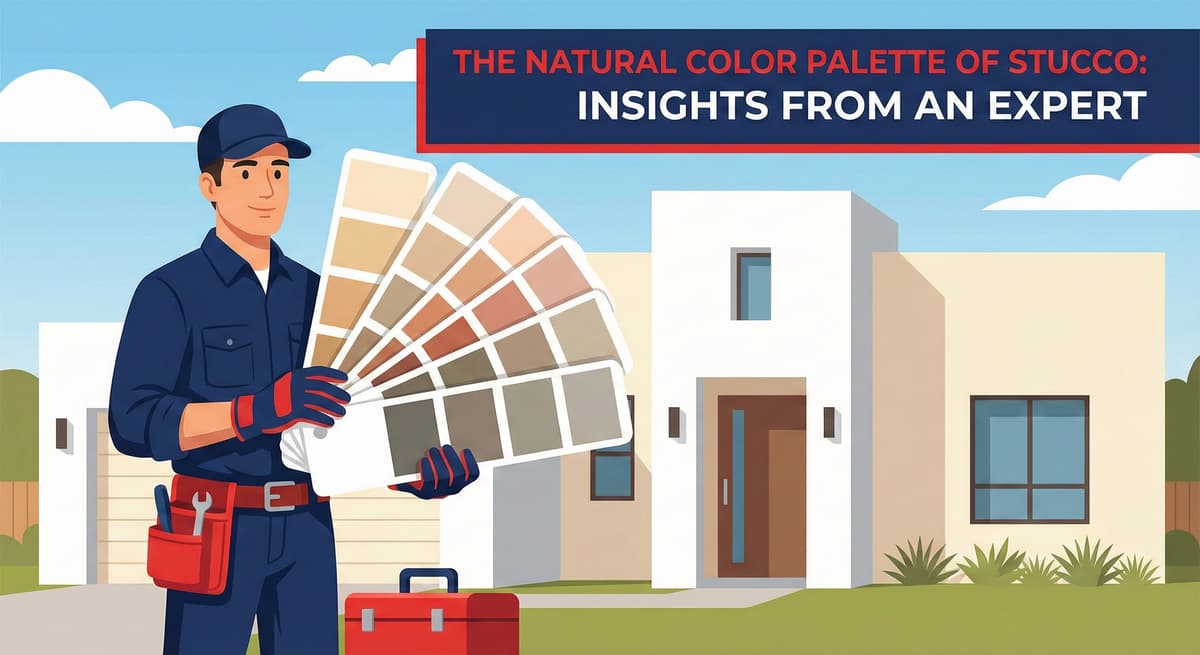
This selection process is strictly outlined in manufacturer color charts (such as Omega or LaHabra), which specify the exact required base (white or gray) for every single color formulation.
3. Integral Color Stucco vs. Painted Synthetic Acrylics
It is important to understand the difference between traditional mineral cement and modern synthetic acrylics.
Synthetic acrylic finishes (often called "elastomeric stucco") operate like heavy paint. They almost exclusively begin with a pure White Tint Base, and the final color is achieved by mechanically dispensing liquid pigment into the bucket (exactly how Home Depot mixes interior wall paint). While acrylics offer infinite color matching, they do not possess the authentic, stone-like aesthetic of true mineral cement.
Traditional integral color stucco is a mineral. It breathes, it cures, and it naturally oxidizes. It provides that highly sought-after natural "mottling" (subtle dark and light color variations) that makes Mediterranean and Spanish Revival homes look so authentic.
4. Best Practices for Color Selection
When finalizing colors for your exterior, consider the following technical factors:
- Texture Alters Perception: A heavy texture (like Spanish Lace) casts micro-shadows that make an integral color stucco appear much darker. A smooth finish (like Santa Barbara) reflects more light, making the exact same color formulation appear lighter and brighter.
- Oxidation and Fading: Traditional cement colors (especially dark greens and blues) will naturally oxidize and fade over decades under harsh UV exposure. This is part of the "Old World" charm. If you require absolute, clinical color uniformity that will never fade, an acrylic finish must be specified instead of cement.
- Sampling is Mandatory: Never select a color based solely on a printed paper brochure. Always require your stucco contractor to apply a physical 2x2 foot sample patch on the wall to observe how the specific texture and local lighting affect the integral color stucco pigment.
Conclusion
The natural color palette of your home should be built into the wall, not painted on top of it. By understanding the interaction between gray and white cement bases and dry pigments, you can engineer an integral color stucco exterior that is both stunningly beautiful and virtually maintenance-free.
Frequently Asked Questions About Stucco
How much does stucco repair cost in Orange County and Los Angeles?+
Stucco repair typically ranges from $500 for minor crack patching to $5,000+ for full re-stucco of a single elevation. The exact cost depends on the damage type (hairline cracks, water damage, delamination, weep screed failure), the square footage involved, and whether the original three-coat or one-coat stucco system needs to be matched. Stucco Champions provides fixed-price written estimates after a free on-site assessment — no hourly billing, no surprise change orders. See our stucco repair cost guide for detailed pricing by repair type.
How long does stucco last in Southern California?+
Properly installed three-coat stucco lasts 50-80+ years in Southern California's climate. The most common failure points aren't the stucco itself — they're the supporting components: corroded weep screed, deteriorated building paper behind the stucco, and improperly sealed window flashing. Most "stucco failures" are actually moisture-intrusion failures that start at one of these points. Annual visual inspection catches problems before they spread, which is why we offer free weep screed assessments for homeowners in our service area.
Can I repair stucco myself, or do I need a contractor?+
Hairline cracks under 1/8 inch wide can be sealed with elastomeric caulk by a homeowner. Anything larger — pattern cracks, delamination (where stucco pulls away from the wall), water-damaged areas, or chimney/window leak repairs — requires a licensed contractor. Improper DIY repair on these is the #1 cause of repeat failures because the underlying cause (usually moisture) isn't addressed. California's CSLB requires a license for any stucco work over $500. Looking for a highly-rated stucco contractor in Southern California? We are a CSLB-licensed and insured team ready to help.
How do I know if I need stucco repair vs. full re-stucco?+
If less than 30% of an elevation has visible damage, repair is the right call. If you see large areas of cracking, multiple zones of delamination, or the underlying paper and lath have rotted across an entire wall, full re-stucco of that elevation is more cost-effective long-term. Our free assessment includes a moisture survey and lath inspection so you get a defensible recommendation either way — not just a quote pushing whichever option costs more.
Do you offer warranties on stucco work?+
Approved stucco repair work includes a 1-year written workmanship warranty. The applicable terms are documented with the approved scope. Stucco Champions is CSLB licensed and insured; verify license #1122006 through the official state lookup. Request a free estimate to review the scope and warranty terms before you sign.
How long does a stucco repair take?+
Most patch repairs are completed in 1-2 days, including a 24-hour cure time before texture matching and color application. Full re-stucco of a single elevation runs 5-7 working days because each coat (scratch, brown, finish) needs to cure properly before the next is applied. We schedule around weather — California stucco needs daytime temperatures above 50°F with no rain forecast for at least 24 hours after each coat. Our crew shows up on time, every time.
Stucco Diagnostics & Calculators
Diagnose specific wall damage symptoms or estimate job scope with our free guides and calculators.
Related Professional Services
A licensed assessment identifies the cause before the finish is opened or replaced.