Stucco Color Drying Time: When the Final Color Really Shows
Stucco Color Drying Time: When the Final Color Really Shows
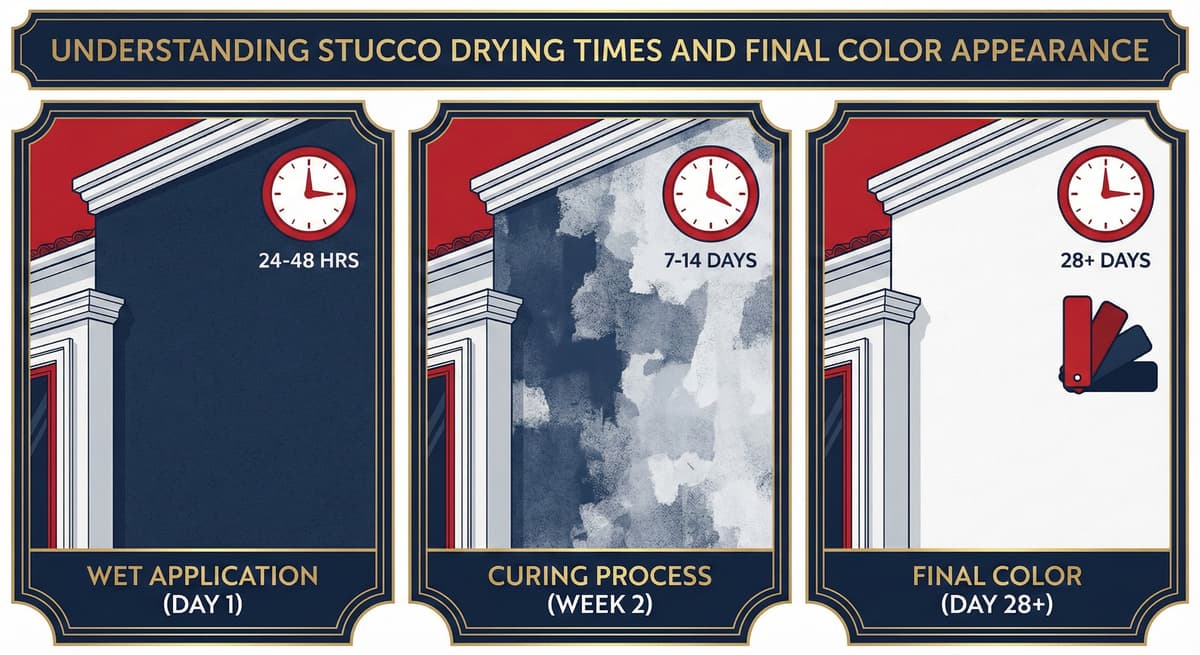
New stucco color coat often looks darker, uneven, or different from the sample immediately after application. That does not always mean the wrong color was used. Cementitious finish coat changes appearance as water leaves the surface and as the cement hydrates and cures.
The safest rule is simple: do not make final color decisions while the wall is still damp.
Free Assessment
Noticing Stucco Damage?
Get a free on-site assessment from a licensed contractor. $0 deposit, no obligation.
GET FREE ASSESSMENTDrying vs. Curing
Drying and curing are related, but they are not the same thing.
- Drying: Water leaves the finish, changing how the color reflects light.
- Curing: Cement hydrates and gains strength over time. Proper moisture conditions matter for cementitious plaster performance.
A wall can look dry before the cementitious material has completed its longer curing process. Weather, wall exposure, texture, thickness, and material type all affect timing.
Why Wet Stucco Looks Darker
Wet cementitious stucco usually looks darker because water changes how the surface absorbs and reflects light. As the finish dries, the color normally lightens. The amount of change varies by color, aggregate, pigment, texture, and weather.
Avoid promising an exact number of “shades” because every finish behaves differently. A small sample panel is a better expectation-setting tool than a printed color chip.
Typical Timing Expectations
Many cementitious finish coats begin to show a more realistic color after the first few days, but the final appearance can take longer under cool, humid, shaded, or coastal conditions. Acrylic finishes often dry more uniformly, but they still depend on manufacturer instructions and weather conditions.
| Condition | What to Expect |
|---|---|
| Fresh cement finish | Often darker and less uniform while damp |
| Cool or humid weather | Slower drying and longer color-evaluation window |
| Hot wind or direct sun | Faster drying, higher risk of uneven appearance if not controlled |
| Heavy texture | May hold moisture longer in recesses |
| Acrylic finish | Follow manufacturer drying and cure guidance |
What Causes Color Variation?
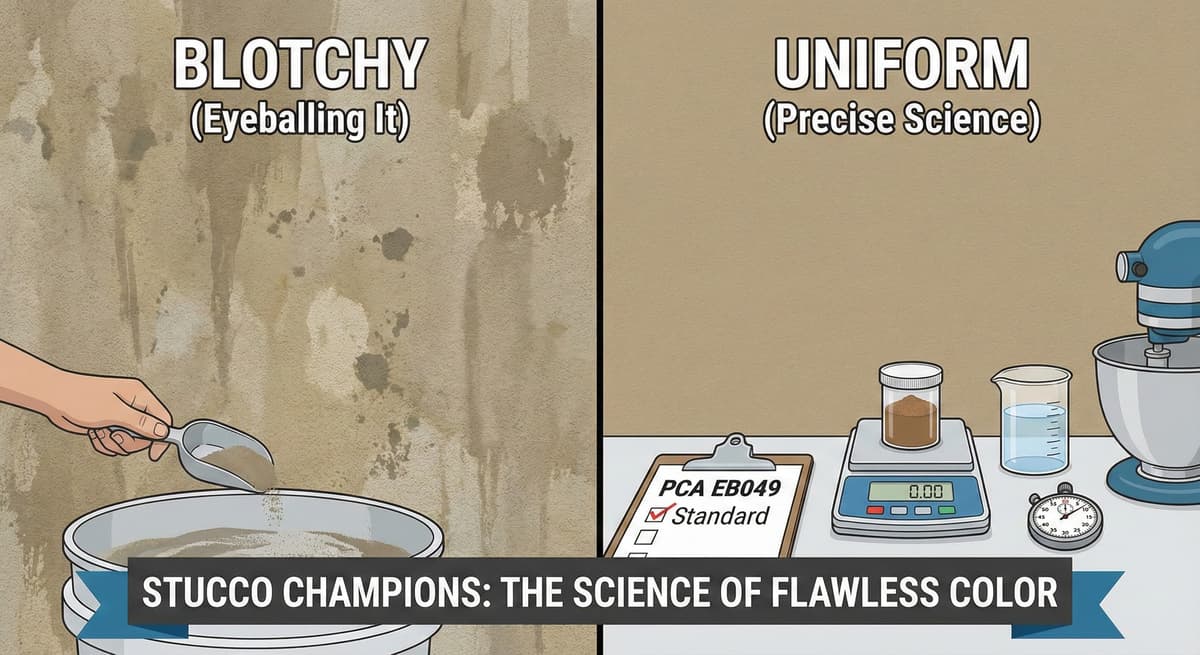
The PCA manual connects finish-coat color variation to several workmanship and substrate conditions. Common causes include:
- Uneven base-coat suction or moisture.
- Different water amounts between batches.
- Adding water to colored finish during finishing.
- Changing tools, technique, or timing across a wall.
- Sun and shade differences during application.
- Stopping in the middle of a visible panel.
Some mottling is normal in traditional cementitious stucco. It becomes a problem when it is outside the approved sample or caused by preventable jobsite variation.
When Should You Judge the Final Color?
Wait until the wall is visually dry across the full elevation and weather has stabilized. If the wall has been exposed to fog, rain, irrigation overspray, or shaded damp conditions, wait longer before judging the color. Compare the wall to the approved sample panel in similar lighting.
Do not judge color from one wet corner, one shaded wall, or a photo taken under unusual lighting.
Can the Color Be Corrected?
Sometimes. If the wall is sound but the color is uneven or lighter/darker than expected, options may include a compatible fog coat, an additional finish treatment, or a compatible coating. The correct option depends on whether the finish is cementitious, acrylic, painted, contaminated, or still curing.
Color correction should not begin until the cause is understood. If the wall is wet because of a leak, irrigation, failed flashing, or trapped moisture, fix that source first.
How to Prevent Color Surprises
- Approve a sample panel made with the same materials and method planned for the project.
- Keep water amounts and mixing time consistent.
- Prepare and dampen the base coat consistently when required.
- Avoid adding water to the surface during finishing unless the product/system allows it.
- Plan wall breaks at natural stopping points.
- Protect fresh work from extreme sun, wind, rain, or cold as required.
Bottom Line
Fresh stucco color should not be judged immediately after application. Cementitious color coat often lightens as it dries, and final appearance depends on curing, weather, base-coat moisture, and workmanship. Use sample panels, control application conditions, and wait for the wall to dry before deciding whether color correction is needed.
A note on fog coat: Stucco Champions does not fog coat older or previously repaired walls. On aged stucco a fog coat telegraphs existing cracks, patch lines, and prior repairs, and it bonds poorly to a rough, chalky, or previously coated surface, so it can dust off or peel. Those walls get a fresh finish coat (re-stucco) instead.
Frequently Asked Questions About Stucco
How much does stucco repair cost in Orange County and Los Angeles?+
Small stucco patches start at $650, larger repairs start at $1,200, and re-stucco of a single elevation up to about 400 sq ft runs about $1,400 - $5,900+. The exact cost depends on the damage type (hairline cracks, water damage, delamination, weep screed failure), the square footage involved, and whether the original three-coat or one-coat stucco system needs to be matched. Stucco Champions provides fixed-price written estimates after a free on-site assessment — no hourly billing, no surprise change orders. See our stucco repair cost guide for detailed pricing by repair type.
How long does stucco last in Southern California?+
Properly installed three-coat stucco lasts 50-80+ years in Southern California's climate. The most common failure points aren't the stucco itself — they're the supporting components: corroded weep screed, deteriorated building paper behind the stucco, and improperly sealed window flashing. Most "stucco failures" are actually moisture-intrusion failures that start at one of these points. Annual visual inspection catches problems before they spread, which is why we offer free weep screed assessments for homeowners in our service area.
Can I repair stucco myself, or do I need a contractor?+
Hairline cracks under 1/8 inch wide can be sealed with elastomeric caulk by a homeowner. Anything larger — pattern cracks, delamination (where stucco pulls away from the wall), water-damaged areas, or chimney/window leak repairs — requires a licensed contractor. Improper DIY repair on these is the #1 cause of repeat failures because the underlying cause (usually moisture) isn't addressed. California's CSLB requires a license for any stucco work over $500. Looking for a highly-rated stucco contractor in Southern California? We are a CSLB-licensed and insured team ready to help.
How do I know if I need stucco repair vs. full re-stucco?+
If less than 30% of an elevation has visible damage, repair is the right call. If you see large areas of cracking, multiple zones of delamination, or the underlying paper and lath have rotted across an entire wall, full re-stucco of that elevation is more cost-effective long-term. Our free assessment includes a moisture survey and lath inspection so you get a defensible recommendation either way — not just a quote pushing whichever option costs more.
Do you offer warranties on stucco work?+
Approved stucco repair work includes a 1-year written workmanship warranty. The applicable terms are documented with the approved scope. Stucco Champions is CSLB licensed and insured; verify license #1122006 through the official state lookup. Request a free estimate to review the scope and warranty terms before you sign.
How long does a stucco repair take?+
Most patch repairs are completed in 1-2 days, including a 24-hour cure time before texture matching and color application. Full re-stucco of a single elevation runs 5-7 working days because each coat (scratch, brown, finish) needs to cure properly before the next is applied. We schedule around weather — California stucco needs daytime temperatures above 50°F with no rain forecast for at least 24 hours after each coat. Our crew shows up on time, every time.
Stucco Diagnostics & Calculators
Diagnose specific wall damage symptoms or estimate job scope with our free guides and calculators.
Related Professional Services
A licensed assessment identifies the cause before the finish is opened or replaced.