STO Stucco Color Charts: Understanding LRV and Heat
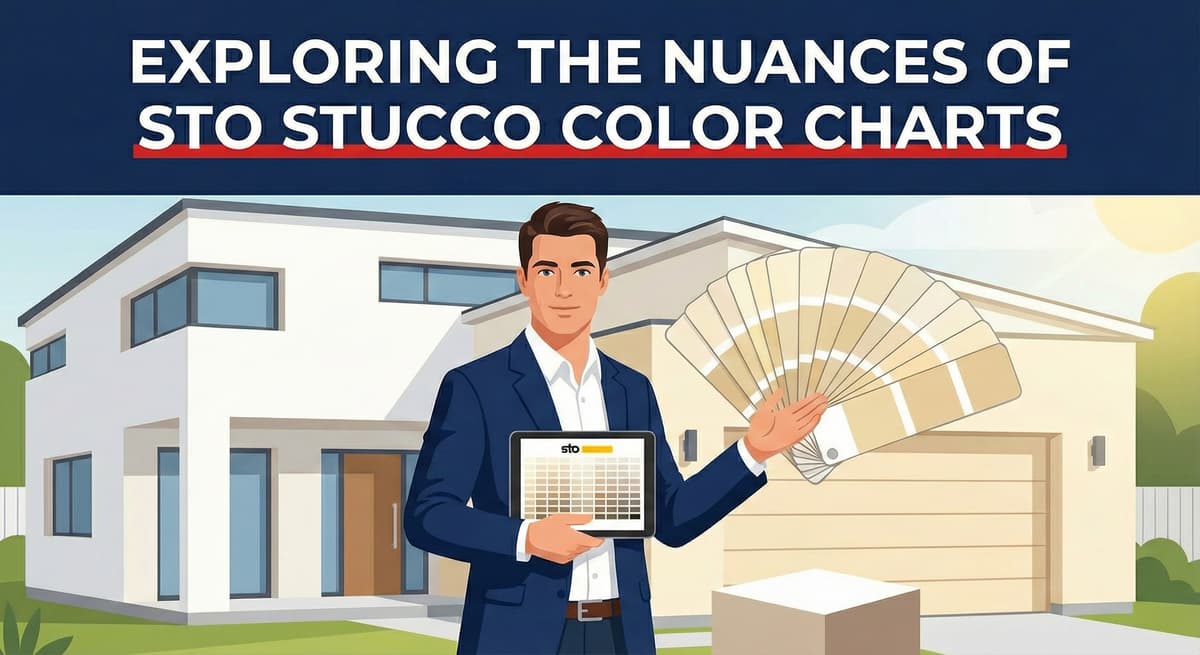
In the world of high-performance exterior coatings, STO Corp. is a heavyweight. Often used in commercial projects and modern custom estates, STO finishes (typically acrylic or silicone-enhanced) offer a color range that traditional cement simply cannot match. Their "Color System" is vast, but it can be overwhelming for a homeowner trying to pick a shade for their renovation.
Unlike traditional brands which focus strictly on muted earth tones, STO offers over 800 vibrant hues. This guide breaks down their collections, explains the critical LRV rating, and helps you choose the right STO color for the Southern California sun.
1. The STO Color Collections
STO organizes their massive library into targeted groups. Knowing which collection to look at saves time.
Free Assessment
Noticing Stucco Damage?
Get a free on-site assessment from a licensed contractor. $0 deposit, no obligation.
GET FREE ASSESSMENTThe "STO Color 800" (The Master List)
This is the complete spectrum. It contains 800 distinct shades, ranging from brilliant whites to deep, saturated blues, blacks, and reds.
- Best For: Modern design, corporate branding matching (commercial), and specific architectural accents.
The "Classic" Collection
A curated list of the 42 most popular colors in North America. These are safe, proven earth tones (beiges, greys, creams) that work well on residential facades. If you are looking for a timeless, elegant look without the risk of being too bold, start here.
The "Southwest" Collection
Specifically designed for our region. This collection features 24 colors inspired by desert landscapes—think Terracotta, Sandstone, and Sage. These colors are formulated specifically to resist the intense UV exposure of the Southwestern United States.
2. Technical Constraint: LRV (Light Reflectance Value)
When browsing STO charts, you will see a number next to each color called LRV. This is not just aesthetic data; it is a critical structural warning.
LRV measures the percentage of light a color reflects.
- High LRV (100): Pure White. Reflects maximum heat. Structurally safe.
- Low LRV (0): Pure Black. Absorbs maximum heat. Dangerous.
If you choose a dark color with an LRV below 20 in Southern California, the wall surface can reach temperatures exceeding 160°F in direct sunlight. This causes severe thermal expansion, leading to cracking in the underlying stucco base coat or warping of EIFS foam. STO requires specific "X-Black" heat-reflective technology for dark colors.
3. The Digital Trap
STO offers excellent digital tools, including downloadable palettes for CAD and Photoshop. While great for architects creating renderings, do not use your computer screen to pick the final color.
Stucco is textured; computer screens are flat. The thousands of tiny shadows cast by the physical texture makes the color appear significantly darker on the wall than on a backlit monitor. We strongly recommend ordering a "Wet Sample" bucket or a physical chip card from a local distributor and applying it to a test wall before approving the color.
Frequently Asked Questions About Stucco
How much does stucco repair cost in Orange County and Los Angeles?+
Stucco repair typically ranges from $500 for minor crack patching to $5,000+ for full re-stucco of a single elevation. The exact cost depends on the damage type (hairline cracks, water damage, delamination, weep screed failure), the square footage involved, and whether the original three-coat or one-coat stucco system needs to be matched. Stucco Champions provides fixed-price written estimates after a free on-site assessment — no hourly billing, no surprise change orders. See our stucco repair cost guide for detailed pricing by repair type.
How long does stucco last in Southern California?+
Properly installed three-coat stucco lasts 50-80+ years in Southern California's climate. The most common failure points aren't the stucco itself — they're the supporting components: corroded weep screed, deteriorated building paper behind the stucco, and improperly sealed window flashing. Most "stucco failures" are actually moisture-intrusion failures that start at one of these points. Annual visual inspection catches problems before they spread, which is why we offer free weep screed assessments for homeowners in our service area.
Can I repair stucco myself, or do I need a contractor?+
Hairline cracks under 1/8 inch wide can be sealed with elastomeric caulk by a homeowner. Anything larger — pattern cracks, delamination (where stucco pulls away from the wall), water-damaged areas, or chimney/window leak repairs — requires a licensed contractor. Improper DIY repair on these is the #1 cause of repeat failures because the underlying cause (usually moisture) isn't addressed. California's CSLB requires a license for any stucco work over $500. Looking for a highly-rated stucco contractor in Southern California? We are a CSLB-licensed and insured team ready to help.
How do I know if I need stucco repair vs. full re-stucco?+
If less than 30% of an elevation has visible damage, repair is the right call. If you see large areas of cracking, multiple zones of delamination, or the underlying paper and lath have rotted across an entire wall, full re-stucco of that elevation is more cost-effective long-term. Our free assessment includes a moisture survey and lath inspection so you get a defensible recommendation either way — not just a quote pushing whichever option costs more.
Do you offer warranties on stucco work?+
Approved stucco repair work includes a 1-year written workmanship warranty. The applicable terms are documented with the approved scope. Stucco Champions is CSLB licensed and insured; verify license #1122006 through the official state lookup. Request a free estimate to review the scope and warranty terms before you sign.
How long does a stucco repair take?+
Most patch repairs are completed in 1-2 days, including a 24-hour cure time before texture matching and color application. Full re-stucco of a single elevation runs 5-7 working days because each coat (scratch, brown, finish) needs to cure properly before the next is applied. We schedule around weather — California stucco needs daytime temperatures above 50°F with no rain forecast for at least 24 hours after each coat. Our crew shows up on time, every time.
Stucco Diagnostics & Calculators
Diagnose specific wall damage symptoms or estimate job scope with our free guides and calculators.
Related Professional Services
A licensed assessment identifies the cause before the finish is opened or replaced.