Changing Stucco Color Without Paint: The Fog Coat Guide
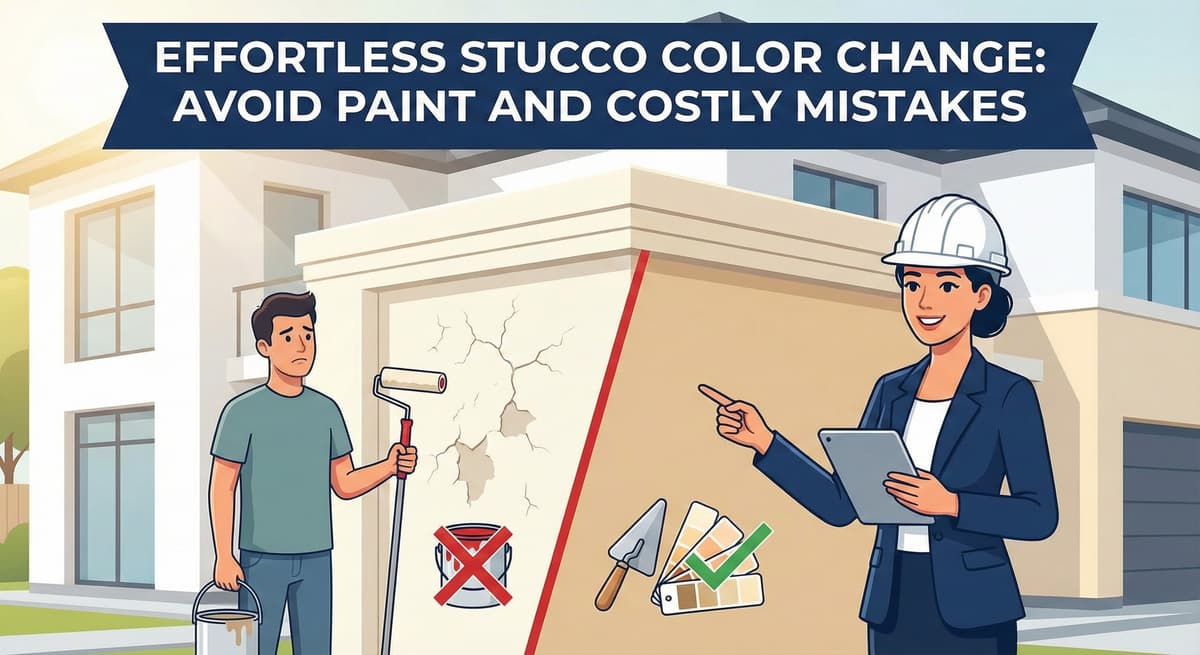
Painting traditional stucco with standard exterior acrylic paint is often a massive mistake. It covers up the beautiful natural sand texture, permanently seals the pores, and initiates a lifetime maintenance cycle of peeling, scraping, and repainting. But what if you hate the color of your home?
You can change the color of traditional cement stucco without painting it. The professional solution lies in Cementitious Stains (commonly known as Fog Coats). These materials soak directly into the wall rather than sitting on top as a film, preserving the breathability and raw texture of the masonry. This guide explains how to recolor your home the right way.
Stucco Champions does not offer fog coating as a standalone service. This article is informational content for homeowners comparing stucco color refresh options. We focus on stucco repair, patching, water damage repair, inspections, and related stucco restoration work.
1. The "Water Test": Are You Eligible?
Before you buy any material, you must determine if your stucco is physically porous. Fog coats and stains only work by absorption.
Splash a cup of clean water onto your stucco wall.
- It darkens and absorbs immediately? Your wall is open-pore traditional cement. You are eligible to stain or fog coat it.
- It beads up and runs off? Your wall is already sealed, heavily painted, or has a synthetic acrylic finish. You cannot use fog coat on this wall. The stain will just sit on the surface and wash off. You must re-paint or completely re-stucco.
Free Assessment
Noticing Stucco Damage?
Get a free on-site assessment from a licensed contractor. $0 deposit, no obligation.
GET FREE ASSESSMENT2. Option A: Fog Coat (The Industry Standard)
This is what professional plasterers use to correct color issues on brand-new homes or to recolor entire tracts.
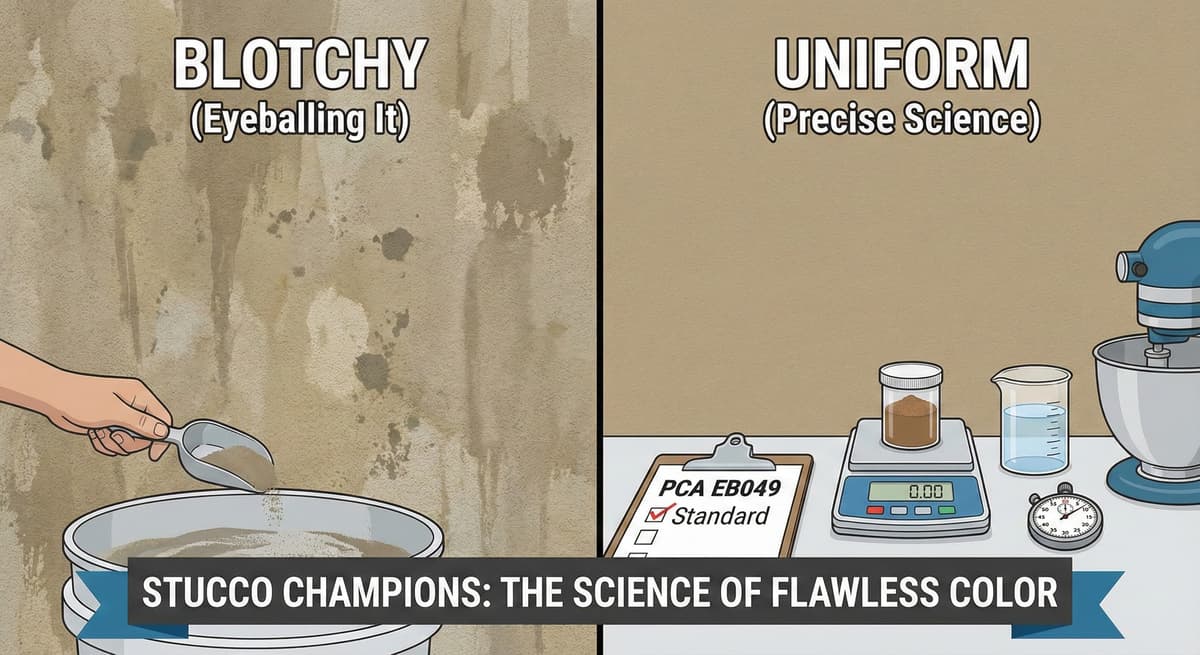
- What it is: A precise dry blend of White Portland cement, hydrated lime, and iron oxide color pigment (with absolutely no sand).
- How it works: It is mixed with water into a slurry and pneumatically sprayed onto the wall. It bonds integrally with the existing dry cement, effectively becoming a brand-new layer of the wall itself.
Pros & Cons
- Pros: Zero ongoing maintenance. It will literally never peel. It keeps the sharp, aggressive texture of the original sand finish completely visible. It allows the house to breathe, preventing mold inside the walls.
- Cons: Very limited color range (mostly earth tones). You generally cannot go lighter (e.g., turning a dark brown house blinding white). It works best for refreshing a faded color or darkening the existing tone.
Fog coat is a thin cementitious color layer. It recolors the wall, but it does not fill, hide, or resurface what is already there, so on an older home it will telegraph the existing issues: hairline cracks, old patch lines, previous repairs, and surface blemishes read straight through the fresh color and often stand out more than they did before.
There is a structural reason too. A fog coat only bonds as well as the surface it lands on, and it needs sound, clean, uniformly porous stucco to key into. When the wall underneath is in rough shape, the bond itself is weaker and the coat can dust off, peel, or re-crack over:
- Chalky or weathered surfaces, where the coat grabs a loose, powdery top layer instead of solid stucco.
- Drummy or delaminating areas that are already pulling away from the lath and take the new coat with them.
- Active cracks and old patches, where rigid cement re-cracks over moving joints and mismatched patch material absorbs unevenly.
- Previously painted or sealed spots, which cement cannot penetrate, so it has almost nothing to grip.
- Weak, over-sanded, or moisture-damaged base coats that cap the bond at a crumbly layer the coat can peel away with.
That is why Stucco Champions does not fog coat older or previously repaired homes. For those walls we recommend a fresh finish coat (re-stucco) so the surface is sound and uniform before it is colored.
3. Option B: Stucco Dyes (The Custom Tints)
Dyes are highly translucent liquid chemicals that penetrate extremely deep into the cement matrix.
- Best For: Creating a highly mottled, "Old World" Tuscan look.
- The Risk: Dyes are incredibly unforgiving. If the wall has varying porosity (for example, smooth patch repairs next to an original rough wall), the dye will absorb wildly unevenly, creating dark, ugly blotches. We only recommend dyes for experienced faux-finish applicators or rustic designs where heavy variation is specifically desired.
4. Why "No Paint" Matters
Why go through this trouble instead of just rolling on a cheap bucket of latex paint?
- Permeability (Breathability): Stucco is designed to get wet and dry out. Paint creates a rubber film that traps moisture behind the wall, rotting the wood framing. Fog coat leaves the cement pores completely open.
- Longevity: Standard paint lasts 7-10 years in the sun before it chalks, fades, or peels. A proper fog coat lasts 15-30 years and fades naturally, much like natural stone.
5. The Application Protocol
Applying Fog Coat is drastically different than rolling paint.
- Clean: Aggressively pressure wash the wall to remove dirt, grease, and oxidation that would block cement absorption.
- Mist: Pre-wet the wall with a garden hose to cool the temperature down (this prevents the wall from instantly "flash drying" the wet fog coat).
- Spray: Apply the fog coat slurry with a pneumatic hopper sprayer or a high-quality pump sprayer in light, overlapping passes.
- Cure: Keep the newly sprayed wall lightly damp with a hose for 24 hours to allow the new cement to properly hydrate and bond.
Fog Coat dries drastically lighter than it looks when wet. It typically takes 3 to 4 full days of curing to reach its final, true color. Do not panic if it looks pitch black or extremely dark on day one. Always test a small, discreet 2x2 foot area first.
Conclusion: Respect the Masonry
Changing your stucco color without paint is the single best way to honor the material. It keeps your home breathable, drastically lowers your long-term maintenance costs, and maintains the authentic, high-end beauty of true plaster. If your home passes the water test, put down the paint roller and pick up the sprayer.
Frequently Asked Questions About Stucco
How much does stucco repair cost in Orange County and Los Angeles?+
Small stucco patches start at $650, larger repairs start at $1,200, and re-stucco of a single elevation up to about 400 sq ft runs about $1,400 - $5,900+. The exact cost depends on the damage type (hairline cracks, water damage, delamination, weep screed failure), the square footage involved, and whether the original three-coat or one-coat stucco system needs to be matched. Stucco Champions provides fixed-price written estimates after a free on-site assessment — no hourly billing, no surprise change orders. See our stucco repair cost guide for detailed pricing by repair type.
How long does stucco last in Southern California?+
Properly installed three-coat stucco lasts 50-80+ years in Southern California's climate. The most common failure points aren't the stucco itself — they're the supporting components: corroded weep screed, deteriorated building paper behind the stucco, and improperly sealed window flashing. Most "stucco failures" are actually moisture-intrusion failures that start at one of these points. Annual visual inspection catches problems before they spread, which is why we offer free weep screed assessments for homeowners in our service area.
Can I repair stucco myself, or do I need a contractor?+
Hairline cracks under 1/8 inch wide can be sealed with elastomeric caulk by a homeowner. Anything larger — pattern cracks, delamination (where stucco pulls away from the wall), water-damaged areas, or chimney/window leak repairs — requires a licensed contractor. Improper DIY repair on these is the #1 cause of repeat failures because the underlying cause (usually moisture) isn't addressed. California's CSLB requires a license for any stucco work over $500. Looking for a highly-rated stucco contractor in Southern California? We are a CSLB-licensed and insured team ready to help.
How do I know if I need stucco repair vs. full re-stucco?+
If less than 30% of an elevation has visible damage, repair is the right call. If you see large areas of cracking, multiple zones of delamination, or the underlying paper and lath have rotted across an entire wall, full re-stucco of that elevation is more cost-effective long-term. Our free assessment includes a moisture survey and lath inspection so you get a defensible recommendation either way — not just a quote pushing whichever option costs more.
Do you offer warranties on stucco work?+
Approved stucco repair work includes a 1-year written workmanship warranty. The applicable terms are documented with the approved scope. Stucco Champions is CSLB licensed and insured; verify license #1122006 through the official state lookup. Request a free estimate to review the scope and warranty terms before you sign.
How long does a stucco repair take?+
Most patch repairs are completed in 1-2 days, including a 24-hour cure time before texture matching and color application. Full re-stucco of a single elevation runs 5-7 working days because each coat (scratch, brown, finish) needs to cure properly before the next is applied. We schedule around weather — California stucco needs daytime temperatures above 50°F with no rain forecast for at least 24 hours after each coat. Our crew shows up on time, every time.
Stucco Diagnostics & Calculators
Diagnose specific wall damage symptoms or estimate job scope with our free guides and calculators.
Related Professional Services
A licensed assessment identifies the cause before the finish is opened or replaced.