Acrylic Stucco Textures: Choosing Fine, Medium, or Coarse Sand
In the evolution of exterior cladding, Acrylic Stucco (often called Synthetic Finish) has revolutionized texture consistency. Unlike traditional cement which relies on heavy trowel techniques, acrylics are essentially high-performance, aggregate-infused coatings that cure by evaporation.
Because the material is mixed in a factory, the sand aggregate size is precise. This allows homeowners and architects to dial in the exact roughness or smoothness of the home’s skin. This guide breaks down the specific texture grades available in acrylic systems.
1. The Science of Aggregate: Controlling the Grit
Acrylic stucco textures are defined by the size of the aggregate (crushed quartz or silica) suspended in the bucket. The larger the rock, the heavier the texture.
Free Assessment
Noticing Stucco Damage?
Get a free on-site assessment from a licensed contractor. $0 deposit, no obligation.
GET FREE ASSESSMENTFine Aggregate (1.0mm)
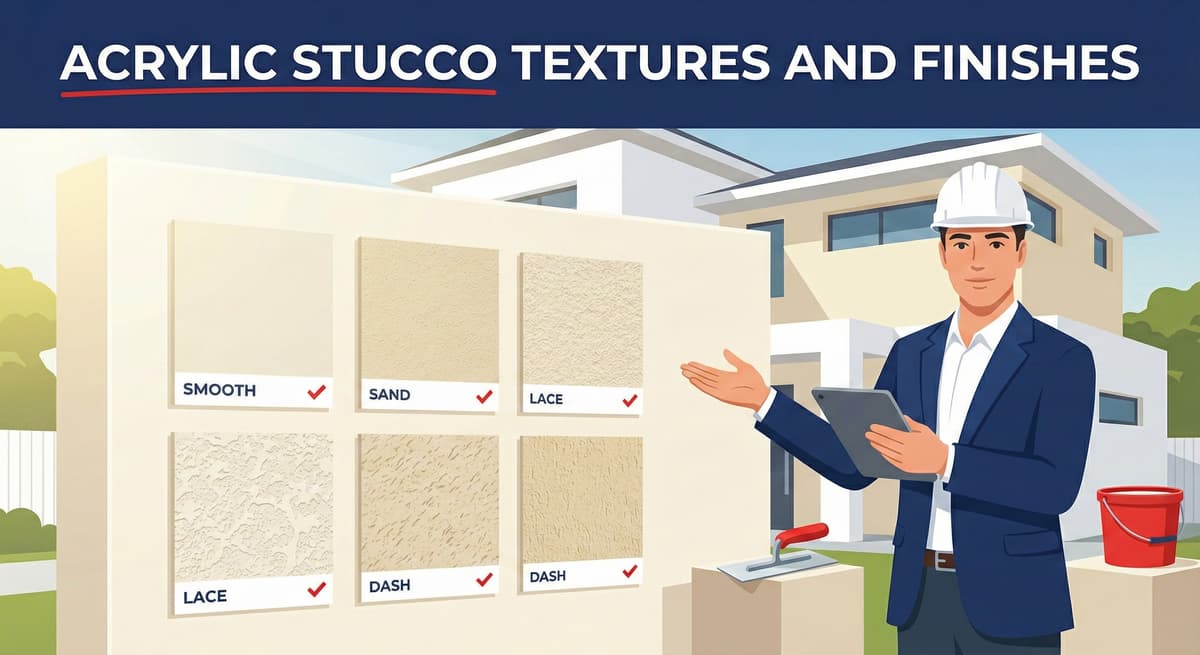
The Look: A subtle, sandpaper-like finish. It creates a highly uniform, modern appearance that mimics a light, sponge-floated sand finish.
- Best For: Contemporary homes or commercial buildings where clean, crisp lines are the priority.
- Pros: Easier to clean (traps less dirt) and looks incredibly sleek.
- Cons: Because it is applied so thin (approx 1/16"), it "telegraphs" imperfections. The brown coat underneath must be rod-straight and perfectly flat; otherwise, every wave and divot in the wall will be visible.
Medium Aggregate (1.5mm)
The Look: The industry standard for residential homes. It balances smoothness with enough grit to create a classic stucco shadow line.
- Best For: Standard residential renovations. It provides enough depth to look like traditional stucco but with the flawless color consistency of acrylic.
- Pros: Highly forgiving. The extra thickness hides minor imperfections in the base coats.
Coarse Aggregate (3.0mm) / "Swirl"
The Look: Heavy, rugged, and distinct. The large stones create deep pockets and shadows.
- Best For: Mediterranean or Rustic designs where visual "mass" and heavy texture are desired. Plasterers often apply this in a circular motion to create "worm" tracks or swirl patterns.
- Cons: Harder to maintain. The deep crevices trap dust, exhaust soot, and spiderwebs, requiring much more frequent pressure washing.
2. Specialty Custom Textures
Beyond standard factory aggregate sizes, acrylics can be manipulated on the wall to create custom Old World looks.
- Freestyle / Skip Trowel: Even though acrylic is thinner than cement, skilled plasterers can layer it to create a heavy "Knockdown" or "Lace" texture. This bridges the gap between the durability of acrylic and the rustic look of Spanish architecture.
- Multi-Color / Antiquing: Because acrylic colors are highly consistent, plasterers can layer two different colored finishes to create a mottled, antiqued effect that mimics naturally aged Tuscan plaster.
3. The Decision Matrix
When selecting your texture grade, always consider the neighborhood environment. If you live on a busy street with heavy traffic exhaust or in an area prone to windblown dust, opt for a Fine or Medium texture. They wash off easily. Heavy coarse textures will look dirty very quickly in urban environments.
Frequently Asked Questions About Stucco
How much does stucco repair cost in Orange County and Los Angeles?+
Stucco repair typically ranges from $500 for minor crack patching to $5,000+ for full re-stucco of a single elevation. The exact cost depends on the damage type (hairline cracks, water damage, delamination, weep screed failure), the square footage involved, and whether the original three-coat or one-coat stucco system needs to be matched. Stucco Champions provides fixed-price written estimates after a free on-site assessment — no hourly billing, no surprise change orders. See our stucco repair cost guide for detailed pricing by repair type.
How long does stucco last in Southern California?+
Properly installed three-coat stucco lasts 50-80+ years in Southern California's climate. The most common failure points aren't the stucco itself — they're the supporting components: corroded weep screed, deteriorated building paper behind the stucco, and improperly sealed window flashing. Most "stucco failures" are actually moisture-intrusion failures that start at one of these points. Annual visual inspection catches problems before they spread, which is why we offer free weep screed assessments for homeowners in our service area.
Can I repair stucco myself, or do I need a contractor?+
Hairline cracks under 1/8 inch wide can be sealed with elastomeric caulk by a homeowner. Anything larger — pattern cracks, delamination (where stucco pulls away from the wall), water-damaged areas, or chimney/window leak repairs — requires a licensed contractor. Improper DIY repair on these is the #1 cause of repeat failures because the underlying cause (usually moisture) isn't addressed. California's CSLB requires a license for any stucco work over $500. Looking for a highly-rated stucco contractor in Southern California? We are a CSLB-licensed and insured team ready to help.
How do I know if I need stucco repair vs. full re-stucco?+
If less than 30% of an elevation has visible damage, repair is the right call. If you see large areas of cracking, multiple zones of delamination, or the underlying paper and lath have rotted across an entire wall, full re-stucco of that elevation is more cost-effective long-term. Our free assessment includes a moisture survey and lath inspection so you get a defensible recommendation either way — not just a quote pushing whichever option costs more.
Do you offer warranties on stucco work?+
Approved stucco repair work includes a 1-year written workmanship warranty. The applicable terms are documented with the approved scope. Stucco Champions is CSLB licensed and insured; verify license #1122006 through the official state lookup. Request a free estimate to review the scope and warranty terms before you sign.
How long does a stucco repair take?+
Most patch repairs are completed in 1-2 days, including a 24-hour cure time before texture matching and color application. Full re-stucco of a single elevation runs 5-7 working days because each coat (scratch, brown, finish) needs to cure properly before the next is applied. We schedule around weather — California stucco needs daytime temperatures above 50°F with no rain forecast for at least 24 hours after each coat. Our crew shows up on time, every time.
Stucco Diagnostics & Calculators
Diagnose specific wall damage symptoms or estimate job scope with our free guides and calculators.
Related Professional Services
A licensed assessment identifies the cause before the finish is opened or replaced.