Finish Coat Stucco: Texture, Thickness & Application Guide

Written by Stucco Champions - Southern California's Authority on Exterior Plastering.
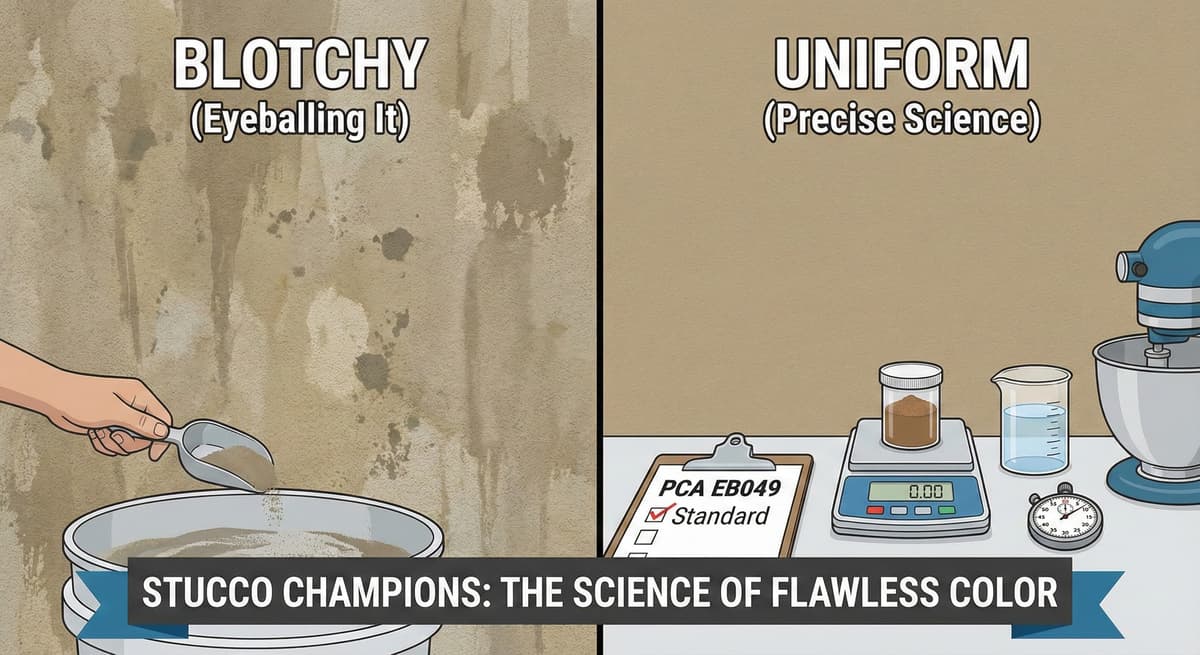
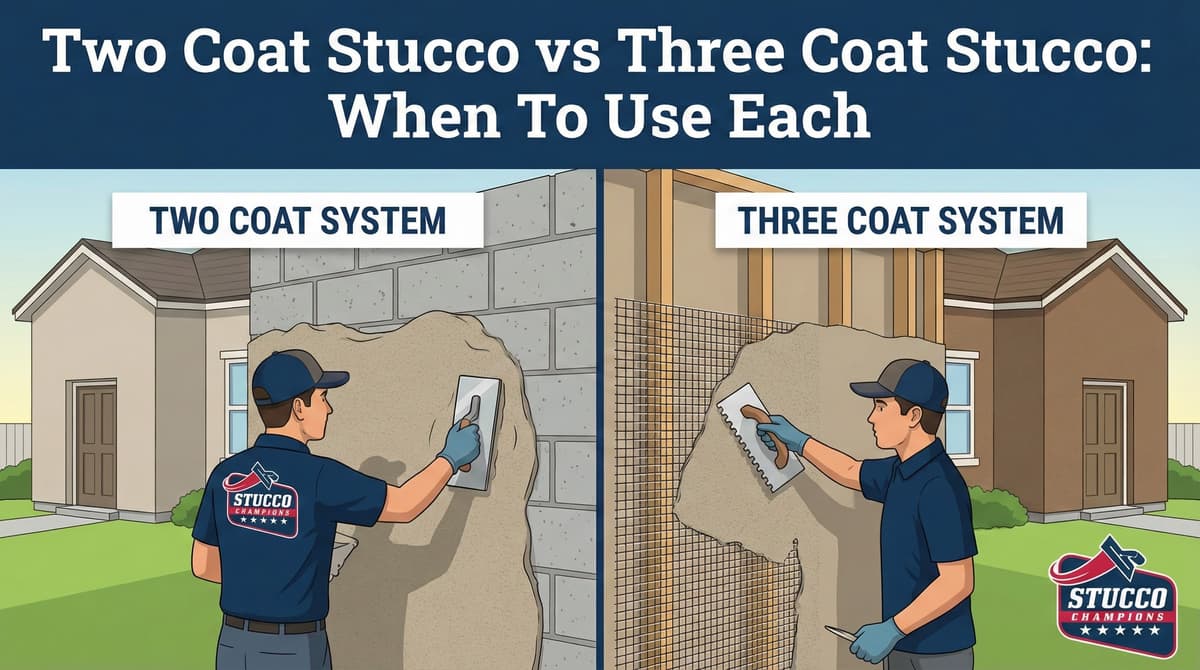
The finish coat is the most visible layer of your home's exterior cladding, yet it is also the thinnest. In a typical three-coat stucco assembly, the thick scratch and brown base coats provide the main wall build, while the finish coat, also called the color coat, provides the final texture, color, weather exposure surface, and curb appeal. Getting this outer layer right requires a technical understanding of aggregate sizing, plaster chemistry, and application timing.
At Stucco Champions, we don't just "spread mud." We match the finish coat stucco thickness to the specific material selected - acrylic or traditional cement - so the wall can cure, bond, and texture correctly in the Southern California climate. This guide breaks down the technical specifications of finish coat application.
What Is Finish Coat Stucco?
Finish coat stucco is the final visible coat applied over the prepared base coat. It is the layer that determines whether the wall looks smooth, sanded, lace-textured, dashed, or heavily textured. On traditional cement stucco, this final coat is often called the color coat because pigment and aggregate are mixed into the plaster. On acrylic systems, the finish is usually a factory-mixed bucket product with aggregate already suspended in the binder.
The finish coat is not meant to correct major wall defects. If the brown coat is wavy, the wall is cracked, or old stucco is loose, the final finish will usually reveal those problems instead of hiding them. For damaged walls, start with stucco repair or stucco patching before choosing the final texture.
Free Assessment
Noticing Stucco Damage?
Get a free on-site assessment from a licensed contractor. $0 deposit, no obligation.
GET FREE ASSESSMENT1. Understanding Stucco Thickness: The "Aggregate Rule"
A common misconception among homeowners is that a thicker finish coat is automatically more durable. In plastering science, this is actually false.
The Rule: The thickness of a finish coat is dictated by the size of the largest aggregate - sand, marble dust, or quartz grains - in the mix. You cannot trowel a finish coat thinner than its aggregate size without the trowel dragging and tearing the plaster. Conversely, you should not apply it thicker than the aggregate size, or the wet plaster will slump, sag, and crack.
According to ASTM C926 guidelines, finish coats typically range from 1/16 inch to 1/4 inch in thickness, depending on the texture selected.
2. Acrylic Finish Coats (Synthetic)
Acrylic finishes are sold pre-mixed in buckets. They utilize crushed quartz or marble aggregate suspended in a 100% acrylic polymer binder. Because they cure by water evaporation, or drying, rather than cement hydration, they are applied very thin, to the exact thickness of the aggregate grains.
| Texture Grade | Aggregate Size | Standard Applied Thickness |
|---|---|---|
| Super Fine | 0.5 mm | 1/32" - 1/16" |
| Fine / Sand | 1.0 mm | 1/16" |
| Medium | 1.5 mm | 1/16" - 1/8" |
| Coarse / Swirl | 3.0 mm | 1/8" |
Because acrylics are factory-mixed, their viscosity is chemically calibrated. Plasterers should not water down an acrylic finish to stretch coverage. Doing so can dilute the acrylic binders, weaken the bond, and lead to color splotchiness or premature peeling.
3. Traditional Finish Coats (Cement-Based)
Traditional stucco color coats are sold as dry, pre-pigmented bags of cement and hydrated lime, mixed with sand and water on-site. They offer more flexibility in thickness but require high skill to control color and texture consistency.
- Fine Finishes (20/30 Plaster Sand): Applied approximately 1/16" to 1/8" thick. This is the standard sand size used for Santa Barbara Smooth finishes.
- Medium / Lace Finishes (16/20 Plaster Sand): Applied up to 3/16" thick. The extra bulk allows the plasterer to create classic knockdown or lace textures.
- Coarse / Dash Finishes (16 Mesh or Larger): Can be built up to 1/4" or 5/16" thick using a mechanical dash gun or sprayer.
Thicker is not better for cement-based finishes. If a traditional finish coat is applied too thick, especially beyond 1/4 inch or even 3/16 inch in a single pass, the high surface tension during cement hydration can cause crazing - a network of fine, spiderweb-like hairline cracks. High lime content in the job mix improves workability but increases shrinkage risk if applied in a heavy layer.
4. Pros and Cons of Finish Coat Thickness
Thick Coats (Coarse/Dash/Lace Textures):
- Pros: Excellent at hiding slight irregularities, waviness, or minor flaws in the underlying brown coat.
- Cons: High surface area collects dirt, dust, and coastal salt, making them harder to clean; more prone to shrinkage cracks if applied unevenly.
Thin Coats (Smooth/Fine Sand Finishes):
- Pros: Dense appearance, easier to wash, and cleaner modern curb appeal.
- Cons: Extremely unforgiving. Every minor wave, bump, or imperfection in the brown coat underneath can telegraph through. Preparing the base coat for a smooth finish requires extensive rodding and floating to keep the wall flat.
5. Single vs. Double-Back Application
For premium finish applications, professional plasterers utilize a double-back technique:
- First Pass (Tight Coat): A thin, tight coat of plaster is applied to fully cover the grey cement brown coat and seal the surface pores.
- Second Pass (Texture Coat): Plasterers immediately double back over the wet first pass, applying additional material to build and float the final texture.
This method supports uniform color coverage and water-shedding performance without overloading the wall with one heavy, sagging layer that would crack during drying.
When Finish Coat Stucco Problems Need Repair
Finish coat problems can be cosmetic, but they can also point to a deeper issue. Color blotching, texture mismatch, hairline crazing, peeling acrylic, or patch outlines may only affect the surface. Bulging, hollow stucco, staining, or cracks that run through the base coat are more serious.
If the finish coat is failing because the surface underneath is loose, wet, cracked, or contaminated, applying a new finish coat will not solve the problem. The wall should be inspected first, especially when there are moisture stains or repeated cracks. In those cases, a stucco inspection or moisture-focused repair may be needed before refinishing.
Conclusion: Matching Material to Design
The beauty and longevity of stucco depend on the precision of the application. By matching the trowel pressure and material thickness to the specific aggregate size, Stucco Champions delivers a finish that is both visually clean and appropriate for Southern California exposure.
Related Resources
To learn more about measuring and managing the thickness of exterior colors, read our guide on Understanding the Thickness of Stucco Color/Finish Coat. For base coat thickness rules, check out our Scratch and Brown Coat Thickness Guide. For broader finish selection, review best stucco finishes for homes.
Ready to Upgrade Your Home's Finish?
Installing smooth Santa Barbara finishes or applying synthetic acrylic coats requires experienced, licensed plasterers. Stucco Champions is a CSLB-licensed contractor serving Orange County and Los Angeles. Contact Stucco Champions today for a professional consultation and free estimate.
Frequently Asked Questions About Stucco
How much does stucco repair cost in Orange County and Los Angeles?+
Small stucco patches start at $650, larger repairs start at $1,200, and re-stucco of a single elevation up to about 400 sq ft runs about $1,400 - $5,900+. The exact cost depends on the damage type (hairline cracks, water damage, delamination, weep screed failure), the square footage involved, and whether the original three-coat or one-coat stucco system needs to be matched. Stucco Champions provides fixed-price written estimates after a free on-site assessment — no hourly billing, no surprise change orders. See our stucco repair cost guide for detailed pricing by repair type.
How long does stucco last in Southern California?+
Properly installed three-coat stucco lasts 50-80+ years in Southern California's climate. The most common failure points aren't the stucco itself — they're the supporting components: corroded weep screed, deteriorated building paper behind the stucco, and improperly sealed window flashing. Most "stucco failures" are actually moisture-intrusion failures that start at one of these points. Annual visual inspection catches problems before they spread, which is why we offer free weep screed assessments for homeowners in our service area.
Can I repair stucco myself, or do I need a contractor?+
Hairline cracks under 1/8 inch wide can be sealed with elastomeric caulk by a homeowner. Anything larger — pattern cracks, delamination (where stucco pulls away from the wall), water-damaged areas, or chimney/window leak repairs — requires a licensed contractor. Improper DIY repair on these is the #1 cause of repeat failures because the underlying cause (usually moisture) isn't addressed. California's CSLB requires a license for any stucco work over $500. Looking for a highly-rated stucco contractor in Southern California? We are a CSLB-licensed and insured team ready to help.
How do I know if I need stucco repair vs. full re-stucco?+
If less than 30% of an elevation has visible damage, repair is the right call. If you see large areas of cracking, multiple zones of delamination, or the underlying paper and lath have rotted across an entire wall, full re-stucco of that elevation is more cost-effective long-term. Our free assessment includes a moisture survey and lath inspection so you get a defensible recommendation either way — not just a quote pushing whichever option costs more.
Do you offer warranties on stucco work?+
Approved stucco repair work includes a 1-year written workmanship warranty. The applicable terms are documented with the approved scope. Stucco Champions is CSLB licensed and insured; verify license #1122006 through the official state lookup. Request a free estimate to review the scope and warranty terms before you sign.
How long does a stucco repair take?+
Most patch repairs are completed in 1-2 days, including a 24-hour cure time before texture matching and color application. Full re-stucco of a single elevation runs 5-7 working days because each coat (scratch, brown, finish) needs to cure properly before the next is applied. We schedule around weather — California stucco needs daytime temperatures above 50°F with no rain forecast for at least 24 hours after each coat. Our crew shows up on time, every time.
Stucco Diagnostics & Tools
Diagnose specific wall damage symptoms or estimate job scope with our free guides and calculators.
Related Professional Services
A licensed assessment identifies the cause before the finish is opened or replaced.