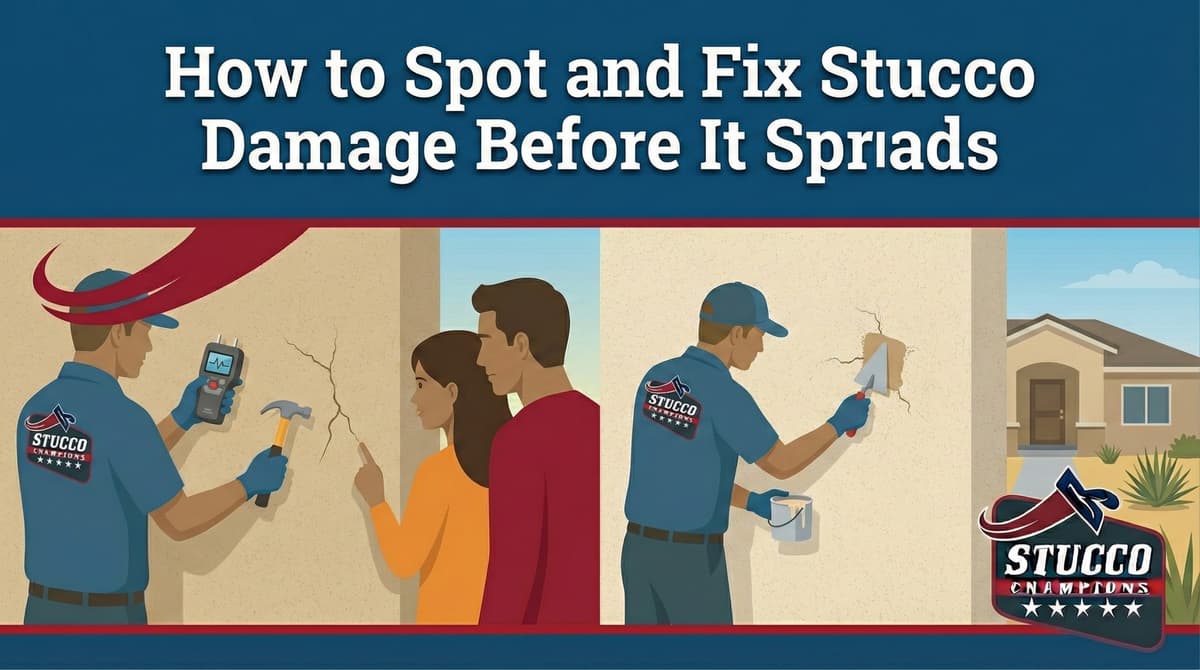
How to Spot and Fix Stucco Damage Before It Spreads
Written by Stucco Champions — Southern California’s Authority on Exterior Plastering.
Stucco is renowned for its exceptional durability in Southern California, acting as a fire-resistant, insect-proof, and thermal-regulating shell for millions of homes. However, it is not invincible. Like any cementitious system, it is susceptible to structural settling, seismic movement, impact damage, and moisture intrusion.
The key to home preservation is early detection. A small hairline crack is a minor maintenance task; a delaminated wall with hidden framing rot is a major structural repair. This guide outlines how to identify the early warning signs of stucco failure and the technical protocols for proper remediation.
1. Visual Diagnostics: Reading the Wall
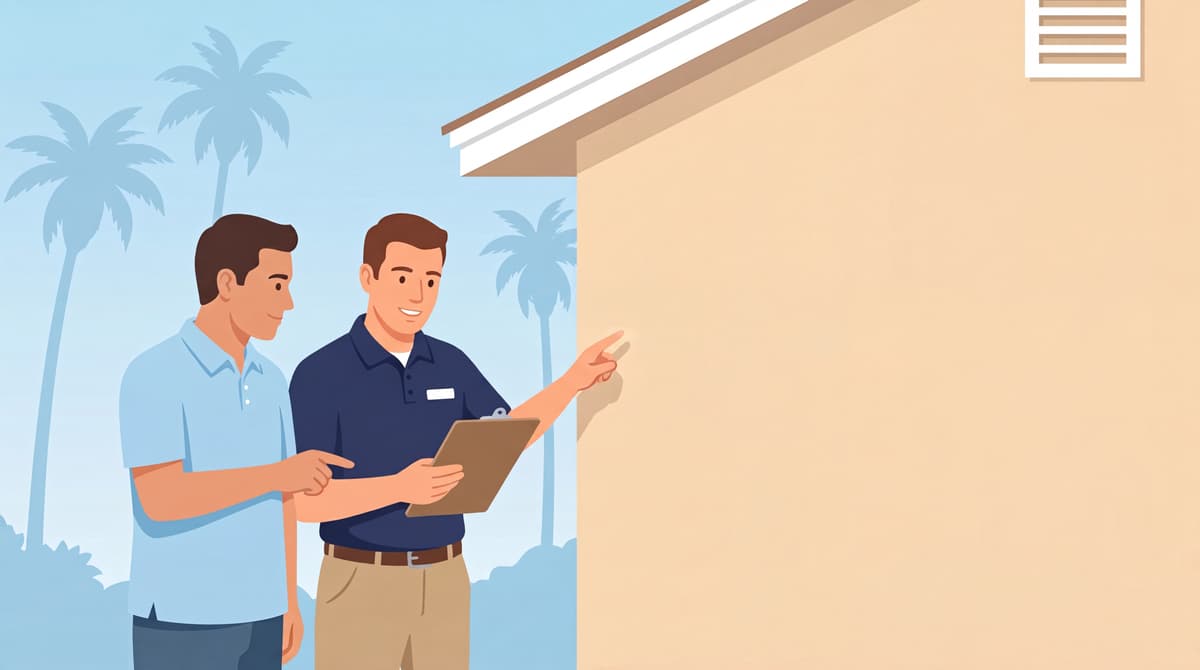
Stucco failure rarely happens overnight; it starts with subtle warning signs. Walk the perimeter of your building and inspect for these indicators:
- Hairline Cracks: Particularly diagonal cracks radiating outward from the corners of window and door frames (re-entrant corners).
- Efflorescence: White, powdery salt deposits on the surface indicating that liquid water is traveling through the cement plaster and evaporating.
- Blistering or Peeling Paint: Stains or bubbles in the paint film, suggesting moisture is trapped behind a non-breathable coating.
- Localized Bulging: Areas where the stucco surface pushes outward, indicating that the internal metal wire lath has rusted, expanded, and delaminated from the framing (rust jacking).
- Mold or Mildew: Dark green or black organic growth, particularly on north-facing walls that receive minimal sunlight, indicating constant dampness.
Free Assessment
Noticing Stucco Damage?
Get a free on-site assessment from a licensed contractor. $0 deposit, no obligation.
GET FREE ASSESSMENT2. Root Cause Analysis: Why Stucco Fails
A professional repair does not just cover up the damage; it addresses the underlying cause. According to the **Portland Cement Plaster/Stucco Manual (EB049)**, we must first diagnose whether cracks are static or active:
- Static Cracks: Usually caused by initial drying shrinkage in the cement base coats. Once formed, they do not expand and can be safely patched.
- Active Cracks: Driven by ongoing structural movement, foundation settling, or thermal cycles. If the wall is missing control joints (conforming to ASTM C1063), the stucco will continuously crack at its weakest points to relieve stress. Active cracks will tear through a standard patch unless relief joints are retrofitted.
- Water Intrusion Sources: Failed window flashing, missing kick-out flashing where rooflines meet walls, or blocked foundation weep screeds (read our guide to retrofit window leaks).
3. Stucco Repair vs. Recoat vs. Full Replacement
The severity of the damage governs the scope of the repair. Use this matrix to evaluate your options:
| Remediation Method | What It Involves | Best For |
|---|---|---|
| Targeted Stucco Repair | Surgical cut-out of the damaged area, lath replacement, zinc rust treatment, and a 3-coat patch. | Localized impact damage, minor window leaks, or rust stains. |
| Stucco Recoat (Re-Stucco) | Prepping the existing surface, applying a bonding agent, and installing a new finish color coat over the entire wall. | Widespread cosmetic staining, fading, or minor hairline cracking on otherwise structurally sound stucco. |
| Full Replacement (Tear-Off) | Complete demolition down to studs, structural framing repair, new sheathing, WRB, lath, and a new 3-coat system. | Widespread delamination, extensive framing dry rot, or failed EIFS/synthetic systems. |
4. Surgical Cut-Out Repair Protocol
When performing localized repairs, Stucco Champions follows a strict technical protocol to ensure the patch bonds permanently with the existing wall:
- Chasing the Damage: We saw-cut the stucco in a clean square or rectangle around the damaged area. We continue removing plaster until we expose clean, shiny, un-oxidized metal lath and sound framing.
- Lath Integration: If the wire is rusted, we cut it out. We treat the edges of the existing wire with a cold-galvanizing zinc spray. The new metal lath must overlap the existing lath by a minimum of 2 inches (per ASTM C1063) and be wired together to maintain reinforcement continuity.
- ASTM C926 Base Coats: We apply a nominal 3/8-inch scratch coat, moist-cure it for 48 hours, apply a 3/8-inch brown coat, and moist-cure it for 48 hours (refer to our stucco thickness and curing guide).
- Texture Blending: We float and texture the final 1/8-inch color coat to match the surrounding wall's aggregate pattern and density.
Frequently Asked Questions
Can stucco be repaired in wet or rainy weather?
No. Cement plaster requires specific temperature and moisture ranges to cure. Applying stucco during active rain washes away the binder, while high humidity prevents proper drying. We require a 48-hour dry window above 40°F to guarantee patch adhesion.
Will a stucco patch match the existing wall perfectly?
While our team specializes in custom texture and color matching, new cement plaster is chemically different from aged plaster and will initially look slightly different. For a completely seamless finish, we often recommend applying a breathable cementitious fog coat or elastomeric coating over the entire wall section once the patch has cured.
Do stucco repairs require building permits in Southern California?
Minor cosmetic patches do not require permits. However, major structural repairs—such as replacing sheathing, windows, or large sections of lath—require a permit and a mandatory lath inspection before plastering begins (read our stucco permit guide).
Conclusion: Proactive Envelope Care
Stucco damage is progressive. Catching minor cracks and blocked weep screeds early prevents water from reaching your home's structural framing. Proactive inspections and correct patching procedures are the key to keeping your home's envelope watertight and beautiful.
Related Resources
For more on lath and plastering standards, visit the Stucco Manufacturers Association (SMA). If you suspect water damage at the bottom of your walls, read our guide on foundation weep screed repairs.
Need a Professional Stucco Repair?
Don't let minor cracks turn into expensive wood rot. Stucco Champions is a CSLB-licensed contractor specializing in forensic stucco repair and moisture barrier restorations. Contact Stucco Champions today for a professional inspection and free estimate!
Looking for local assistance? Contact our stucco repair in Buena Park today.
A note on fog coat: Stucco Champions does not fog coat older or previously repaired walls. On aged stucco a fog coat telegraphs existing cracks, patch lines, and prior repairs, and it bonds poorly to a rough, chalky, or previously coated surface, so it can dust off or peel. Those walls get a fresh finish coat (re-stucco) instead.
Frequently Asked Questions About Stucco
How much does stucco repair cost in Orange County and Los Angeles?+
Small stucco patches start at $650, larger repairs start at $1,200, and re-stucco of a single elevation up to about 400 sq ft runs about $1,400 - $5,900+. The exact cost depends on the damage type (hairline cracks, water damage, delamination, weep screed failure), the square footage involved, and whether the original three-coat or one-coat stucco system needs to be matched. Stucco Champions provides fixed-price written estimates after a free on-site assessment — no hourly billing, no surprise change orders. See our stucco repair cost guide for detailed pricing by repair type.
How long does stucco last in Southern California?+
Properly installed three-coat stucco lasts 50-80+ years in Southern California's climate. The most common failure points aren't the stucco itself — they're the supporting components: corroded weep screed, deteriorated building paper behind the stucco, and improperly sealed window flashing. Most "stucco failures" are actually moisture-intrusion failures that start at one of these points. Annual visual inspection catches problems before they spread, which is why we offer free weep screed assessments for homeowners in our service area.
Can I repair stucco myself, or do I need a contractor?+
Hairline cracks under 1/8 inch wide can be sealed with elastomeric caulk by a homeowner. Anything larger — pattern cracks, delamination (where stucco pulls away from the wall), water-damaged areas, or chimney/window leak repairs — requires a licensed contractor. Improper DIY repair on these is the #1 cause of repeat failures because the underlying cause (usually moisture) isn't addressed. California's CSLB requires a license for any stucco work over $500. Looking for a highly-rated stucco contractor in Southern California? We are a CSLB-licensed and insured team ready to help.
How do I know if I need stucco repair vs. full re-stucco?+
If less than 30% of an elevation has visible damage, repair is the right call. If you see large areas of cracking, multiple zones of delamination, or the underlying paper and lath have rotted across an entire wall, full re-stucco of that elevation is more cost-effective long-term. Our free assessment includes a moisture survey and lath inspection so you get a defensible recommendation either way — not just a quote pushing whichever option costs more.
Do you offer warranties on stucco work?+
Approved stucco repair work includes a 1-year written workmanship warranty. The applicable terms are documented with the approved scope. Stucco Champions is CSLB licensed and insured; verify license #1122006 through the official state lookup. Request a free estimate to review the scope and warranty terms before you sign.
How long does a stucco repair take?+
Most patch repairs are completed in 1-2 days, including a 24-hour cure time before texture matching and color application. Full re-stucco of a single elevation runs 5-7 working days because each coat (scratch, brown, finish) needs to cure properly before the next is applied. We schedule around weather — California stucco needs daytime temperatures above 50°F with no rain forecast for at least 24 hours after each coat. Our crew shows up on time, every time.
Stucco Diagnostics & Calculators
Diagnose specific wall damage symptoms or estimate job scope with our free guides and calculators.
Related Professional Services
A licensed assessment identifies the cause before the finish is opened or replaced.