The Hydration Advantage: Curing Stucco in the Rain
Written by Stucco Champions — Southern California’s Authority on Exterior Plastering.
The Hydration Advantage: Curing Stucco in the Rain
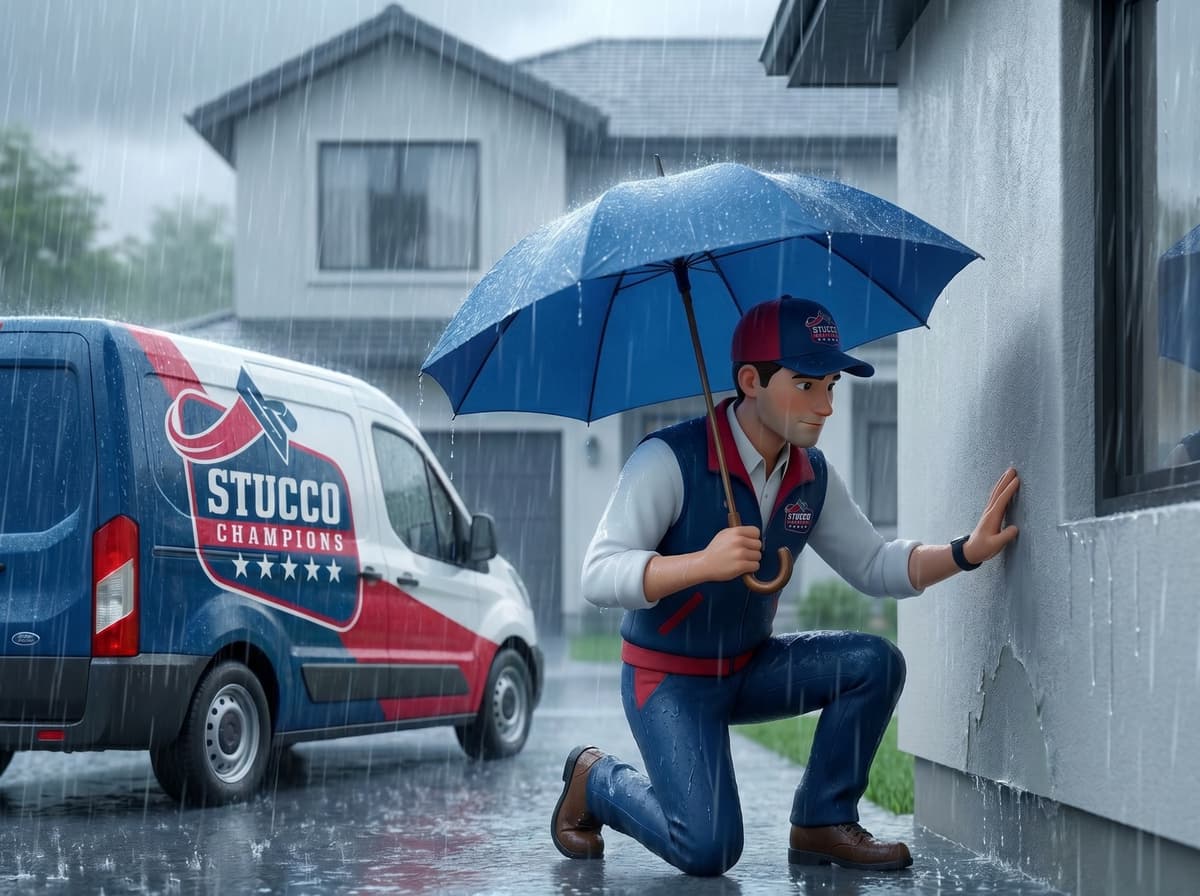
There is a common misconception among homeowners that cement behaves like mud—if it gets wet before it dries, it washes away. When an unexpected winter rainstorm hits Southern California during a stucco project, panic often ensues.
However, from an engineering standpoint, moisture is the catalyst for strength. While applying a final aesthetic color coat in the rain is strictly prohibited, ambient moisture is actually highly beneficial for the structural base coats. This guide explains the science of cement hydration and why "rainy conditions" can result in a superior exterior cladding.
Free Assessment
Noticing Stucco Damage?
Get a free on-site assessment from a licensed contractor. $0 deposit, no obligation.
GET FREE ASSESSMENT1. Curing vs. Drying: The Chemical Distinction
Paint dries through the evaporation of solvents. Cement cures through a chemical reaction called hydration.
When Portland cement is mixed with water, the water does not simply evaporate; it chemically bonds with the cement molecules to form a crystalline matrix (calcium silicate hydrate). If the moisture evaporates too rapidly (as it often does under the intense Southern California sun), the hydration process is halted prematurely, resulting in weak, chalky stucco that is prone to severe shrinkage cracking.
2. The Benefit of High Humidity
During the application of the "Scratch" and "Brown" coats (the structural layers), high ambient humidity and light rain provide a natural advantage.
- Slower Cure Times: The moist environment prevents rapid evaporation, allowing the cement to hydrate slowly over several days. A slow cure results in significantly higher compressive strength.
- Natural Wet-Curing: Under normal hot-weather conditions, contractors are required to manually "wet-cure" the wall by lightly misting it with a hose twice a day for 48 hours. A light, misty rain accomplishes this code requirement naturally, ensuring the wall reaches maximum hardness.
3. The Danger of "Wash Out"
While moisture is beneficial, bulk water is destructive.
Cement needs water to hydrate, but if the wall is hit with heavy, driving rain before the cement has achieved its initial set (typically within the first 4 to 6 hours), the rain will physically wash the cement paste out of the sand aggregate.
The Protocol: If heavy rain is imminent, contractors must erect scaffolding tents using 6-mil plastic. This allows the wall to benefit from the 100% ambient humidity while protecting the wet mortar from direct mechanical impact.
4. The Finish Coat Exception
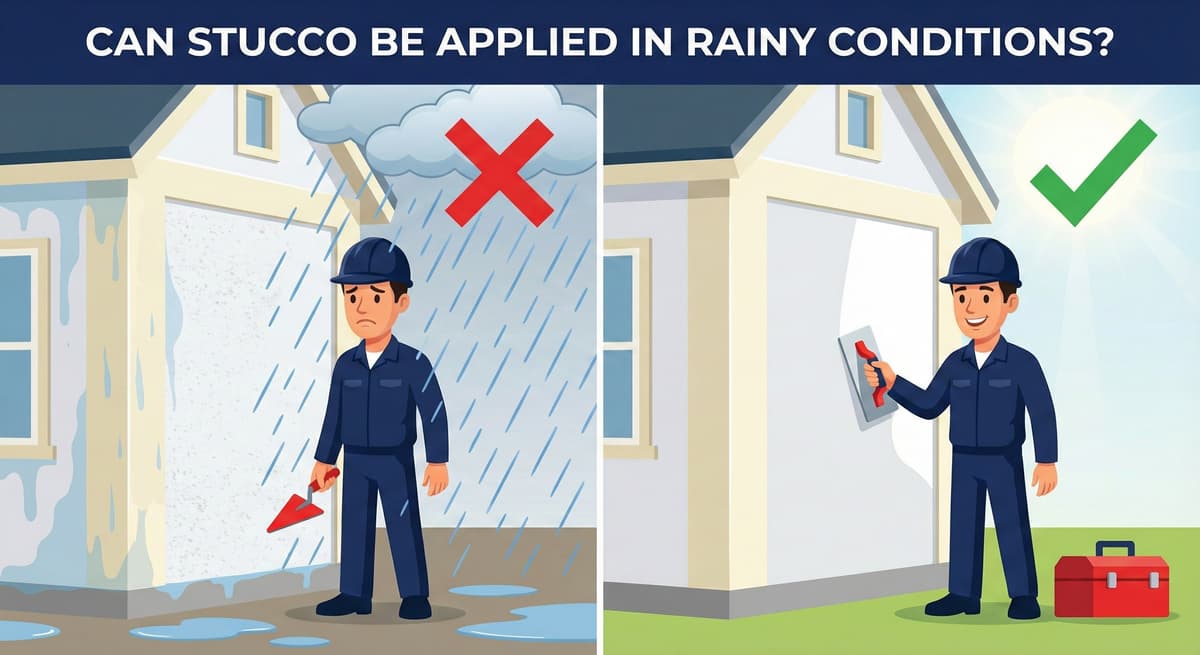
The rules change entirely when the final color coat is applied. Whether utilizing a traditional cement finish or a synthetic acrylic finish, the top layer must be applied in dry weather.
Rain or high humidity during the finish phase will cause:
- Efflorescence: Water migrating through the curing cement will pull white calcium salts to the surface, causing severe white staining.
- Mottling: Uneven drying times across the wall will result in a blotchy, inconsistent color appearance.
- Acrylic Wash-Off: Because synthetic finishes are water-based polymers, heavy rain before they cure can literally wash the expensive finish off the wall and into the landscaping.
Conclusion
If rain is forecasted while your base coats are curing, do not panic—your house is essentially receiving a free, high-quality wet-cure that will increase its long-term durability. However, if you are scheduled for color application, demand that your contractor pause production until the skies clear.
Frequently Asked Questions About Stucco
How much does stucco repair cost in Orange County and Los Angeles?+
Small stucco patches start at $650, larger repairs start at $1,200, and re-stucco of a single elevation up to about 400 sq ft runs about $1,400 - $5,900+. The exact cost depends on the damage type (hairline cracks, water damage, delamination, weep screed failure), the square footage involved, and whether the original three-coat or one-coat stucco system needs to be matched. Stucco Champions provides fixed-price written estimates after a free on-site assessment — no hourly billing, no surprise change orders. See our stucco repair cost guide for detailed pricing by repair type.
How long does stucco last in Southern California?+
Properly installed three-coat stucco lasts 50-80+ years in Southern California's climate. The most common failure points aren't the stucco itself — they're the supporting components: corroded weep screed, deteriorated building paper behind the stucco, and improperly sealed window flashing. Most "stucco failures" are actually moisture-intrusion failures that start at one of these points. Annual visual inspection catches problems before they spread, which is why we offer free weep screed assessments for homeowners in our service area.
Can I repair stucco myself, or do I need a contractor?+
Hairline cracks under 1/8 inch wide can be sealed with elastomeric caulk by a homeowner. Anything larger — pattern cracks, delamination (where stucco pulls away from the wall), water-damaged areas, or chimney/window leak repairs — requires a licensed contractor. Improper DIY repair on these is the #1 cause of repeat failures because the underlying cause (usually moisture) isn't addressed. California's CSLB requires a license for any stucco work over $500. Looking for a highly-rated stucco contractor in Southern California? We are a CSLB-licensed and insured team ready to help.
How do I know if I need stucco repair vs. full re-stucco?+
If less than 30% of an elevation has visible damage, repair is the right call. If you see large areas of cracking, multiple zones of delamination, or the underlying paper and lath have rotted across an entire wall, full re-stucco of that elevation is more cost-effective long-term. Our free assessment includes a moisture survey and lath inspection so you get a defensible recommendation either way — not just a quote pushing whichever option costs more.
Do you offer warranties on stucco work?+
Approved stucco repair work includes a 1-year written workmanship warranty. The applicable terms are documented with the approved scope. Stucco Champions is CSLB licensed and insured; verify license #1122006 through the official state lookup. Request a free estimate to review the scope and warranty terms before you sign.
How long does a stucco repair take?+
Most patch repairs are completed in 1-2 days, including a 24-hour cure time before texture matching and color application. Full re-stucco of a single elevation runs 5-7 working days because each coat (scratch, brown, finish) needs to cure properly before the next is applied. We schedule around weather — California stucco needs daytime temperatures above 50°F with no rain forecast for at least 24 hours after each coat. Our crew shows up on time, every time.
Stucco Diagnostics & Calculators
Diagnose specific wall damage symptoms or estimate job scope with our free guides and calculators.
Related Professional Services
A licensed assessment identifies the cause before the finish is opened or replaced.