Matching Stucco Fog Coat: Why Touch-Ups Often Fail
Fog coating is the professional industry standard for refreshing and recoloring traditional cement stucco. It is a cementitious stain that absorbs deep into the porous wall, restoring vibrant color without sealing the surface like standard paint.
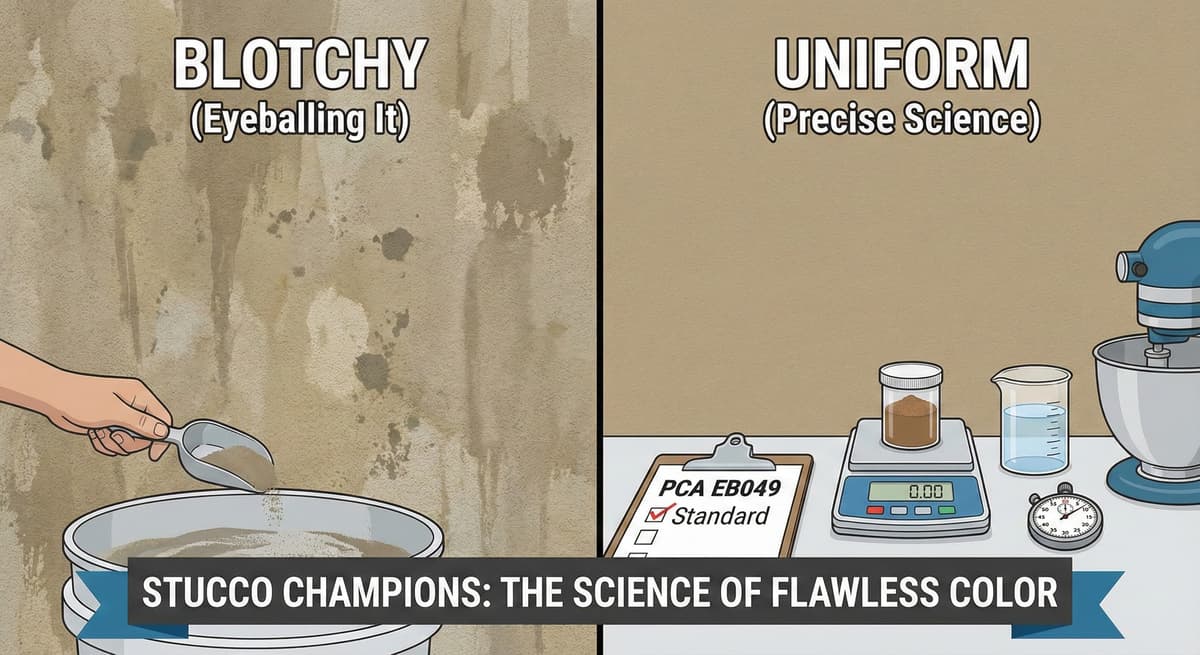
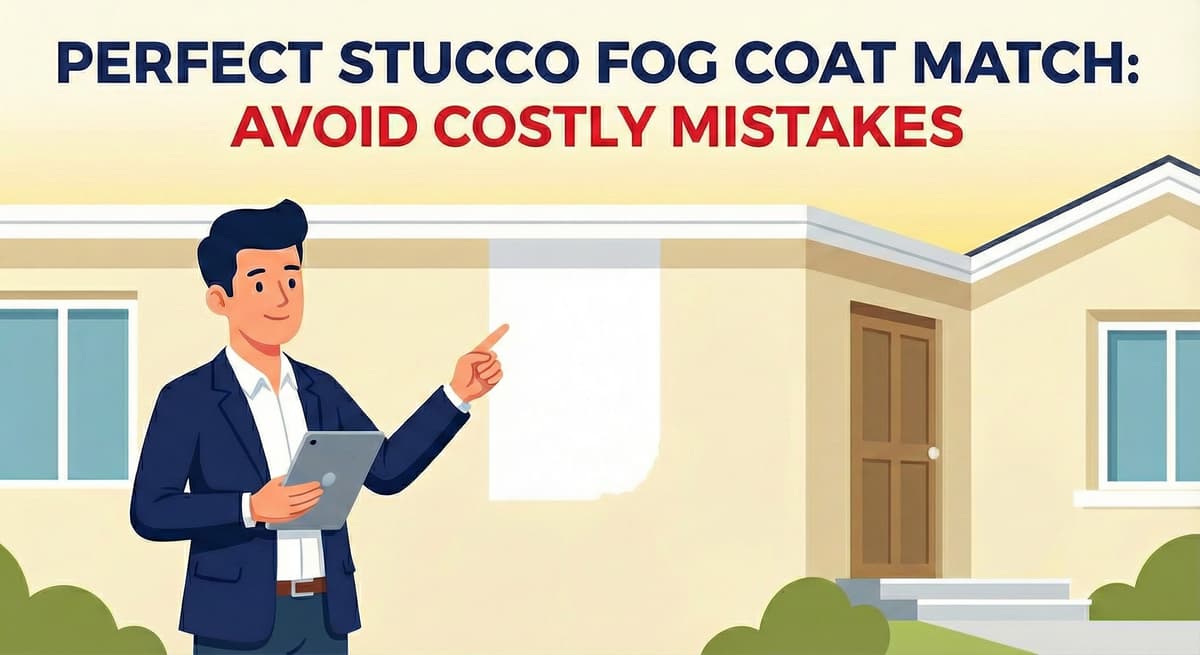
However, homeowners and handymen often mistakenly treat fog coat exactly like a bottle of touch-up paint for a car. They mix a small batch, dab it onto a patched spot, and are absolutely shocked when it dries as a massive, highly visible dark blotch. Matching an existing fog coat—especially if the original manufacturer is defunct or the wall has severely faded—is chemically and visually complex.
This guide explains the science of color matching and why the professional "Corner-to-Corner" rule is absolutely essential for a flawless finish.
Stucco Champions does not offer fog coating as a standalone service. This article is informational content for homeowners comparing stucco color refresh options. We focus on stucco repair, patching, water damage repair, inspections, and related stucco restoration work.
1. The Chemistry of the Mismatch
Why is it practically impossible to perfectly match an old wall with a new bag of material?
- Oxidation & Fading: Even the highest-quality iron oxide cement pigments fade and chalk under the brutal Southern California sun. A fresh bag of "Mission Beige" bought today will be vibrant; the exact same "Mission Beige" on your wall from 2010 has been bleached by a decade of UV light.
- Porosity Differences: A wet fog coat slurry absorbs differently into a fresh patch (which is thirsty, new cement) than it does into an aged, oxidized wall (old cement). This distinct difference in physical absorption always creates a dark "halo" effect right around the border of the repair.
Free Assessment
Noticing Stucco Damage?
Get a free on-site assessment from a licensed contractor. $0 deposit, no obligation.
GET FREE ASSESSMENT2. The Matching Protocol: Custom vs. Off-the-Shelf
If you buy a standard pre-mixed bag from Home Depot, it will not match. Professional matching requires a color lab.
Step A: The Harvest
We take a hammer and chisel and carefully remove a 2-inch square sample of the stucco from a very discreet area (usually hidden behind an AC unit compressor or down near the bottom weep screed). This physical sample represents the current, faded color of the home, not the original color.
Step B: Lab Analysis
We take this physical sample directly to a major stucco manufacturer's lab (like LaHabra, Omega, or Merlex). Their color technicians use a spectrophotometer to break down the pigment load and create a custom dry-mix formula specifically designed to match the current aged state of your wall. This process typically takes 3 to 5 business days.
3. The "Corner-to-Corner" Rule (Critical)
Even with a perfect custom lab match, attempting a "spot touch-up" in the middle of a wall is incredibly risky. The human eye is exceptionally good at detecting slight variations in texture and sheen on a flat plane.
Do not stop in the middle of a wall. We always apply fog coat from one architectural break to another. For example, we spray from the corner of the house to the window frame, or from a downspout across to a door frame. By intentionally ending the wet application at a natural, physical break line, any microscopic color difference between the freshly fogged section and the old section becomes completely invisible to the eye.
4. Application Technique: The Mist
Fog coat is never painted or rolled on; it is heavily misted.
- The Tool: Professionals use a pneumatic hopper sprayer or a high-quality, pressurized garden-style pump sprayer.
- The Method: Apply the slurry in very light, overlapping passes. If you flood the wall with too much liquid at once, the heavy cement will run, sag, and leave permanent vertical streaks. The goal is to lightly "stain" the stucco by absorption, not coat it like a thick paint.
5. When a Perfect Match is Impossible
Sometimes, a wall is just too stained, mottled, or heavily patched for even a corner-to-corner repair to look right.
The Solution: Fog the entire elevation. Fog coating is relatively inexpensive when compared to full exterior painting or total re-stuccoing. If the touch-up area is large enough, it is almost always more cost-effective and visually pleasing to simply spray the entire wall, guaranteeing a 100% uniform, monolithic finish that looks brand new.
Fog coat is a thin cementitious color layer. It recolors the wall, but it does not fill, hide, or resurface what is already there, so on an older home it will telegraph the existing issues: hairline cracks, old patch lines, previous repairs, and surface blemishes read straight through the fresh color and often stand out more than they did before.
There is a structural reason too. A fog coat only bonds as well as the surface it lands on, and it needs sound, clean, uniformly porous stucco to key into. When the wall underneath is in rough shape, the bond itself is weaker and the coat can dust off, peel, or re-crack over:
- Chalky or weathered surfaces, where the coat grabs a loose, powdery top layer instead of solid stucco.
- Drummy or delaminating areas that are already pulling away from the lath and take the new coat with them.
- Active cracks and old patches, where rigid cement re-cracks over moving joints and mismatched patch material absorbs unevenly.
- Previously painted or sealed spots, which cement cannot penetrate, so it has almost nothing to grip.
- Weak, over-sanded, or moisture-damaged base coats that cap the bond at a crumbly layer the coat can peel away with.
That is why Stucco Champions does not fog coat older or previously repaired homes. For those walls we recommend a fresh finish coat (re-stucco) so the surface is sound and uniform before it is colored.
Frequently Asked Questions About Stucco
How much does stucco repair cost in Orange County and Los Angeles?+
Stucco repair typically ranges from $500 for minor crack patching to $5,000+ for full re-stucco of a single elevation. The exact cost depends on the damage type (hairline cracks, water damage, delamination, weep screed failure), the square footage involved, and whether the original three-coat or one-coat stucco system needs to be matched. Stucco Champions provides fixed-price written estimates after a free on-site assessment — no hourly billing, no surprise change orders. See our stucco repair cost guide for detailed pricing by repair type.
How long does stucco last in Southern California?+
Properly installed three-coat stucco lasts 50-80+ years in Southern California's climate. The most common failure points aren't the stucco itself — they're the supporting components: corroded weep screed, deteriorated building paper behind the stucco, and improperly sealed window flashing. Most "stucco failures" are actually moisture-intrusion failures that start at one of these points. Annual visual inspection catches problems before they spread, which is why we offer free weep screed assessments for homeowners in our service area.
Can I repair stucco myself, or do I need a contractor?+
Hairline cracks under 1/8 inch wide can be sealed with elastomeric caulk by a homeowner. Anything larger — pattern cracks, delamination (where stucco pulls away from the wall), water-damaged areas, or chimney/window leak repairs — requires a licensed contractor. Improper DIY repair on these is the #1 cause of repeat failures because the underlying cause (usually moisture) isn't addressed. California's CSLB requires a license for any stucco work over $500. Looking for a highly-rated stucco contractor in Southern California? We are a CSLB-licensed and insured team ready to help.
How do I know if I need stucco repair vs. full re-stucco?+
If less than 30% of an elevation has visible damage, repair is the right call. If you see large areas of cracking, multiple zones of delamination, or the underlying paper and lath have rotted across an entire wall, full re-stucco of that elevation is more cost-effective long-term. Our free assessment includes a moisture survey and lath inspection so you get a defensible recommendation either way — not just a quote pushing whichever option costs more.
Do you offer warranties on stucco work?+
Approved stucco repair work includes a 1-year written workmanship warranty. The applicable terms are documented with the approved scope. Stucco Champions is CSLB licensed and insured; verify license #1122006 through the official state lookup. Request a free estimate to review the scope and warranty terms before you sign.
How long does a stucco repair take?+
Most patch repairs are completed in 1-2 days, including a 24-hour cure time before texture matching and color application. Full re-stucco of a single elevation runs 5-7 working days because each coat (scratch, brown, finish) needs to cure properly before the next is applied. We schedule around weather — California stucco needs daytime temperatures above 50°F with no rain forecast for at least 24 hours after each coat. Our crew shows up on time, every time.
Stucco Diagnostics & Calculators
Diagnose specific wall damage symptoms or estimate job scope with our free guides and calculators.
Related Professional Services
A licensed assessment identifies the cause before the finish is opened or replaced.