Dryer Vent Through Stucco: Cutting, Flashing, Sealant & Patch Rules
Written by Stucco Champions — Southern California’s Authority on Exterior Plastering.
Dryer Vent Through Stucco: Cutting, Flashing, Sealant & Patch Rules
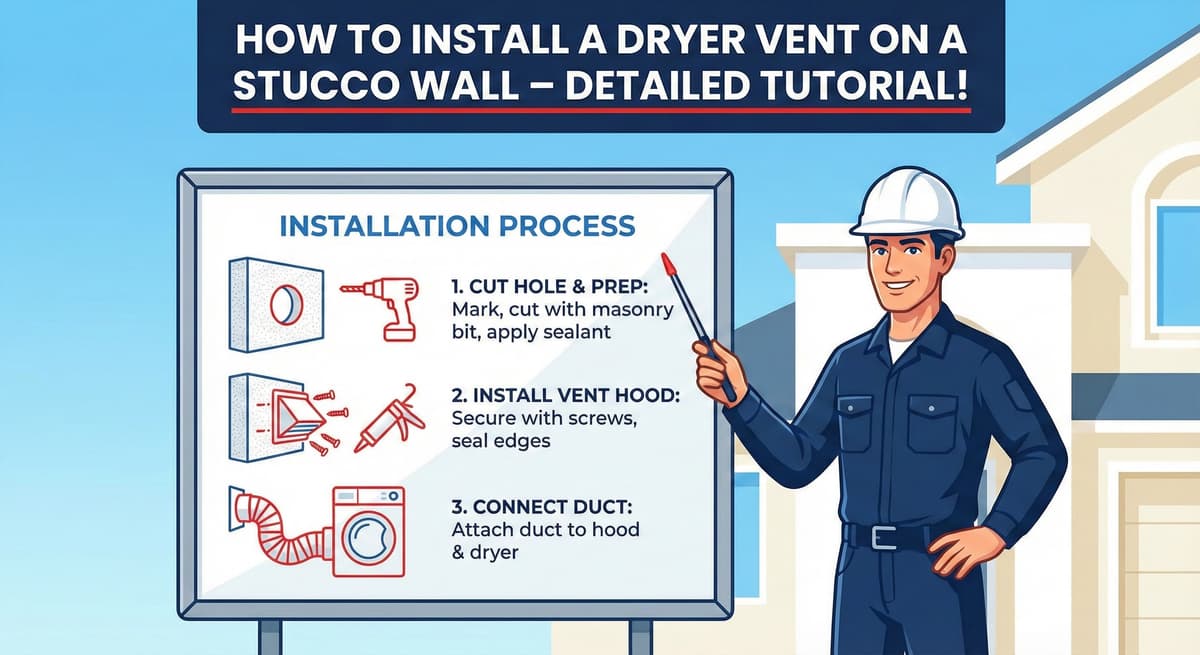
Installing a dryer vent through a stucco wall is not just a hole-saw task. It creates a new exterior penetration through the finish coat, base coat, lath, water-resistive barrier, sheathing, and interior wall. If the vent is not planned and sealed correctly, it can crack the stucco, damage concealed layers, leak into the wall, or create a lint and exhaust problem.
Follow the dryer manufacturer’s instructions, local mechanical code, and any permit requirements. This article focuses on the stucco wall details: cutting cleanly, protecting the WRB and lath, flashing or sealing the vent hood, and patching the plaster assembly correctly.
Free Assessment
Noticing Stucco Damage?
Get a free on-site assessment from a licensed contractor. $0 deposit, no obligation.
GET FREE ASSESSMENT1. Plan the vent location before cutting
Locate studs, blocking, wiring, plumbing, gas lines, shear panels, and exterior obstacles before drilling. Do not choose a location only because it is convenient outside. The vent path also needs to work inside: short, accessible, properly sloped or routed as required, and compatible with the dryer manufacturer’s maximum duct length and fittings.
Avoid placing the vent too close to corners, control joints, weep screeds, windows, doors, decks, roof intersections, electrical equipment, or areas where the hood will be hit by sprinklers or landscaping.
2. Cut the stucco without shattering the surrounding area
A diamond-grit hole saw, core bit, or careful grinder-and-chisel method may be used depending on the wall condition and vent size. Avoid aggressive hammering that can crack nearby stucco or loosen the lath. Dust control, eye protection, and respiratory protection are important because cement plaster cutting can create silica dust.
Cut only as much stucco as needed, but leave enough room to install the vent sleeve, hood, flashing or mounting block, and sealant correctly. A perfectly round hole is not useful if there is no way to waterproof the penetration.
3. Protect the WRB and lath
On framed stucco walls, the water-resistive barrier behind the lath is part of the drainage plane. Cutting through it creates a leak risk. If the WRB is damaged, it should be repaired or integrated with a flashing detail before the vent hood is installed. The lath should not be left loose, sharp, or unsupported at the edge of the opening.
PCA guidance emphasizes that flashing should redirect water to the exterior and that lath, paper, accessories, and flashing must interface correctly. A dryer vent is a penetration, so it deserves the same water-management attention as other wall openings.
4. Use a proper vent hood and duct connection
Use a dryer-rated exterior vent hood and duct materials that comply with the appliance instructions and local code. Avoid makeshift covers, insect screens that trap lint, crushed flexible duct at the wall, or hoods that cannot be cleaned. The hood should shed water, resist pests, and allow the dryer to exhaust properly.
If the wall is thick, the sleeve or duct connection must pass through the full assembly without gaps that leak air, lint, pests, or water into the wall cavity.
5. Flash and seal the exterior hood
Sealant alone is not always enough. The best detail depends on whether the vent is installed during new stucco, during a repair opening, or as a retrofit through finished stucco. A mounting block, flange, flexible flashing, backer rod, compatible exterior sealant, and proper shingle-lap integration may be needed.
Do not bury the hood flange in a way that traps water behind the stucco. Do not rely on a surface bead of caulk over dirty, cracked, or loose stucco. The sealant should bond to sound material and be inspectable for future maintenance.
6. Patch around the vent with compatible materials
If the stucco is opened beyond the vent sleeve, patch in layers that match the existing assembly. Loose plaster should be removed to sound edges. Damaged lath should be repaired or tied in. The patch should embed lath where present, restore thickness, cure properly, and receive a compatible finish.
Texture and color matching are separate from waterproofing. A tiny caulk ring may look quick, but it does not replace a proper patch or flashing repair when the opening is oversized or damaged.
7. Maintain the vent after installation
Dryer vents need maintenance. Keep the hood clean, confirm the damper opens freely, remove lint buildup, and inspect the sealant and surrounding stucco periodically. If staining, cracking, loose plaster, or interior dampness appears near the vent, treat it as a potential penetration leak until proven otherwise.
Bottom line
A dryer vent through stucco needs more than a clean core hole. Plan the location, avoid structure and utilities, cut carefully, restore WRB and lath, use a dryer-rated hood, flash and seal the penetration, and patch with compatible stucco materials. If you cannot access or repair the concealed water barrier, bring in a qualified contractor.
Frequently Asked Questions About Stucco
How much does stucco repair cost in Orange County and Los Angeles?+
Stucco repair typically ranges from $500 for minor crack patching to $5,000+ for full re-stucco of a single elevation. The exact cost depends on the damage type (hairline cracks, water damage, delamination, weep screed failure), the square footage involved, and whether the original three-coat or one-coat stucco system needs to be matched. Stucco Champions provides fixed-price written estimates after a free on-site assessment — no hourly billing, no surprise change orders. See our stucco repair cost guide for detailed pricing by repair type.
How long does stucco last in Southern California?+
Properly installed three-coat stucco lasts 50-80+ years in Southern California's climate. The most common failure points aren't the stucco itself — they're the supporting components: corroded weep screed, deteriorated building paper behind the stucco, and improperly sealed window flashing. Most "stucco failures" are actually moisture-intrusion failures that start at one of these points. Annual visual inspection catches problems before they spread, which is why we offer free weep screed assessments for homeowners in our service area.
Can I repair stucco myself, or do I need a contractor?+
Hairline cracks under 1/8 inch wide can be sealed with elastomeric caulk by a homeowner. Anything larger — pattern cracks, delamination (where stucco pulls away from the wall), water-damaged areas, or chimney/window leak repairs — requires a licensed contractor. Improper DIY repair on these is the #1 cause of repeat failures because the underlying cause (usually moisture) isn't addressed. California's CSLB requires a license for any stucco work over $500. Looking for a highly-rated stucco contractor in Southern California? We are a CSLB-licensed and insured team ready to help.
How do I know if I need stucco repair vs. full re-stucco?+
If less than 30% of an elevation has visible damage, repair is the right call. If you see large areas of cracking, multiple zones of delamination, or the underlying paper and lath have rotted across an entire wall, full re-stucco of that elevation is more cost-effective long-term. Our free assessment includes a moisture survey and lath inspection so you get a defensible recommendation either way — not just a quote pushing whichever option costs more.
Do you offer warranties on stucco work?+
Approved stucco repair work includes a 1-year written workmanship warranty. The applicable terms are documented with the approved scope. Stucco Champions is CSLB licensed and insured; verify license #1122006 through the official state lookup. Request a free estimate to review the scope and warranty terms before you sign.
How long does a stucco repair take?+
Most patch repairs are completed in 1-2 days, including a 24-hour cure time before texture matching and color application. Full re-stucco of a single elevation runs 5-7 working days because each coat (scratch, brown, finish) needs to cure properly before the next is applied. We schedule around weather — California stucco needs daytime temperatures above 50°F with no rain forecast for at least 24 hours after each coat. Our crew shows up on time, every time.
Stucco Diagnostics & Calculators
Diagnose specific wall damage symptoms or estimate job scope with our free guides and calculators.
Related Professional Services
A licensed assessment identifies the cause before the finish is opened or replaced.