Can You Stucco a Shipping Container? Steel, Lath, Foam & Moisture Limits
Written by Stucco Champions — Southern California’s Authority on Exterior Plastering.
Can You Stucco a Shipping Container? Steel, Lath, Foam & Moisture Limits
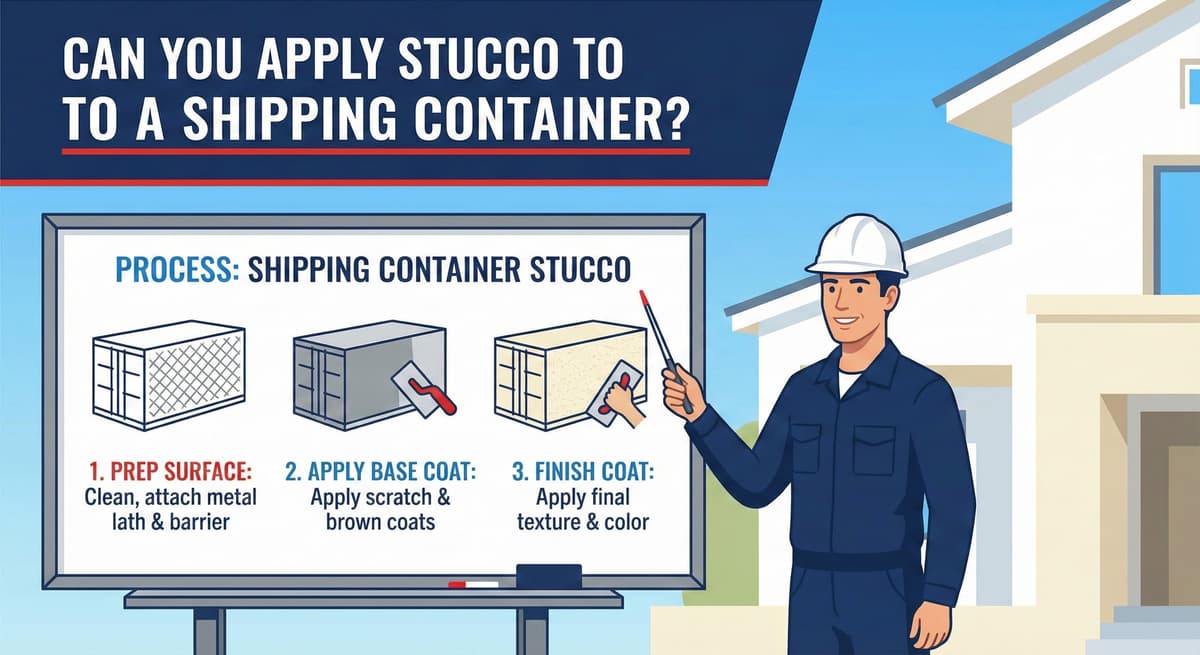
Stucco can sometimes be installed as part of a cladding assembly on a shipping container, but it should not be bonded directly to the steel skin. A container is a corrugated steel structure that moves with heat, flexes under loads, and can develop condensation or corrosion problems if the exterior is covered without a drainage and attachment plan.
The practical answer is conditional: stucco may be possible on a container only when a designed support, drainage, insulation, and attachment system separates the plaster from the moving steel. This is a project for a qualified designer, engineer, or contractor familiar with both stucco and metal structures.
Free Assessment
Noticing Stucco Damage?
Get a free on-site assessment from a licensed contractor. $0 deposit, no obligation.
GET FREE ASSESSMENT1. Do not direct-apply cement plaster to container steel
Portland cement plaster needs a compatible substrate or a metal plaster base that allows mechanical key. A shipping container wall is not masonry, wood framing, or a standard stucco substrate. The steel skin expands, contracts, vibrates, and may have coatings that interfere with bond. Direct-applied plaster can delaminate or crack because the steel and cement plaster move differently.
Instead, the wall needs a cladding assembly: framing or furring, approved lath or plaster base, drainage, insulation where required, and details for corners, openings, penetrations, and terminations.
2. Decide whether the container wall is structure or cladding backing
Containers can be modified heavily for doors, windows, decks, interior framing, insulation, and utilities. Cutting openings can change the structural behavior of the steel shell. Before adding stucco weight or new attachments, confirm how the container is reinforced and whether fasteners, welds, or furring members are allowed.
A stucco contractor should not be expected to make structural decisions about a modified container shell. Those decisions belong in the design phase.
3. A furred or framed rainscreen approach is usually safer
A practical approach is to create a secondary exterior cladding frame over the container. That frame can support WRB or other moisture-control layers, lath, accessories, insulation, and the stucco base coat. The goal is to keep the plaster assembly stable while allowing water and condensation to drain or dry.
The SMA guide emphasizes selecting a moisture-management method and maintaining consistent details at penetrations, transitions, and terminations. That principle matters even more on steel because trapped moisture can contribute to corrosion.
4. Foam and one-coat systems require manufacturer approval
Rigid foam or one-coat stucco may be considered for container projects, but those are proprietary assemblies. The foam, fasteners, lath, basecoat, finish, drainage profile, and substrate limits must be approved by the manufacturer or evaluation report. Do not assume a one-coat foam system approved for framed walls automatically applies to a shipping container.
If foam is used, the design still needs a path for drainage and drying. Foam should not trap water against unprotected steel.
5. Corrosion and condensation are major risks
Shipping containers can experience condensation when warm moist air meets cooler steel. Exterior stucco can change the temperature and drying behavior of the wall. If the steel is covered without proper coating, separation, ventilation, or drainage, rust may develop behind the new cladding where it is difficult to inspect.
Before cladding, confirm steel condition, existing coatings, corrosion treatment, fastener compatibility, and whether dissimilar metals could create corrosion issues.
6. Openings and penetrations need real flashing
Container homes often have many custom openings: windows, doors, HVAC sleeves, vents, conduit, lights, and utility penetrations. Stucco around those openings needs flashing and termination details, not just sealant. PCA guidance describes flashing as vital to plaster longevity because it redirects water to the exterior.
Every opening should be designed before lath and plaster begin. Cutting new penetrations after the stucco assembly is complete increases leak risk.
7. When stucco is not the right container finish
Stucco may be a poor choice if the container will move frequently, lacks structural reinforcement, has active corrosion, has unresolved condensation problems, or cannot support a code-compliant cladding assembly. In those cases, metal panels, rainscreen siding, cement board systems, or other lightweight claddings may be more practical.
Bottom line
You can sometimes use stucco on a shipping container, but not by bonding cement directly to the steel. Treat it as a designed exterior cladding assembly with structural review, corrosion control, drainage, lath or approved plaster base, flashing, and manufacturer-approved components. If those details are missing, stucco is the wrong finish.
Frequently Asked Questions About Stucco
How much does stucco repair cost in Orange County and Los Angeles?+
Stucco repair typically ranges from $500 for minor crack patching to $5,000+ for full re-stucco of a single elevation. The exact cost depends on the damage type (hairline cracks, water damage, delamination, weep screed failure), the square footage involved, and whether the original three-coat or one-coat stucco system needs to be matched. Stucco Champions provides fixed-price written estimates after a free on-site assessment — no hourly billing, no surprise change orders. See our stucco repair cost guide for detailed pricing by repair type.
How long does stucco last in Southern California?+
Properly installed three-coat stucco lasts 50-80+ years in Southern California's climate. The most common failure points aren't the stucco itself — they're the supporting components: corroded weep screed, deteriorated building paper behind the stucco, and improperly sealed window flashing. Most "stucco failures" are actually moisture-intrusion failures that start at one of these points. Annual visual inspection catches problems before they spread, which is why we offer free weep screed assessments for homeowners in our service area.
Can I repair stucco myself, or do I need a contractor?+
Hairline cracks under 1/8 inch wide can be sealed with elastomeric caulk by a homeowner. Anything larger — pattern cracks, delamination (where stucco pulls away from the wall), water-damaged areas, or chimney/window leak repairs — requires a licensed contractor. Improper DIY repair on these is the #1 cause of repeat failures because the underlying cause (usually moisture) isn't addressed. California's CSLB requires a license for any stucco work over $500. Looking for a highly-rated stucco contractor in Southern California? We are a CSLB-licensed and insured team ready to help.
How do I know if I need stucco repair vs. full re-stucco?+
If less than 30% of an elevation has visible damage, repair is the right call. If you see large areas of cracking, multiple zones of delamination, or the underlying paper and lath have rotted across an entire wall, full re-stucco of that elevation is more cost-effective long-term. Our free assessment includes a moisture survey and lath inspection so you get a defensible recommendation either way — not just a quote pushing whichever option costs more.
Do you offer warranties on stucco work?+
Approved stucco repair work includes a 1-year written workmanship warranty. The applicable terms are documented with the approved scope. Stucco Champions is CSLB licensed and insured; verify license #1122006 through the official state lookup. Request a free estimate to review the scope and warranty terms before you sign.
How long does a stucco repair take?+
Most patch repairs are completed in 1-2 days, including a 24-hour cure time before texture matching and color application. Full re-stucco of a single elevation runs 5-7 working days because each coat (scratch, brown, finish) needs to cure properly before the next is applied. We schedule around weather — California stucco needs daytime temperatures above 50°F with no rain forecast for at least 24 hours after each coat. Our crew shows up on time, every time.
Stucco Diagnostics & Calculators
Diagnose specific wall damage symptoms or estimate job scope with our free guides and calculators.
Related Professional Services
A licensed assessment identifies the cause before the finish is opened or replaced.