Stucco Color Choice: How It Impacts Your Home’s Look
Written by Stucco Champions — Southern California’s Authority on Exterior Plastering.
Physics of Pigment: How Color Choice Impacts Stucco Performance
Choosing a stucco color is the most visible decision a homeowner makes, but it is also an engineering decision. In Southern California, color dictates more than curb appeal; it dictates the thermal performance and maintenance cycle of your home.
Dark colors absorb heat; light colors reflect it. This simple rule of physics has profound implications for a rigid masonry shell like stucco. If you choose the wrong color for your climate or material type, you invite cracking, fading, and efflorescence. This guide explains the science behind the swatch.
Free Assessment
Noticing Stucco Damage?
Get a free on-site assessment from a licensed contractor. $0 deposit, no obligation.
GET FREE ASSESSMENT1. Light Reflectance Value (LRV)
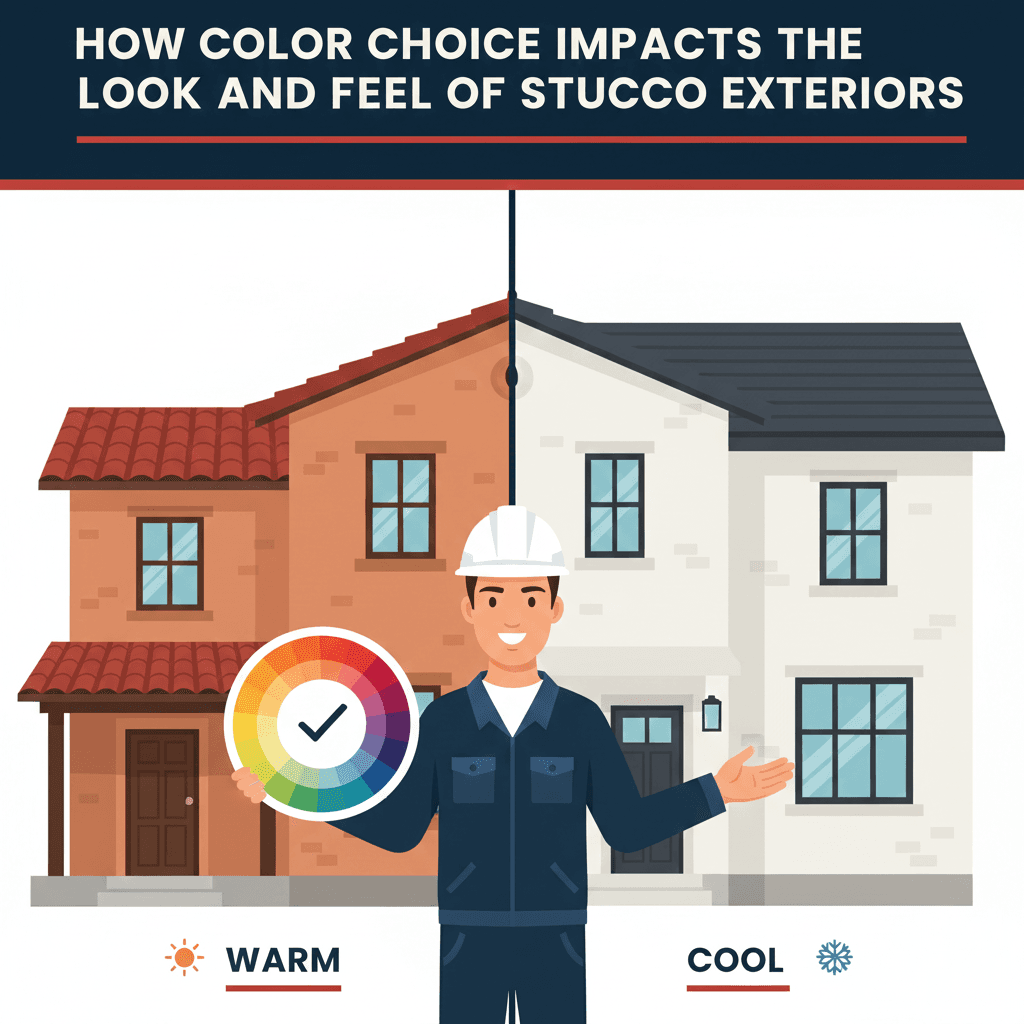
Every stucco color has an LRV Number (0 = Black, 100 = White). This measures the percentage of solar energy the wall reflects:
- High LRV (Light Colors): Reflects solar radiation. Keeps the stucco substrate cooler, reducing thermal movement. Recommended for traditional cementitious finishes.
- Low LRV (Dark Colors): Absorbs solar radiation. Can raise the surface temperature of the wall to 150°F+ on hot Inland Empire afternoons, leading to intense structural stresses.
If you apply a dark charcoal stucco (Low LRV) on a south-facing wall in Riverside, surface temperatures can exceed 150°F. The resulting thermal expansion and subsequent contraction lead to crazing and "spiderweb" cracking. Under **ASTM C926**, rigid cementitious finishes should not be tinted to low-LRV dark shades. If a dark aesthetic is required, specify a highly flexible, elastomeric acrylic finish that can bridge thermal movements.
Ready to see how different colors look on your home? Our Stucco Visualizer lets you test before you commit.
2. Material Compatibility Matrix
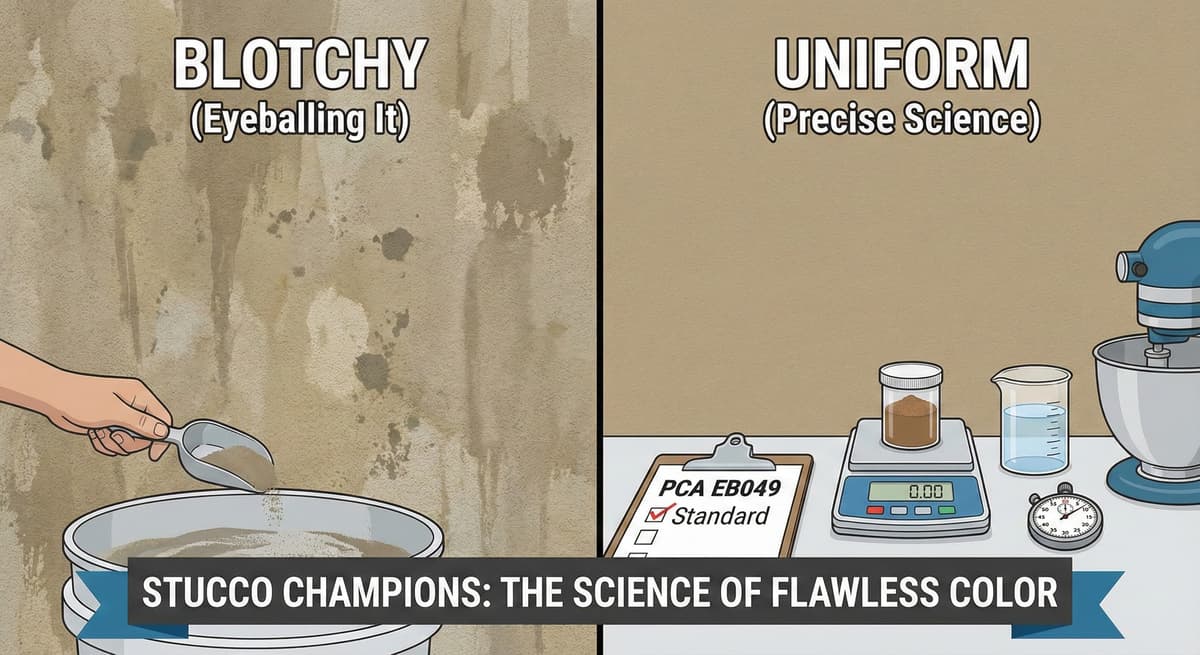
Not all colors work with all materials. Your desired aesthetic dictates the chemistry we use. Under **ASTM C897**, aggregate grain sizes determine texture styling (such as Santa Barbara smooth vs heavy sand float). Synthetic acrylic finishes contain high-grade polymers that encapsulate pigments. Never dilute synthetic finishes with excess water, as this breaks down the polymer binders and leads to chalking, fading, and peeling.
| Color Family | Required Material | Why? |
|---|---|---|
| Whites & Pastels | White Cement Base | Grey cement makes light colors look muddy. White cement base ensures color purity and prevents blotchiness. |
| Earth Tones (Tan/Beige) | Traditional Grey Cement | Iron oxide mineral pigments blend naturally with grey cement, offering a rich, classic mottled look. |
| Dark/Vibrant (Blue/Black) | Acrylic (Synthetic) Finish | Traditional cement cannot hold dark pigment without turning chalky (efflorescence). Acrylic encapsulates the color. |
3. Perception: How Color Changes Scale
Beyond physics, color alters the architectural weight of the home:
- Light Colors: Make a home feel larger and more expansive. They highlight architectural details like foam trim, cornices, and quoins by creating strong shadow lines.
- Dark Colors: Make a home feel smaller and "grounded." They hide dirt and atmospheric stains but can obscure structural details because shadows do not show up against dark walls.
4. The Cost of Color
Color choice impacts the project budget in three ways:
- Pigment Cost: Standard earth tones are inexpensive. Deep reds, greens, and blues require expensive synthetic organic pigments that can add $2-$4 per square yard to material cost.
- Base Material: White cement is significantly more expensive than grey cement. If you want a bright Swiss Coffee look, expect a premium for the white base.
- Maintenance: Dark colors fade faster under intense UV. You may need to re-coat a dark home every 10 years, whereas a beige home can go 20 years without fading noticeably.
Conclusion: Balance Beauty and Biology
The best color for your home is one that balances your aesthetic goals with the realities of the Southern California sun. If you want low maintenance, stick to high-LRV earth tones in traditional cement. If you want high drama with dark colors, invest in a premium Acrylic system to handle the heat.
Test Colors Before You Commit
Our Stucco Visualizer lets you preview different colors on a real home — or get a project estimate.
Frequently Asked Questions About Stucco
How much does stucco repair cost in Orange County and Los Angeles?+
Small stucco patches start at $650, larger repairs start at $1,200, and re-stucco of a single elevation up to about 400 sq ft runs about $1,400 - $5,900+. The exact cost depends on the damage type (hairline cracks, water damage, delamination, weep screed failure), the square footage involved, and whether the original three-coat or one-coat stucco system needs to be matched. Stucco Champions provides fixed-price written estimates after a free on-site assessment — no hourly billing, no surprise change orders. See our stucco repair cost guide for detailed pricing by repair type.
How long does stucco last in Southern California?+
Properly installed three-coat stucco lasts 50-80+ years in Southern California's climate. The most common failure points aren't the stucco itself — they're the supporting components: corroded weep screed, deteriorated building paper behind the stucco, and improperly sealed window flashing. Most "stucco failures" are actually moisture-intrusion failures that start at one of these points. Annual visual inspection catches problems before they spread, which is why we offer free weep screed assessments for homeowners in our service area.
Can I repair stucco myself, or do I need a contractor?+
Hairline cracks under 1/8 inch wide can be sealed with elastomeric caulk by a homeowner. Anything larger — pattern cracks, delamination (where stucco pulls away from the wall), water-damaged areas, or chimney/window leak repairs — requires a licensed contractor. Improper DIY repair on these is the #1 cause of repeat failures because the underlying cause (usually moisture) isn't addressed. California's CSLB requires a license for any stucco work over $500. Looking for a highly-rated stucco contractor in Southern California? We are a CSLB-licensed and insured team ready to help.
How do I know if I need stucco repair vs. full re-stucco?+
If less than 30% of an elevation has visible damage, repair is the right call. If you see large areas of cracking, multiple zones of delamination, or the underlying paper and lath have rotted across an entire wall, full re-stucco of that elevation is more cost-effective long-term. Our free assessment includes a moisture survey and lath inspection so you get a defensible recommendation either way — not just a quote pushing whichever option costs more.
Do you offer warranties on stucco work?+
Approved stucco repair work includes a 1-year written workmanship warranty. The applicable terms are documented with the approved scope. Stucco Champions is CSLB licensed and insured; verify license #1122006 through the official state lookup. Request a free estimate to review the scope and warranty terms before you sign.
How long does a stucco repair take?+
Most patch repairs are completed in 1-2 days, including a 24-hour cure time before texture matching and color application. Full re-stucco of a single elevation runs 5-7 working days because each coat (scratch, brown, finish) needs to cure properly before the next is applied. We schedule around weather — California stucco needs daytime temperatures above 50°F with no rain forecast for at least 24 hours after each coat. Our crew shows up on time, every time.
Stucco Diagnostics & Calculators
Diagnose specific wall damage symptoms or estimate job scope with our free guides and calculators.
Related Professional Services
A licensed assessment identifies the cause before the finish is opened or replaced.