Corrosion-Resistant Metal Lath: Coatings & Coastal Protection
Written by Stucco Champions — Southern California’s Authority on Exterior Plastering.
Corrosion-Resistant Metal Lath: Coatings & Coastal Protection
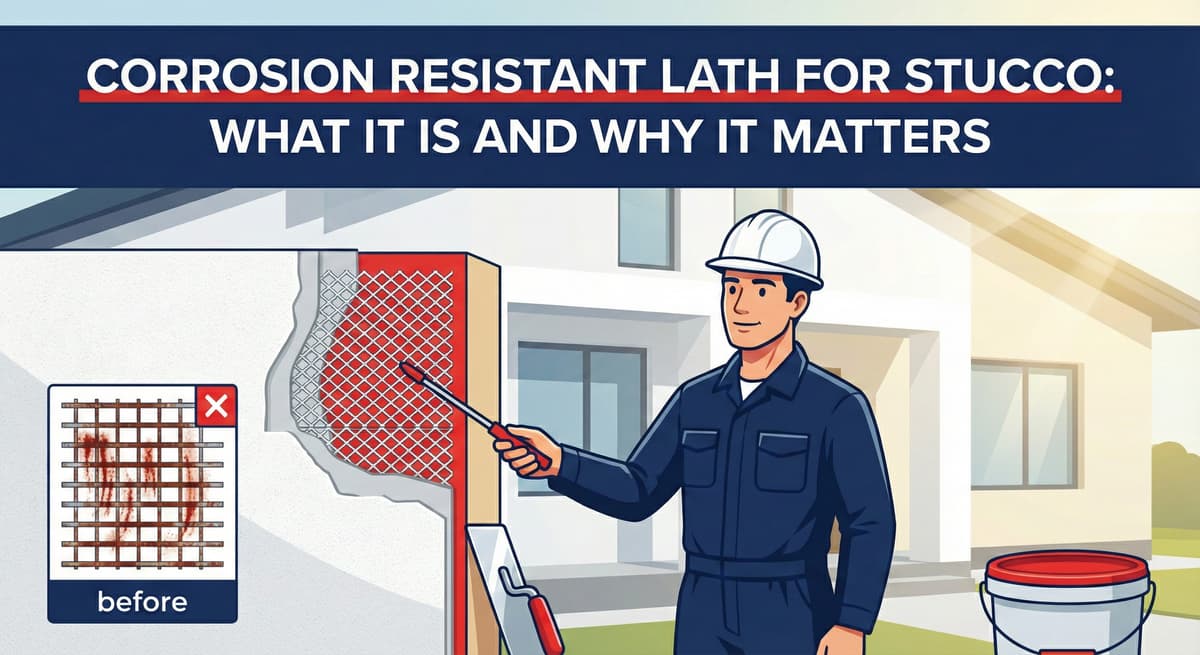
If stucco is the skin of your home, the metal lath is the skeleton. Because stucco is a reservoir cladding that absorbs and holds moisture, the metal mesh embedded within the scratch coat is continuously exposed to water and humidity. In Southern California, where marine environments and salt-laden sea breezes accelerate oxidation, selecting the right corrosion-resistant lath is critical to preventing structural failure.
This guide dives into the metallurgy of stucco reinforcement, explaining how different zinc coatings protect your home, why rust causes stucco to crack, and when you should upgrade to premium corrosion-resistant materials.
Free Assessment
Noticing Stucco Damage?
Get a free on-site assessment from a licensed contractor. $0 deposit, no obligation.
GET FREE ASSESSMENT1. The Chemistry of Corrosion: Galvanized Protection
Most stucco installations use galvanized steel mesh. Galvanizing is the process of coating steel with a protective layer of zinc. Zinc acts as a sacrificial anode, meaning it will corrode and oxidize before the underlying steel does.
Under **ASTM A641** (Standard Specification for Zinc-Coated Carbon Steel Wire) and **ASTM C1063**, metal lath must meet specific zinc weight requirements to be considered code-compliant for exterior plastering:
- Class 1 Galvanizing (Light Duty): The bare minimum weight. While standard in dry, inland climates, Class 1 wire has a thin zinc layer that degrades quickly in humid coastal zones.
- Class 3 / G60/G90 Galvanizing (Heavy Duty): Features a significantly thicker zinc coating. G60 (0.60 oz of zinc per square foot) or G90 (0.90 oz) provides up to three times the corrosion resistance of Class 1 wire, making it the professional baseline for Southern California.
2. The Danger of "Rust Jacking"
When the zinc layer is exhausted, the steel wire begins to corrode, leading to a phenomenon known as rust jacking.
As steel oxidizes and turns into rust, it expands to 4 to 10 times its original physical volume. This massive volumetric expansion occurs inside the rigid 7/8-inch cement plaster shell. The resulting internal pressure exceeds the tensile strength of the stucco, causing severe cracking, bulging, and chunks of plaster to delaminate and fall off the wall (spalling).
3. Premium Upgrades: Stainless Steel and Non-Metallic Lath
For oceanfront properties or homes located within 5 miles of the coast (such as Newport Beach, San Clemente, or Manhattan Beach), standard galvanized lath may still fail prematurely. In these harsh environments, we recommend upgrading the skeleton:
- Stainless Steel Lath (Type 304 or 316): The ultimate metal upgrade. Type 304 provides outstanding rust resistance, while Type 316 (marine-grade) contains molybdenum, making it impervious to salt-water pitting. It complies fully with **ASTM C1063** and will last the lifetime of the building.
- Non-Metallic (Fiberglass/Plastic) Lath: A modern alternative complying with **ASTM C1764 / ASTM C1788 / ASTM C1787**. Because it contains no metal, it is completely immune to rust, salt spray, and galvanic reaction. It is lightweight, does not cut the plasterer's hands, and is highly recommended for extreme coastal exposures.
4. Replacement and Code Protocols
If your stucco already exhibits brown rust stains bleeding through the plaster, the internal metal lath has structurally compromised. Patching over rusted wire is a temporary cosmetic fix that will fail within months.
Replacing corroded lath requires demolition to the wood studs (studs-out repair) to verify framing integrity. Under **ASTM C1063**, the new wire must overlap any remaining sound wire by at least 2 inches, and all fasteners must penetrate the framing studs by a minimum of 3/4 inch. Because this involves structural shear walls and envelope waterproofing, it must be performed by a CSLB-licensed C-35 Lathing & Plastering contractor.
Conclusion: Protect the Skeleton
You will never see the metal lath once the plaster has cured, but its corrosion resistance dictates the life expectancy of your home. By selecting the correct galvanization weights or upgrading to stainless or non-metallic systems, Stucco Champions ensures that your home’s structural skeleton remains intact against the salt air and ocean elements.
Last week, we shared the The Comprehensive Guide to Stucco Lathing Wire Types. Learn how different wire gauges and configurations affect wall strength.
Frequently Asked Questions About Stucco
How much does stucco repair cost in Orange County and Los Angeles?+
Stucco repair typically ranges from $500 for minor crack patching to $5,000+ for full re-stucco of a single elevation. The exact cost depends on the damage type (hairline cracks, water damage, delamination, weep screed failure), the square footage involved, and whether the original three-coat or one-coat stucco system needs to be matched. Stucco Champions provides fixed-price written estimates after a free on-site assessment — no hourly billing, no surprise change orders. See our stucco repair cost guide for detailed pricing by repair type.
How long does stucco last in Southern California?+
Properly installed three-coat stucco lasts 50-80+ years in Southern California's climate. The most common failure points aren't the stucco itself — they're the supporting components: corroded weep screed, deteriorated building paper behind the stucco, and improperly sealed window flashing. Most "stucco failures" are actually moisture-intrusion failures that start at one of these points. Annual visual inspection catches problems before they spread, which is why we offer free weep screed assessments for homeowners in our service area.
Can I repair stucco myself, or do I need a contractor?+
Hairline cracks under 1/8 inch wide can be sealed with elastomeric caulk by a homeowner. Anything larger — pattern cracks, delamination (where stucco pulls away from the wall), water-damaged areas, or chimney/window leak repairs — requires a licensed contractor. Improper DIY repair on these is the #1 cause of repeat failures because the underlying cause (usually moisture) isn't addressed. California's CSLB requires a license for any stucco work over $500. Looking for a highly-rated stucco contractor in Southern California? We are a CSLB-licensed and insured team ready to help.
How do I know if I need stucco repair vs. full re-stucco?+
If less than 30% of an elevation has visible damage, repair is the right call. If you see large areas of cracking, multiple zones of delamination, or the underlying paper and lath have rotted across an entire wall, full re-stucco of that elevation is more cost-effective long-term. Our free assessment includes a moisture survey and lath inspection so you get a defensible recommendation either way — not just a quote pushing whichever option costs more.
Do you offer warranties on stucco work?+
Approved stucco repair work includes a 1-year written workmanship warranty. The applicable terms are documented with the approved scope. Stucco Champions is CSLB licensed and insured; verify license #1122006 through the official state lookup. Request a free estimate to review the scope and warranty terms before you sign.
How long does a stucco repair take?+
Most patch repairs are completed in 1-2 days, including a 24-hour cure time before texture matching and color application. Full re-stucco of a single elevation runs 5-7 working days because each coat (scratch, brown, finish) needs to cure properly before the next is applied. We schedule around weather — California stucco needs daytime temperatures above 50°F with no rain forecast for at least 24 hours after each coat. Our crew shows up on time, every time.
Stucco Diagnostics & Calculators
Diagnose specific wall damage symptoms or estimate job scope with our free guides and calculators.
Related Professional Services
A licensed assessment identifies the cause before the finish is opened or replaced.