Choosing the Right Exterior Paint for Stucco
Written by Stucco Champions — Southern California’s Authority on Exterior Plastering.
Choosing the Right Exterior Paint for Stucco
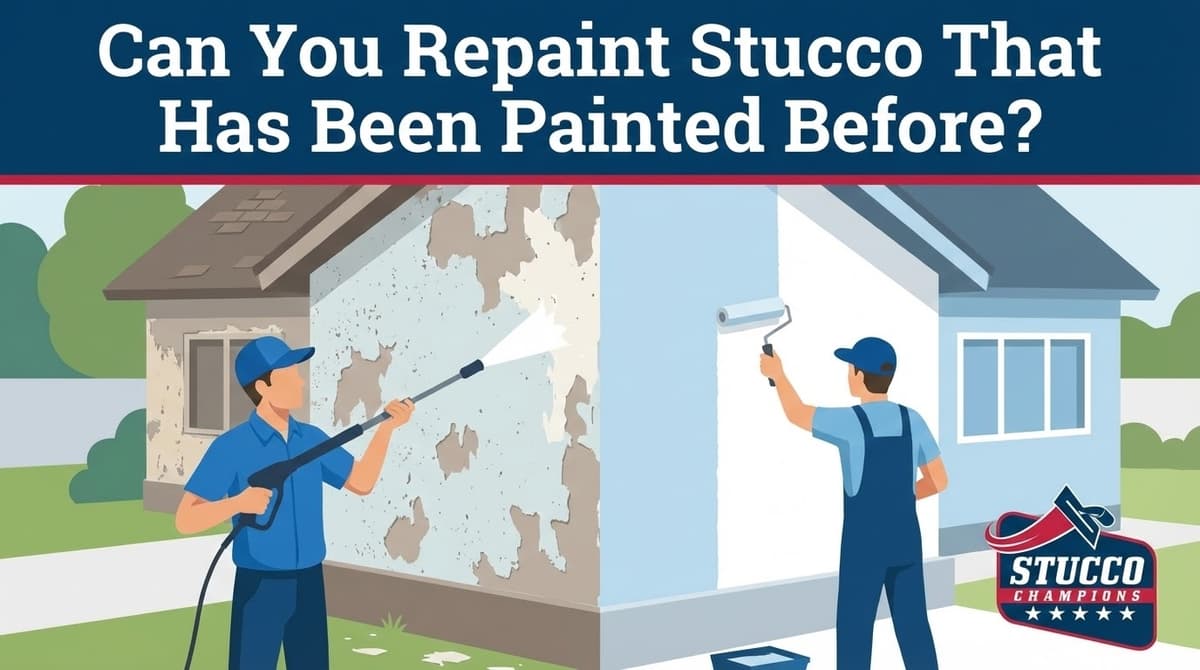
If your stucco home has already been painted, you cannot revert to a traditional, breathable cement fog coat. You must maintain the painted envelope. However, not all exterior paints are engineered for the specific demands of masonry.
Stucco is highly alkaline, highly textured, and subject to extreme thermal movement. Utilizing standard exterior wood paint will result in rapid failure. This guide breaks down the three primary categories of masonry coatings to ensure you select the correct product for your next recoat.
Free Assessment
Noticing Stucco Damage?
Get a free on-site assessment from a licensed contractor. $0 deposit, no obligation.
GET FREE ASSESSMENT1. 100% Acrylic Paint (The Standard Performer)
Premium 100% acrylic paints are the industry standard for structurally sound, previously painted stucco.
- The Chemistry: Acrylic resins provide excellent color retention (UV resistance) and adhere tenaciously to older, properly cleaned acrylic layers.
- Breathability (Perm Rating): High-quality acrylics are "semi-permeable." They repel bulk rainwater from the outside while allowing a moderate amount of water vapor (humidity) to escape from inside the wall cavity.
- When to Use It: This is the ideal choice if your existing stucco is in good condition, free of major cracking, and requires a straightforward aesthetic refresh.
2. Elastomeric Coatings (The Heavy Duty Bridge)
Elastomeric paint is not merely paint; it is a high-build, rubberized liquid waterproofing membrane. It is applied up to ten times thicker than standard acrylic paint.
- The Advantage (Elasticity): Elastomeric coatings can stretch up to 300%. If your home suffers from chronic, widespread hairline "spiderweb" cracking due to thermal expansion or settling, an elastomeric coating will stretch over the micro-cracks as they open and close, keeping the wall waterproof.
- The Risk (Low Breathability): Because it is a thick rubber membrane, it possesses a very low Perm Rating. If bulk water bypasses the coating (e.g., through a leaking roof or uncaulked window), the elastomeric film will trap the moisture inside the wall, causing massive bubbling and structural rot.
- When to Use It: Only specify Elastomeric if your wall requires extreme waterproofing and dynamic crack-bridging. Note: If your house was previously painted with elastomeric, you must recoat it with elastomeric; standard acrylic will not bond to the rubberized surface.
3. Mineral / Silicate Paints (The Breathable Premium)
Mineral silicate paints (such as Keim) represent the pinnacle of masonry coatings, though they are rarely found in big-box hardware stores.
- The Chemistry: Unlike acrylics, which form a plastic film on the surface, silicate paints utilize potassium silicate to chemically bond (petrify) with the masonry substrate.
- The Advantage: They boast an exceptionally high Perm Rating, offering breathability nearly identical to raw stucco. Furthermore, because they contain no organic resins, they are immune to UV fading, blistering, and biological growth.
- When to Use It: Ideal for high-end restorations, historic properties, or highly damp coastal environments where maximum breathability is required to prevent moisture entrapment.
4. The Crucial Role of Masonry Primer
Regardless of the topcoat selected, primer is non-negotiable if you have executed fresh cement repairs on the wall.
New stucco patches possess a pH level of 12 or 13 (highly alkaline). If you apply acrylic paint directly over fresh cement, the alkalinity will chemically "burn" the resin (a process called saponification), causing the paint to instantly peel and fail. You must apply an alkali-resistant masonry primer to neutralize the patch before applying the colored topcoat.
Conclusion
Selecting the right paint is an engineering decision. Use 100% Acrylic for standard maintenance, Elastomeric for chronic hairline cracking, and Mineral paint for ultimate breathability. Always verify the compatibility of the new product with the existing coating to ensure a permanent bond.
A note on fog coat: Stucco Champions does not fog coat older or previously repaired walls. On aged stucco a fog coat telegraphs existing cracks, patch lines, and prior repairs, and it bonds poorly to a rough, chalky, or previously coated surface, so it can dust off or peel. Those walls get a fresh finish coat (re-stucco) instead.
Frequently Asked Questions About Stucco
How much does stucco repair cost in Orange County and Los Angeles?+
Stucco repair typically ranges from $500 for minor crack patching to $5,000+ for full re-stucco of a single elevation. The exact cost depends on the damage type (hairline cracks, water damage, delamination, weep screed failure), the square footage involved, and whether the original three-coat or one-coat stucco system needs to be matched. Stucco Champions provides fixed-price written estimates after a free on-site assessment — no hourly billing, no surprise change orders. See our stucco repair cost guide for detailed pricing by repair type.
How long does stucco last in Southern California?+
Properly installed three-coat stucco lasts 50-80+ years in Southern California's climate. The most common failure points aren't the stucco itself — they're the supporting components: corroded weep screed, deteriorated building paper behind the stucco, and improperly sealed window flashing. Most "stucco failures" are actually moisture-intrusion failures that start at one of these points. Annual visual inspection catches problems before they spread, which is why we offer free weep screed assessments for homeowners in our service area.
Can I repair stucco myself, or do I need a contractor?+
Hairline cracks under 1/8 inch wide can be sealed with elastomeric caulk by a homeowner. Anything larger — pattern cracks, delamination (where stucco pulls away from the wall), water-damaged areas, or chimney/window leak repairs — requires a licensed contractor. Improper DIY repair on these is the #1 cause of repeat failures because the underlying cause (usually moisture) isn't addressed. California's CSLB requires a license for any stucco work over $500. Looking for a highly-rated stucco contractor in Southern California? We are a CSLB-licensed and insured team ready to help.
How do I know if I need stucco repair vs. full re-stucco?+
If less than 30% of an elevation has visible damage, repair is the right call. If you see large areas of cracking, multiple zones of delamination, or the underlying paper and lath have rotted across an entire wall, full re-stucco of that elevation is more cost-effective long-term. Our free assessment includes a moisture survey and lath inspection so you get a defensible recommendation either way — not just a quote pushing whichever option costs more.
Do you offer warranties on stucco work?+
Approved stucco repair work includes a 1-year written workmanship warranty. The applicable terms are documented with the approved scope. Stucco Champions is CSLB licensed and insured; verify license #1122006 through the official state lookup. Request a free estimate to review the scope and warranty terms before you sign.
How long does a stucco repair take?+
Most patch repairs are completed in 1-2 days, including a 24-hour cure time before texture matching and color application. Full re-stucco of a single elevation runs 5-7 working days because each coat (scratch, brown, finish) needs to cure properly before the next is applied. We schedule around weather — California stucco needs daytime temperatures above 50°F with no rain forecast for at least 24 hours after each coat. Our crew shows up on time, every time.
Stucco Diagnostics & Calculators
Diagnose specific wall damage symptoms or estimate job scope with our free guides and calculators.
Related Professional Services
A licensed assessment identifies the cause before the finish is opened or replaced.