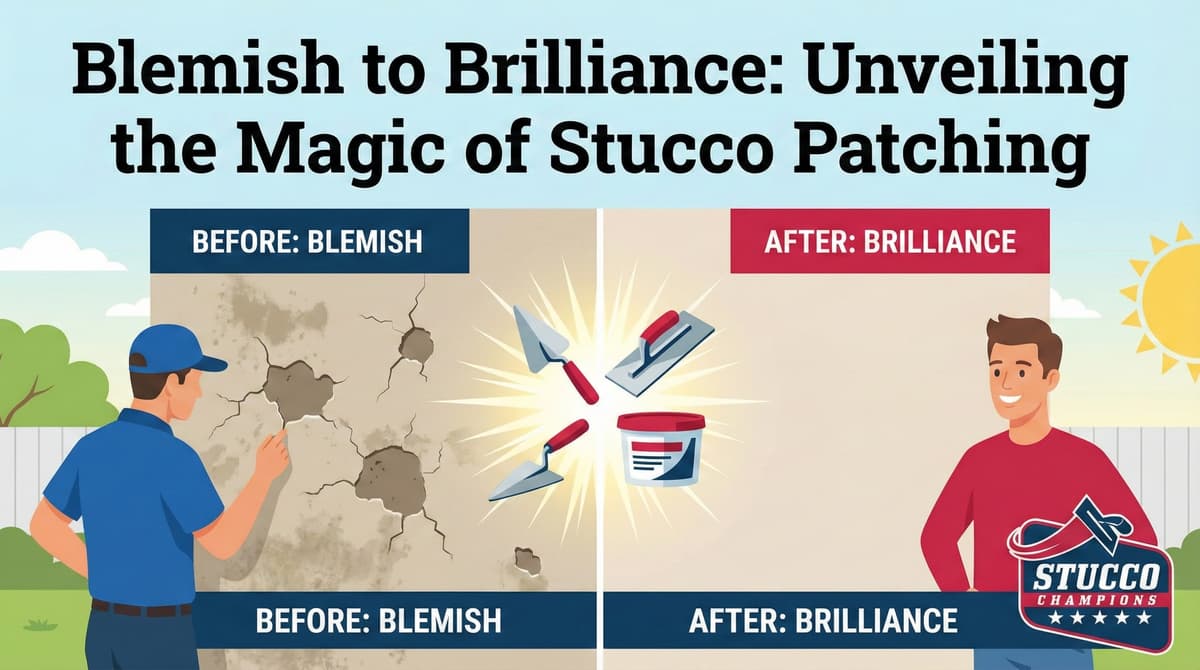
The Anatomy of a Repair: Professional Stucco Patching
Written by Stucco Champions — Southern California’s Authority on Exterior Plastering.
The Anatomy of a Repair: Professional Stucco Patching
Does your exterior bear the scars of time? Chipped corners, impact holes, and fractures are more than just cosmetic eyesores—they are entry points for moisture. In Southern California, where UV exposure degrades building paper and seismic activity stresses the lath, a simple crack can quickly evolve into structural rot.
This guide demystifies the technical process of stucco patching, exploring the surgical approach required to restore your home’s waterproofing envelope rather than relying on temporary surface sealants.
Free Assessment
Noticing Stucco Damage?
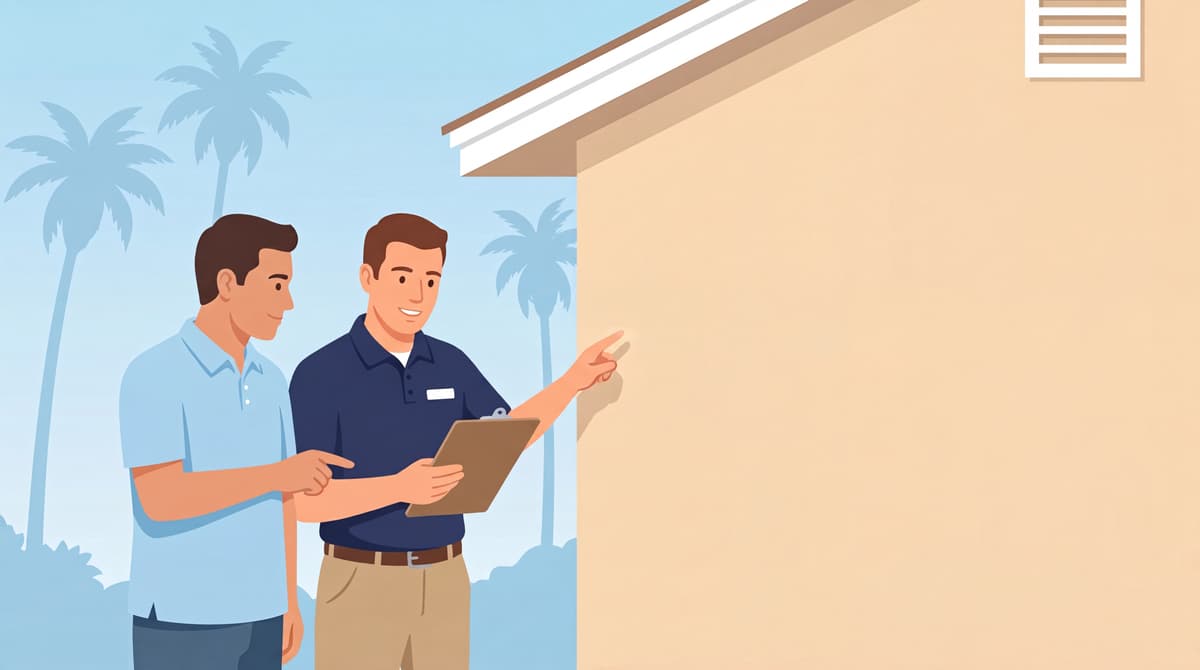
Get a free on-site assessment from a licensed contractor. $0 deposit, no obligation.
GET FREE ASSESSMENT1. Why Patching is Non-Negotiable
Many homeowners ignore small impact holes, assuming stucco is just a decorative skin. However, stucco is the primary defense for your wood framing.
- Structural Integrity: Once water bypasses the stucco, it rusts the metal wire lath. As the metal oxidizes and expands, it forces the stucco off the wall (a process known as spalling). Proper patching halts this cycle.
2. The "Band-Aid" vs. The Surgical Repair
The Temporary Fix (Surface Patching)
Filling a hole with caulk or pre-mixed "stucco patch" from a tube without exposing the lath is a temporary measure. This relies entirely on a surface bond, which will inevitably fail as the house undergoes thermal expansion and contraction.
The Professional Way (ASTM Protocol)
Professional patching follows a strict structural sequence:
- Square Cutting: We use a depth-guarded diamond blade to cut a clean square around the damage, removing the jagged, compromised edges.
- The Shingle Lap: We verify the waterproofing. A new layer of Grade D building paper (or equivalent WRB) must be slid behind the existing paper at the top edge and over the paper at the bottom edge. This overlapping "Shingle Lap" ensures water drains outward.
- Mechanical Bond: We expose the existing wire mesh or install new lath, tying it securely to the structure. The new cement mechanically locks onto this wire, rather than just adhering to old dust.
3. The Patching Process: Step-by-Step
Phase 1: Prep & Prime
Remove all loose debris. If the substrate is concrete or block, apply a liquid bonding agent (such as Weld-Crete) to adhere the new cement to the old surface.
Phase 2: The Base Coat
Apply a base coat of fiber-reinforced stucco. It should be packed tightly into the void and left slightly recessed (about 1/8") to allow volume for the final texture.
Phase 3: The Texture Match
The new texture must fade gradually into the old texture using a wet brush or sponge—a process known as feathering. A hard edge will catch a shadow and look like a scar.
4. Pricing & Expectations
Stucco patching is labor-intensive due to setup, curing times, and multiple coats.
- Typical Cost: Professional patches generally range from $650 to $1,000 per location depending on access, height, and severity.
- Color Matching: New cement is chemically different from old cement. It will rarely match the faded color of the original wall perfectly without painting or fog coating the entire elevation.
5. Post-Patch Maintenance
- Hydration (Curing): Mist the new patch with water for 48 hours. This slows down the hydration process, mitigating shrinkage cracks.
- Sealing: After the patch cures (ideally 28 days to reach a neutral pH), prime and paint it with a high-quality elastomeric or acrylic coating to seal the porosity.
A note on fog coat: Stucco Champions does not fog coat older or previously repaired walls. On aged stucco a fog coat telegraphs existing cracks, patch lines, and prior repairs, and it bonds poorly to a rough, chalky, or previously coated surface, so it can dust off or peel. Those walls get a fresh finish coat (re-stucco) instead.
Frequently Asked Questions About Stucco
How much does stucco repair cost in Orange County and Los Angeles?+
Stucco repair typically ranges from $500 for minor crack patching to $5,000+ for full re-stucco of a single elevation. The exact cost depends on the damage type (hairline cracks, water damage, delamination, weep screed failure), the square footage involved, and whether the original three-coat or one-coat stucco system needs to be matched. Stucco Champions provides fixed-price written estimates after a free on-site assessment — no hourly billing, no surprise change orders. See our stucco repair cost guide for detailed pricing by repair type.
How long does stucco last in Southern California?+
Properly installed three-coat stucco lasts 50-80+ years in Southern California's climate. The most common failure points aren't the stucco itself — they're the supporting components: corroded weep screed, deteriorated building paper behind the stucco, and improperly sealed window flashing. Most "stucco failures" are actually moisture-intrusion failures that start at one of these points. Annual visual inspection catches problems before they spread, which is why we offer free weep screed assessments for homeowners in our service area.
Can I repair stucco myself, or do I need a contractor?+
Hairline cracks under 1/8 inch wide can be sealed with elastomeric caulk by a homeowner. Anything larger — pattern cracks, delamination (where stucco pulls away from the wall), water-damaged areas, or chimney/window leak repairs — requires a licensed contractor. Improper DIY repair on these is the #1 cause of repeat failures because the underlying cause (usually moisture) isn't addressed. California's CSLB requires a license for any stucco work over $500. Looking for a highly-rated stucco contractor in Southern California? We are a CSLB-licensed and insured team ready to help.
How do I know if I need stucco repair vs. full re-stucco?+
If less than 30% of an elevation has visible damage, repair is the right call. If you see large areas of cracking, multiple zones of delamination, or the underlying paper and lath have rotted across an entire wall, full re-stucco of that elevation is more cost-effective long-term. Our free assessment includes a moisture survey and lath inspection so you get a defensible recommendation either way — not just a quote pushing whichever option costs more.
Do you offer warranties on stucco work?+
Approved stucco repair work includes a 1-year written workmanship warranty. The applicable terms are documented with the approved scope. Stucco Champions is CSLB licensed and insured; verify license #1122006 through the official state lookup. Request a free estimate to review the scope and warranty terms before you sign.
How long does a stucco repair take?+
Most patch repairs are completed in 1-2 days, including a 24-hour cure time before texture matching and color application. Full re-stucco of a single elevation runs 5-7 working days because each coat (scratch, brown, finish) needs to cure properly before the next is applied. We schedule around weather — California stucco needs daytime temperatures above 50°F with no rain forecast for at least 24 hours after each coat. Our crew shows up on time, every time.
Stucco Diagnostics & Calculators
Diagnose specific wall damage symptoms or estimate job scope with our free guides and calculators.
Related Professional Services
A licensed assessment identifies the cause before the finish is opened or replaced.