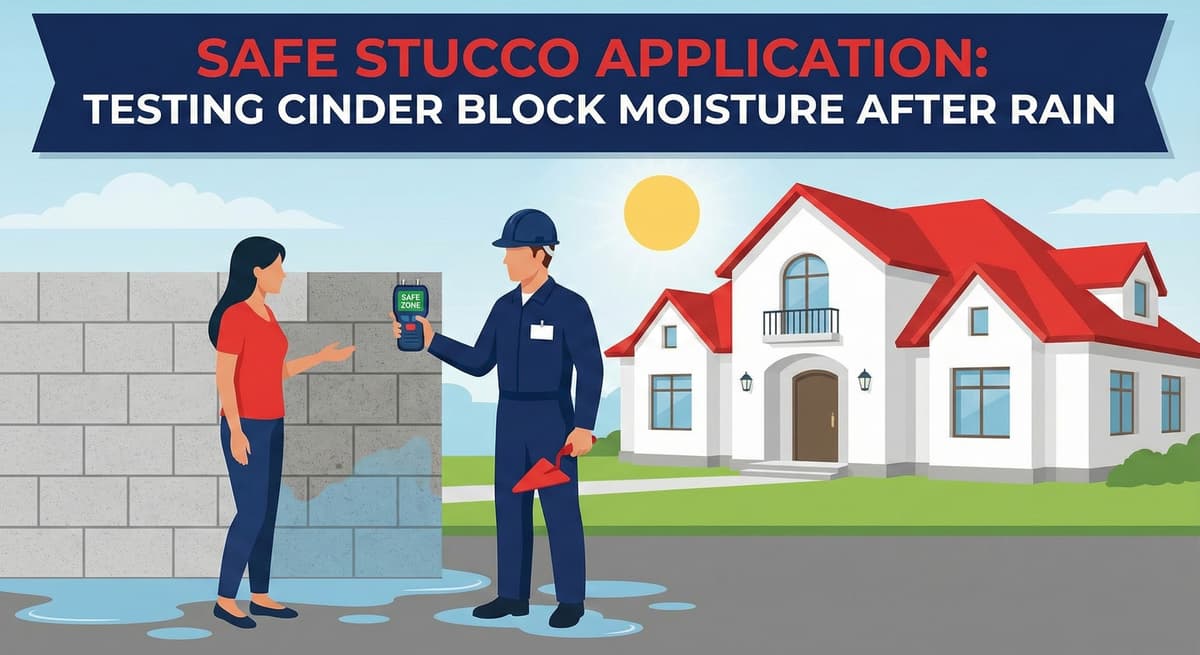
How to Safely Apply Stucco Base Coat Cinder Block After Rain
Written by Stucco Champions — Southern California’s Authority on Exterior Plastering.
The Rain Delay: Applying Stucco Base Coat to Cinder Block After a Storm
In Southern California, our rainy season is short but intense. For homeowners and contractors mid-project, a soaked cinder block wall presents a critical decision: Do we apply the scratch coat now, or do we wait?
Applying stucco to a saturated masonry wall is a gamble. If the block is too wet, the bond fails, and the stucco slides off. If it’s too dry, the block sucks the moisture out of the mix, causing cracking. This guide explains the science of the SSD (Saturated Surface Dry) condition and how to determine if your wall is ready for cement.
1. The Physics of Bonding: Why Moisture Matters
Stucco adheres to cinder block (CMU) through a combination of mechanical keying and chemical bonding.
Too Wet: If the block is saturated, the pores are full of water. The new stucco cannot penetrate the surface to create a grip. This leads to "slumping" (sliding) and eventual delamination.
Too Dry: Cinder block is a sponge. If it is bone dry, it will instantly suck the hydration water out of your wet stucco. This "flash drying" stops the chemical cure, leaving you with a weak, crumbly coat.
Free Assessment
Noticing Stucco Damage?
Get a free on-site assessment from a licensed contractor. $0 deposit, no obligation.
GET FREE ASSESSMENT2. The Diagnostic: Is It Ready?
You cannot judge moisture by looking at the wall; you have to test it. We look for the "Goldilocks" zone.
The Absorption Test
Splash a cup of water against the block.
Result A: The water runs down the face without soaking in.
Verdict: Too Wet (or Sealed). Do not apply stucco. The pores are already full.
Result B: The water absorbs instantly and the spot dries in seconds.
Verdict: Too Dry. You must mist the wall before application to prevent flash drying.
Result C: The water absorbs, turning the block dark, but the surface sheen disappears quickly.
Verdict: Perfect (SSD Condition). This is the ideal state for bonding.
Rain brings salts to the surface. If you see a white, chalky powder on the block after it dries, this is Efflorescence. You must remove this before stuccoing. If you apply base coat over salts, the bond will fail. Scrub it with a stiff brush and a mild vinegar/water solution.
3. The Application Protocol
Once the moisture level is correct (SSD), you proceed with the Direct-Apply system.
Step A: The Bonding Agent
Even if the moisture is perfect, we recommend insurance. Apply a liquid bonding agent (like Weld-Crete) or a "dash coat" (cement slurry) to the block. This chemical adhesive ensures the new stucco sticks even if the block moisture varies across the wall.
Step B: The Fiber-Reinforced Base
Do not use standard mortar. Use a Fiber-Reinforced Stucco Base (like Omega or Quikrete).
Why? Cinder block walls have grout lines that absorb water differently than the block face. This causes "telegraphing" (grid patterns) in the finish. The fibers in the mix act as a bridge, preventing these cracks from transferring to the surface.
Step C: The Scratch
Apply the base coat 3/8" thick. While wet, run a scarifier (scratch tool) horizontally across the surface. This mechanical key is essential for the finish coat to hang onto later.
4. Accelerating the Process
If you are on a tight schedule and the wall is soaked, you can speed up evaporation.
- Air Movement: Set up high-velocity fans aimed at the wall. Wind dries masonry faster than heat.
- Heat: In extreme cases, tent the area and run a propane heater, but ensure ventilation to prevent carbonation of the concrete surface.
Conclusion: Respect the Sponge
Cinder block is a sponge. Managing how much water is inside that sponge determines the success of your stucco job. If it rained yesterday, check the absorption today. Ideally, you want a damp interior but a dry surface (SSD) to guarantee a bond that lasts 50 years.
Related ResourcesLast week, we shared How to Properly Stucco Cinder Block Walls. This guide covers the full application process in detail.