Stucco Warning Signs: What to Do About a Rusty Weep Screed
Written by Stucco Champions — Southern California’s Authority on Exterior Plastering.
Should You Replace a Rusty Weep Screed? A Technical Assessment
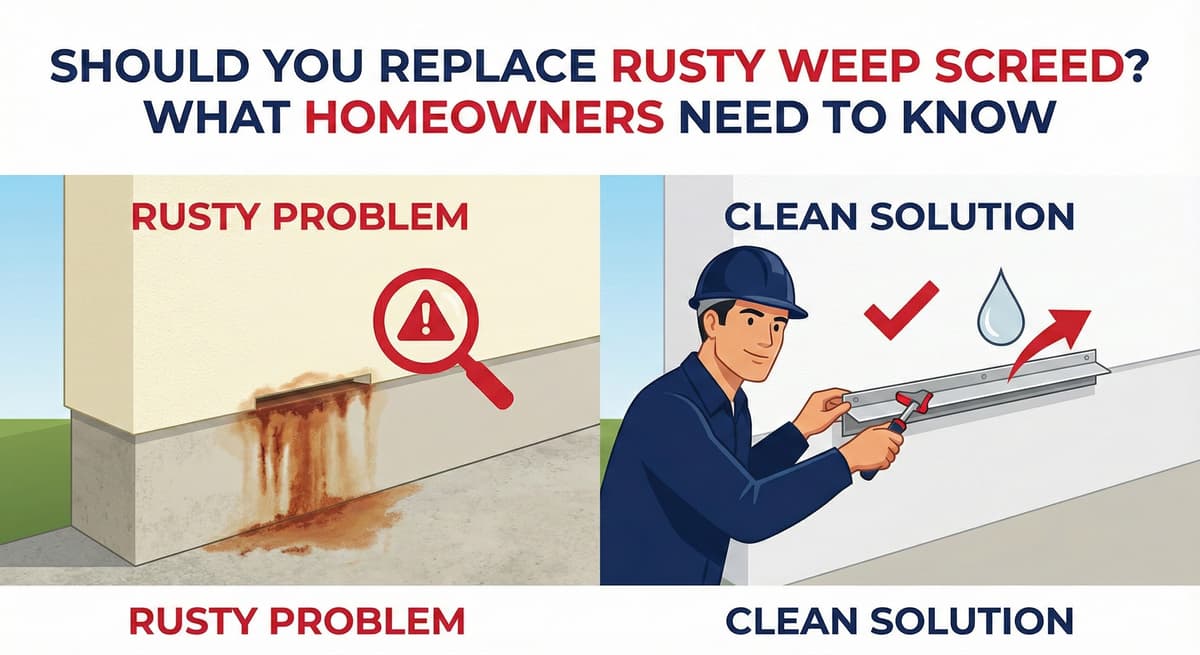
In the coastal and high-humidity zones of Southern California, rust at the foundation line is a common sight. This corrosion attacks the weep screed, the critical metal flashing responsible for draining moisture from your stucco walls. While unsightly, rust is often ignored until it causes significant structural damage.
So, when does "surface rust" become "structural failure"? This guide explains the pathology of metal corrosion in stucco systems and the professional protocol for repair.
See rust at your foundation line? Take our Weep Screed Assessment now — it only takes 2 minutes.
Free Assessment
Noticing Stucco Damage?
Get a free on-site assessment from a licensed contractor. $0 deposit, no obligation.
GET FREE ASSESSMENT1. The "Rust Jacking" Phenomenon
Weep screeds are typically made of galvanized steel (zinc-coated). Over time, moisture and soil acidity eat through the zinc, exposing the raw steel to oxygen.
What Happens Next: Iron oxide (rust) occupies 4-6 times the volume of the original steel. As the metal rusts, it expands. This force, known as "Rust Jacking," cracks the surrounding stucco and pushes it off the wall, creating a direct path for water and termites to enter the framing under **ASTM C1063** lath conditions.
2. Diagnostic Matrix: Monitor vs. Replace
Not every rust stain requires demolition. Use this guide to assess severity.
| Symptom | Diagnosis | Action Required |
|---|---|---|
| Orange Stains Only | Cosmetic Surface Rust. | Wire brush, prime with rust inhibitor, and paint. |
| Flaking Metal | Pitting Corrosion. The metal is thinning. | Monitor closely; plan for replacement in 1-2 years. |
| Cracked Stucco | Rust Jacking. The metal is expanding. | Immediate Replacement. The envelope is compromised. |
| Perforation (Holes) | Total Failure. Water is entering the wall. | Emergency Replacement to prevent dry rot. |
3. The Replacement Protocol
Replacing a weep screed is a surgical procedure. You cannot just slide a new one in.
The Process:
- Demolition: We saw-cut the bottom 8-12 inches of stucco along the entire affected wall to expose the framing.
- Extraction: The old, rusted screed is pried off. We inspect the mudsill plate (wood framing) for rot and termites.
- Integration: A new screed is installed. Critical Step: New water-resistive barrier paper (**CRC Section R703.7.3** double-layer Grade D paper) must be slid under the existing paper above to create a proper shingle lap.
- Re-Stucco: We install new wire lath and apply a three-coat patch to match the existing texture per **ASTM C926** standards.
4. Upgrade Options: Vinyl & Stainless
If you live near the beach (Salt Air Zone), replacing galvanized steel with galvanized steel is a temporary fix. It will rust again.
The Upgrade Options:
- Vinyl (PVC) Screed: Impervious to rust. The best choice for coastal homes, though less rigid than metal.
- Stainless Steel: Extremely expensive but virtually indestructible. Used in high-end custom estates.
The #1 cause of premature weep screed rust is Soil Contact. Code requires clearances of at least 4 inches between the weep screed and the raw soil/earth and at least 2 inches above concrete/paved surfaces. If you pile mulch or dirt against the metal, the acidity in the soil eats the galvanization in months. Keep the grade low!
Conclusion: Don't Wait for the Leak
A rusty weep screed is a "Check Engine Light" for your home. Catching it early allows for a simple repair. Ignoring it leads to dry rot repairs costing thousands. At Stucco Champions, we specialize in the surgical replacement of these critical components, ensuring your home's drainage system functions perfectly.
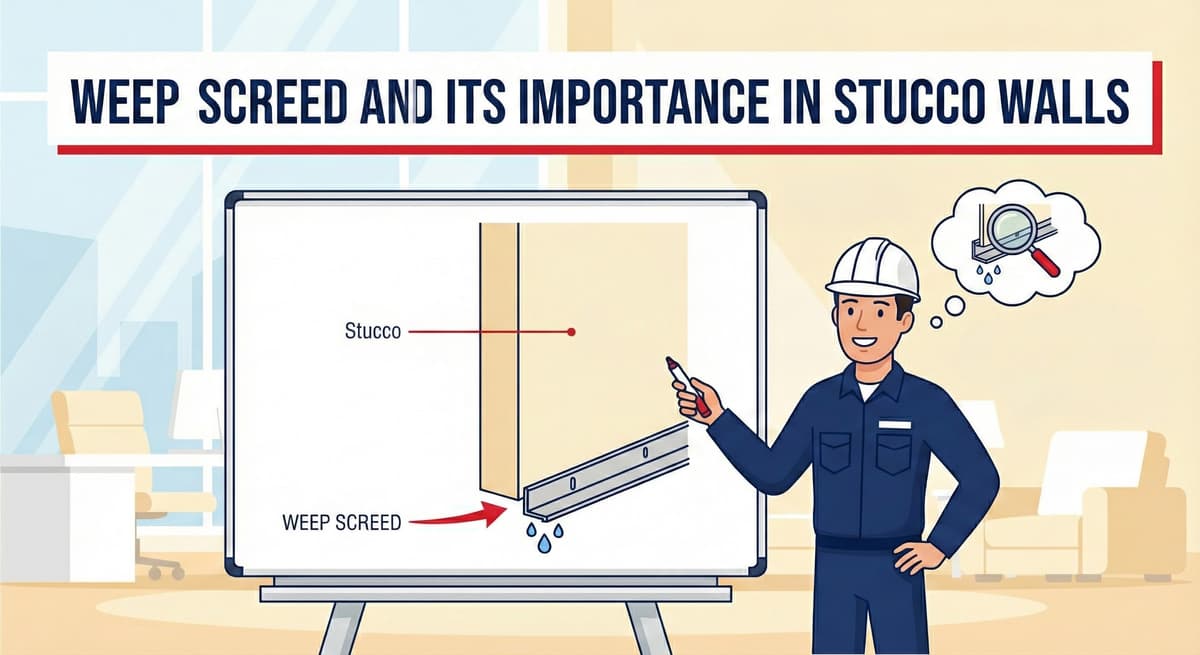
Last week, we shared Importance of Weep Screed in Stucco Walls. Understand the physics of drainage.
Worried About a Rusty Weep Screed?
Our free visual self-check helps you determine if your weep screed needs attention — takes just 2 minutes.
Free Weep Screed AssessmentFrequently Asked Questions About Stucco
How much does stucco repair cost in Orange County and Los Angeles?+
Small stucco patches start at $650, larger repairs start at $1,200, and re-stucco of a single elevation up to about 400 sq ft runs about $1,400 - $5,900+. The exact cost depends on the damage type (hairline cracks, water damage, delamination, weep screed failure), the square footage involved, and whether the original three-coat or one-coat stucco system needs to be matched. Stucco Champions provides fixed-price written estimates after a free on-site assessment — no hourly billing, no surprise change orders. See our stucco repair cost guide for detailed pricing by repair type.
How long does stucco last in Southern California?+
Properly installed three-coat stucco lasts 50-80+ years in Southern California's climate. The most common failure points aren't the stucco itself — they're the supporting components: corroded weep screed, deteriorated building paper behind the stucco, and improperly sealed window flashing. Most "stucco failures" are actually moisture-intrusion failures that start at one of these points. Annual visual inspection catches problems before they spread, which is why we offer free weep screed assessments for homeowners in our service area.
Can I repair stucco myself, or do I need a contractor?+
Hairline cracks under 1/8 inch wide can be sealed with elastomeric caulk by a homeowner. Anything larger — pattern cracks, delamination (where stucco pulls away from the wall), water-damaged areas, or chimney/window leak repairs — requires a licensed contractor. Improper DIY repair on these is the #1 cause of repeat failures because the underlying cause (usually moisture) isn't addressed. California's CSLB requires a license for any stucco work over $500. Looking for a highly-rated stucco contractor in Southern California? We are a CSLB-licensed and insured team ready to help.
How do I know if I need stucco repair vs. full re-stucco?+
If less than 30% of an elevation has visible damage, repair is the right call. If you see large areas of cracking, multiple zones of delamination, or the underlying paper and lath have rotted across an entire wall, full re-stucco of that elevation is more cost-effective long-term. Our free assessment includes a moisture survey and lath inspection so you get a defensible recommendation either way — not just a quote pushing whichever option costs more.
Do you offer warranties on stucco work?+
Approved stucco repair work includes a 1-year written workmanship warranty. The applicable terms are documented with the approved scope. Stucco Champions is CSLB licensed and insured; verify license #1122006 through the official state lookup. Request a free estimate to review the scope and warranty terms before you sign.
How long does a stucco repair take?+
Most patch repairs are completed in 1-2 days, including a 24-hour cure time before texture matching and color application. Full re-stucco of a single elevation runs 5-7 working days because each coat (scratch, brown, finish) needs to cure properly before the next is applied. We schedule around weather — California stucco needs daytime temperatures above 50°F with no rain forecast for at least 24 hours after each coat. Our crew shows up on time, every time.
Stucco Diagnostics & Calculators
Diagnose specific wall damage symptoms or estimate job scope with our free guides and calculators.
Related Professional Services
A licensed assessment identifies the cause before the finish is opened or replaced.