Stucco Brand Guide: Acrylic Finish Brands & How to Choose
Written by Stucco Champions - Southern California's Authority on Exterior Plastering.
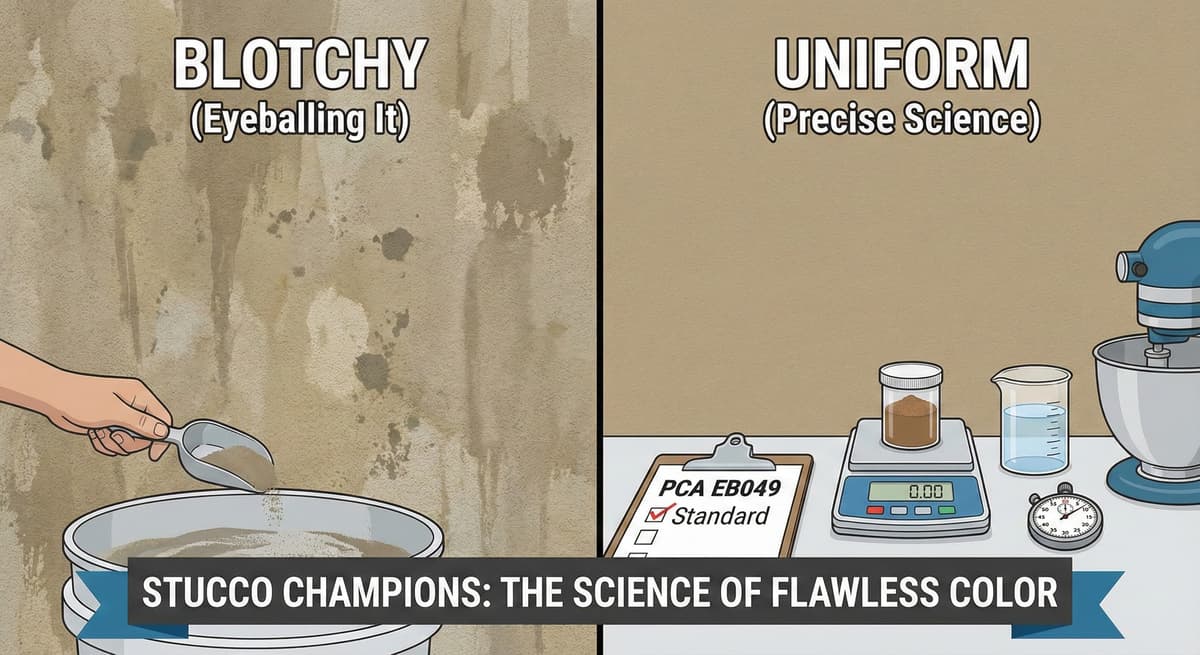
Choosing the right stucco brand matters most when the project uses acrylic finish, dark colors, smooth textures, or a large wall area where color consistency has to be controlled. The brand affects workability, texture options, dirt resistance, color stability, and how well the finish performs in Southern California sun, salt air, and heat.
Acrylic stucco is a synthetic finish coat made with acrylic polymer resins, graded aggregate, pigments, and performance additives. It is applied over a properly prepared stucco base coat to create the final color and texture of the wall. It is not the structural stucco layer by itself.
This guide explains how to compare finish brands, what acrylic finish is, which names homeowners commonly hear about, and when product choice matters more than the logo on the bucket.
Quick Answer: What Stucco Brand Should You Choose?
The best stucco brand is the one that fits the finish type, color, wall condition, local availability, and the contractor's experience with that product. Parex, LaHabra, El Rey, Sto, and Omega are common names in acrylic stucco and finish-coat conversations, but brand alone does not guarantee a good result. Surface prep and installer skill still matter more than the label.
| Decision Factor | Why It Matters |
|---|---|
| Finish texture | Fine, sand, smooth, swirl, and heavier textures behave differently by product line. |
| Color depth | Dark colors and bright whites often benefit from acrylic finish and strong pigment control. |
| Workability | Some products stay open longer, float cleaner, or resist tearing better in hot weather. |
| System compatibility | The finish should match the wall system, primer, base coat, and manufacturer requirements. |
| Installer familiarity | A crew that knows the product can usually produce a cleaner, more consistent finish. |
Free Assessment
Noticing Stucco Damage?
Get a free on-site assessment from a licensed contractor. $0 deposit, no obligation.
GET FREE ASSESSMENTWhat Is Acrylic Stucco?
Acrylic stucco is a pre-mixed synthetic finish coat. Traditional cement finish cures hard and mineral-like. Acrylic finish dries into a more flexible coating that can hold color evenly, resist some surface staining, and shed liquid water better than many cement finishes.
That does not mean acrylic is a repair shortcut. It should be applied over a sound, properly prepared wall. If the wall is wet, soft, cracked from movement, or poorly floated, an acrylic finish will not fix the underlying problem.
Acrylic finish is commonly used for modern exterior upgrades, darker colors, consistent fine textures, and projects where the homeowner wants a clean finish with tighter color control.
Stucco Brand vs. Stucco System
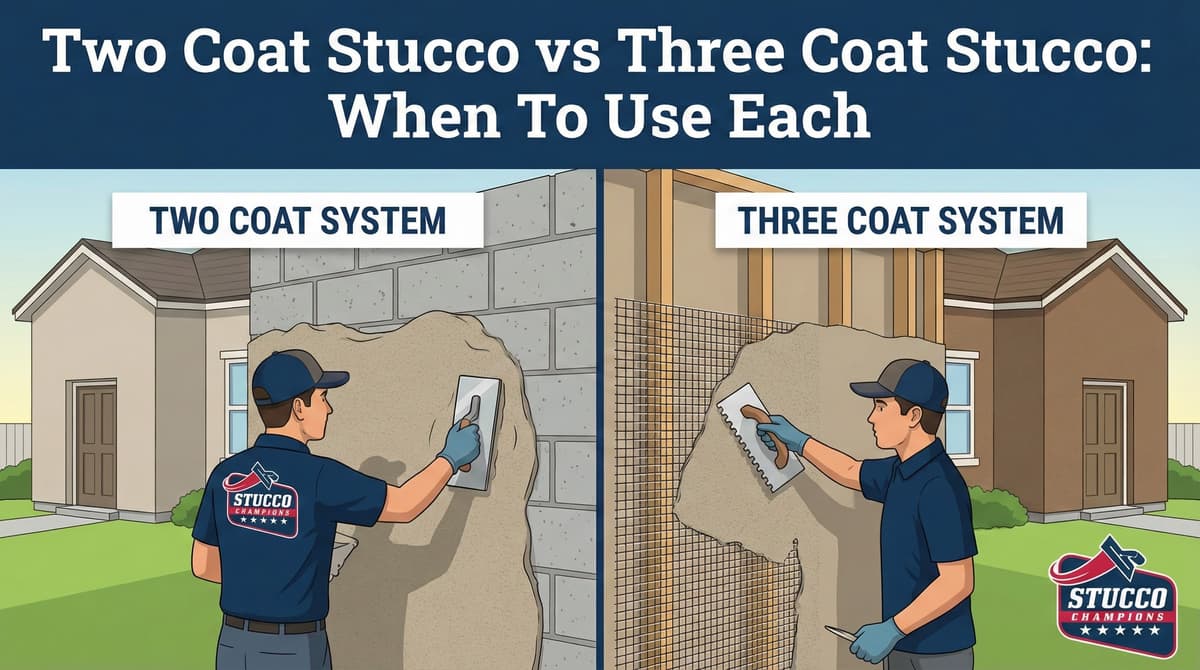
A common mistake is treating the product label as if it describes the entire wall system. A manufacturer may make finish coats, base coats, EIFS products, primers, coatings, and accessories. The brand name alone does not tell you whether the wall is traditional stucco, one-coat stucco, EIFS, or a cement stucco wall with an acrylic finish.
For example, acrylic finish can be used over traditional stucco assemblies when the wall is prepared correctly. It can also be part of EIFS assemblies. Those are different wall systems even if the finish texture looks similar from the street.
If you are comparing wall systems, review our guide to stucco vs. EIFS. If you are choosing a finish for a conventional stucco home, start with the wall condition and desired texture before picking the brand.
How to Compare Acrylic Stucco Brands
When comparing acrylic stucco brands, look beyond name recognition. The best product on paper can perform poorly if it is applied over the wrong substrate, in the wrong weather, or by a crew that is not comfortable with the material.
Important comparison points include:
- Texture range: Fine, medium, sand, swirl, and specialty textures should match the desired finish.
- Dirt pickup resistance: Some acrylic finishes include additives that help reduce dust and smog staining.
- Color support: Dark or saturated colors may need a product line designed for stronger pigment stability.
- Open time: In warm weather, material that dries too fast can tear, drag, or show lap marks.
- Vapor permeability: The finish should resist liquid water without trapping vapor inside a wall that needs to dry.
- Local supply: A product that is easy to source locally is easier to match for future repairs.
Common Acrylic Stucco Brand Names
The brands below are common names homeowners may hear during acrylic finish, smooth stucco, EIFS, and exterior coating conversations. The right choice still depends on the specific product line, color, texture, wall system, and applicator.
Parex USA, LaHabra, and El Rey
Parex USA is associated with several major stucco and finish brands used across residential and commercial exterior work. LaHabra is especially familiar in California stucco conversations, while El Rey is also common in Southwest markets.
These brands are often considered when the project needs familiar color systems, acrylic finish options, and strong local recognition. For many homeowners, the advantage is not just the product name. It is the availability of colors, textures, and contractors who have used the materials before.
Sto
Sto is known for engineered wall systems, EIFS-related assemblies, and high-performance exterior finish products. A contractor may recommend Sto when water shedding, dirt resistance, bright whites, or commercial-grade finish performance are important.
Sto can be a strong option for high-performance finishes, but it should be used as part of a properly detailed wall assembly. Brand performance depends on system design, not just the final coat.
Omega Products
Omega is popular with many plastering contractors because of workability and familiar texture options. Applicators often care about how a finish feels on the wall: whether it floats cleanly, tears, drags, or gives enough working time to produce a consistent surface.
For difficult smooth or fine finishes, installer comfort with the material can make a visible difference.
Brand Choice for Smooth Stucco
Smooth stucco is where brand and installer skill both become more noticeable. A fine acrylic finish can support a clean modern look, but it will not hide a wavy brown coat, bad patch lines, or inconsistent wall preparation.
If the goal is a smooth exterior, the wall needs to be floated flatter before the finish is applied. The acrylic product can help with color consistency and fine texture, but the substrate determines whether the finished wall looks clean in direct sunlight.
For expectations around flat modern finishes, see our smooth stucco finish service page. For a texture comparison, review sand finish stucco vs. smooth stucco.
When Brand Matters Less Than Wall Condition
A premium finish product will not save a failing wall. Before choosing a manufacturer or coating line, check for cracks, bubbling paint, soft areas, staining, buried weep screed, or signs of water trapped behind the stucco.
If the wall has active moisture problems, delamination, rusted lath, or damaged sheathing, repair comes first. Applying a high-end acrylic finish over a wet or unstable wall can trap symptoms and make the next repair more expensive.
For repair-first situations, start with our stucco repair service page or the guide to stucco water damage repair.
Questions to Ask Before Choosing a Brand
Before approving a stucco brand, ask how the finish will be used on the actual wall instead of choosing from a sample board alone. Small samples can look clean indoors, but exterior walls show shadows, patch lines, sunlight, and texture variation differently.
Good questions include:
- Is the existing wall traditional stucco, one-coat stucco, EIFS, or a previous coating? The answer affects primer, base preparation, and finish compatibility.
- Will the finish be smooth, sand, or heavier texture? Smooth finishes usually expose wall flatness problems faster than sand or medium textures.
- Is the color dark, bright white, or custom-matched? Some acrylic product lines handle color depth and pigment consistency better than others.
- Is the wall near ocean air, heavy sun, sprinklers, or high-traffic areas? Exposure affects staining, fading, water shedding, and long-term maintenance.
- Can the same material be sourced later for repairs? A locally available product is easier to match if a future patch, addition, or wall repair is needed.
- Does the contractor regularly install that exact product line? Familiarity matters because acrylic finish timing, floating, and edge control change by material.
The best choice is usually the brand and product line that match the wall, texture goal, color, and installer process. If two products are similar, choose the one your contractor can source reliably and apply consistently on Southern California exterior walls.
Final Recommendation
If you are choosing a stucco brand, do not start with the logo. Start with the wall system, finish texture, color, climate exposure, and contractor experience. Parex, LaHabra, El Rey, Sto, and Omega can all be appropriate in the right situation, but the best result comes from matching the product to the wall and having it installed correctly.
For acrylic stucco, brand choice matters most when the project involves dark colors, smooth finishes, large elevations, coastal exposure, or future texture matching. For basic repairs, the right diagnosis and preparation are more important than the most expensive finish bucket.
Need help choosing a stucco finish or brand? Contact Stucco Champions for a free consultation and a finish recommendation based on your wall condition, texture goals, and exterior style.
Frequently Asked Questions About Stucco
How much does stucco repair cost in Orange County and Los Angeles?+
Stucco repair typically ranges from $500 for minor crack patching to $5,000+ for full re-stucco of a single elevation. The exact cost depends on the damage type (hairline cracks, water damage, delamination, weep screed failure), the square footage involved, and whether the original three-coat or one-coat stucco system needs to be matched. Stucco Champions provides fixed-price written estimates after a free on-site assessment — no hourly billing, no surprise change orders. See our stucco repair cost guide for detailed pricing by repair type.
How long does stucco last in Southern California?+
Properly installed three-coat stucco lasts 50-80+ years in Southern California's climate. The most common failure points aren't the stucco itself — they're the supporting components: corroded weep screed, deteriorated building paper behind the stucco, and improperly sealed window flashing. Most "stucco failures" are actually moisture-intrusion failures that start at one of these points. Annual visual inspection catches problems before they spread, which is why we offer free weep screed assessments for homeowners in our service area.
Can I repair stucco myself, or do I need a contractor?+
Hairline cracks under 1/8 inch wide can be sealed with elastomeric caulk by a homeowner. Anything larger — pattern cracks, delamination (where stucco pulls away from the wall), water-damaged areas, or chimney/window leak repairs — requires a licensed contractor. Improper DIY repair on these is the #1 cause of repeat failures because the underlying cause (usually moisture) isn't addressed. California's CSLB requires a license for any stucco work over $500. Looking for a highly-rated stucco contractor in Southern California? We are a CSLB-licensed and insured team ready to help.
How do I know if I need stucco repair vs. full re-stucco?+
If less than 30% of an elevation has visible damage, repair is the right call. If you see large areas of cracking, multiple zones of delamination, or the underlying paper and lath have rotted across an entire wall, full re-stucco of that elevation is more cost-effective long-term. Our free assessment includes a moisture survey and lath inspection so you get a defensible recommendation either way — not just a quote pushing whichever option costs more.
Do you offer warranties on stucco work?+
Approved stucco repair work includes a 1-year written workmanship warranty. The applicable terms are documented with the approved scope. Stucco Champions is CSLB licensed and insured; verify license #1122006 through the official state lookup. Request a free estimate to review the scope and warranty terms before you sign.
How long does a stucco repair take?+
Most patch repairs are completed in 1-2 days, including a 24-hour cure time before texture matching and color application. Full re-stucco of a single elevation runs 5-7 working days because each coat (scratch, brown, finish) needs to cure properly before the next is applied. We schedule around weather — California stucco needs daytime temperatures above 50°F with no rain forecast for at least 24 hours after each coat. Our crew shows up on time, every time.
Stucco Diagnostics & Calculators
Diagnose specific wall damage symptoms or estimate job scope with our free guides and calculators.
Related Professional Services
A licensed assessment identifies the cause before the finish is opened or replaced.