Why Is My Stucco Bulging or Soft? What It Means and When to Repair It

If you notice a section of your exterior wall feels soft to the touch, sounds hollow when you tap on it, or looks like it is bulging outward, it should not be ignored. While minor surface flaws are common, bulging or soft stucco often means that the finish coat, base coat, wire lath, waterproofing paper, or the base wall itself is failing.
Quick Answer
If stucco is bulging, soft, or hollow, it usually means the stucco has separated from the wall or moisture has damaged the layers behind it. It may be caused by trapped water, failed paper, corroded lath, impact damage, buried weep screed, or old patch work. A small surface crack can sometimes be monitored, but soft or moving stucco should be inspected before patching or painting.
Free Assessment
Noticing Stucco Damage?
Get a free on-site assessment from a licensed contractor. $0 deposit, no obligation.
GET FREE ASSESSMENTWhat Bulging or Soft Stucco Usually Means
When stucco pulls away from the wall, it loses its structural integrity. Bulging indicates that the mechanical bond holding the heavy cement layers to your home has broken. Softness or a hollow sound confirms that the area behind the finish coat is no longer solid. This is frequently referred to as stucco delamination, which happens when the layers detach from the wire lath or the lath itself detaches from the framing.
Common Causes of Bulging Stucco
Understanding what causes stucco to fail is the first step toward a permanent fix. Several factors can lead to soft, hollow, or bulging walls.
Trapped moisture behind the stucco
When water gets behind the protective layers and cannot escape, it begins to break down the materials holding the stucco in place. This trapped moisture is a common cause of severe stucco failure.
Stucco delamination
Over time, the layers of stucco can separate from one another or from the underlying wire lath. This delamination creates a void, resulting in a hollow sound and a visibly bulging surface.
Corroded wire lath
The wire lath acts as the skeleton of your stucco wall. If moisture reaches the metal lath and causes it to rust and corrode, the lath can expand, weaken, and eventually lose its ability to hold the stucco in place, leaving the heavy stucco with nothing to hold onto.
Failed or missing waterproofing paper
Building paper or moisture barriers prevent water from reaching the wood framing. If this paper tears, fails, or was never installed correctly, moisture can easily rot the wood and compromise the entire wall assembly.
Buried or damaged weep screed
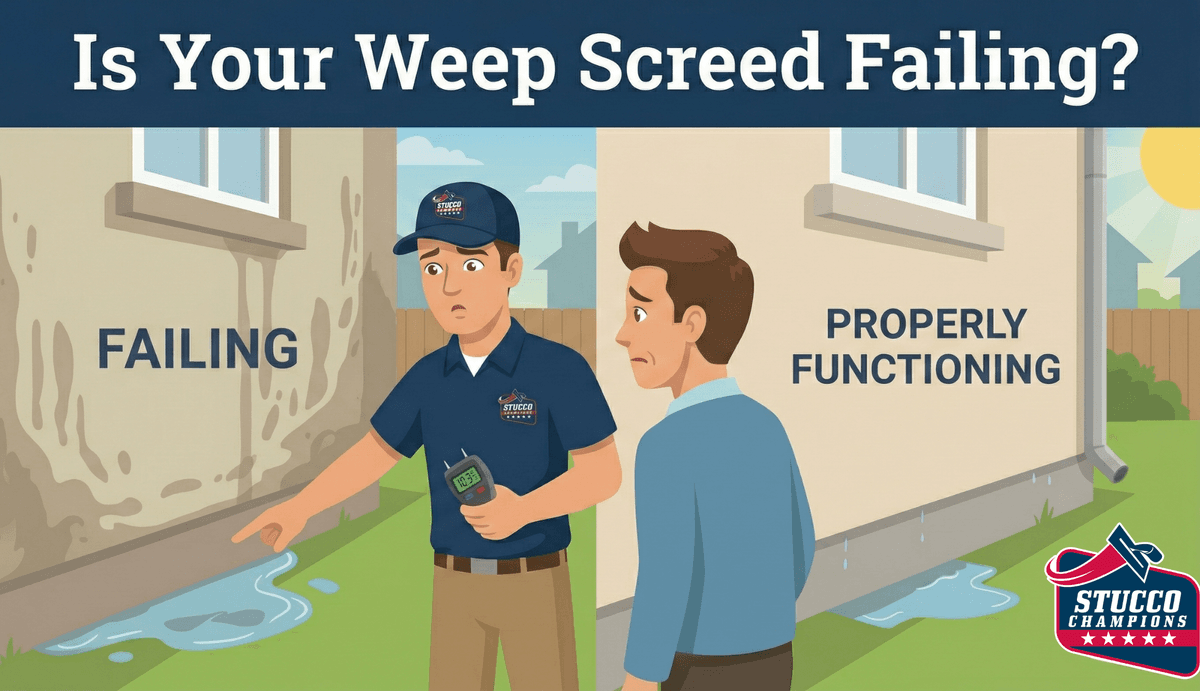
A weep screed is designed to let water exit the bottom of your stucco walls. If it is buried by soil, concrete, or planters, water backs up into the wall. This trapped water leads to soft stucco and rot near the foundation. Read more about weep screed repair.
Old patch work or impact damage
Previous repairs that were not blended correctly or impact damage from vehicles or equipment can weaken the bond. Poorly patched areas are highly susceptible to popping loose and bulging over time.
Wall movement or settlement
As a house settles or experiences seismic movement, the rigid stucco can shift. This movement can snap the mechanical bonds, causing sections to bulge outward and crack. If you are noticing other types of fractures, review what causes stucco cracks.
How to Tell If It Is Surface Damage or a Deeper Wall Problem
A tight, thin hairline crack is often just a surface issue caused by natural shrinkage. However, if you press on the wall and it moves, or if you tap the area and it sounds like a hollow drum, you are dealing with a deeper substrate problem. Discoloration, white chalky streaks (efflorescence), and significant bulging are clear signs that the damage extends beyond the surface layer.
Why You Should Not Just Patch or Paint Over It
It can be tempting to simply paint over a bulge or seal it with caulk. Doing so will trap existing moisture inside the wall, accelerating rot, mold growth, and lath corrosion. Painting over a hollow spot does not restore the structural bond. The heavy stucco will eventually crack again or fall off completely, leading to a much more expensive repair project. See our guide on stucco repair vs replace to understand the differences in repair methods.
When Bulging Stucco Needs Professional Repair
If the stucco feels soft, easily crumbles, has visible water stains, or flexes when pushed, it is time to call a professional. Any bulging area larger than a few inches poses a risk of falling and exposing your home framing to the elements. Professional stucco repair ensures the root cause is fixed so the problem does not return.
What a Stucco Inspection Should Check
A thorough evaluation is critical to determining the true scope of the damage.
Tap test and movement check
A professional will tap the wall to map out the exact boundaries of the hollow, delaminated area. They will also gently press on the stucco to feel for movement or softness.
Crack pattern review
The shape and direction of the cracks surrounding the bulge can provide clues about whether the issue is related to settling, thermal expansion, or severe water intrusion.
Moisture staining or efflorescence
Inspectors look for dark stains, mold, or white mineral deposits (efflorescence) on the surface, which clearly indicate water is traveling through the stucco assembly.
Base-wall and weep screed clearance
The bottom of the wall must be checked to ensure the weep screed is clear and functioning. A blocked screed is an important warning sign. You can try a weep screed assessment to evaluate this area.
Window, door, and penetration areas
Inspectors examine the caulking and flashing around windows, doors, and pipes, as these are common entry points for water that eventually causes lower wall bulging.
Whether the wall needs opening for deeper diagnosis
Sometimes, the only way to know the extent of the rot or lath corrosion is to carefully open a small section of the soft stucco to inspect the framing and waterproofing paper behind it.
Repair Options: Patch, Section Repair, Weep Screed Work, or Re-Stucco
Depending on the inspection results, the solution could range from cutting out and repairing a localized section to completely rebuilding the lower wall. If a blocked weep screed is the culprit, the repair must include installing proper drainage. For extensive delamination across multiple walls, a full re-stucco might be the most cost-effective long-term option. If you are wondering about the timeline, you can learn how long does stucco repair take or review our stucco repair cost guide.
What Homeowners in Orange County and Los Angeles Should Do Next
Living in Southern California means your home faces unique coastal moisture, heat cycles, and seismic activity. Addressing soft or bulging stucco early can save you from extensive dry rot and structural damage down the line.
Frequently Asked Questions
Is bulging stucco dangerous?
Yes, it can be. Heavy sections of loose stucco can detach and fall, posing a safety hazard. It also exposes the wood framing of your home to moisture, which can contribute to rot or moisture-related damage.
Can I push bulging stucco back into place?
No. Once the mechanical bond between the stucco and the wire lath is broken, it cannot be simply pushed back or glued. The damaged section must be removed and properly rebuilt.
Can I paint over soft or hollow stucco?
Painting over soft stucco will only hide the problem temporarily and can actually trap moisture inside the wall, making the underlying damage much worse.
Does bulging stucco always mean water damage?
While trapped moisture is the most common cause, bulging can also be the result of poor original installation, severe house settling, or impact damage.
How much does bulging stucco repair cost?
The cost depends entirely on how far the damage has spread and whether the wood framing behind the stucco needs replacement. A proper inspection is required for an accurate estimate.
How fast should I schedule an inspection?
You should schedule an inspection as soon as you notice the bulging or softness, especially before the rainy season begins, to prevent further water intrusion.
If you are in Orange County or Los Angeles and your stucco feels soft, sounds hollow, or is pulling away from the wall, schedule a free Stucco Champions assessment before patching or painting. Start by getting an estimate or requesting a professional stucco inspection.
Frequently Asked Questions About Stucco
How much does stucco repair cost in Orange County and Los Angeles?+
Stucco repair typically ranges from $500 for minor crack patching to $5,000+ for full re-stucco of a single elevation. The exact cost depends on the damage type (hairline cracks, water damage, delamination, weep screed failure), the square footage involved, and whether the original three-coat or one-coat stucco system needs to be matched. Stucco Champions provides fixed-price written estimates after a free on-site assessment — no hourly billing, no surprise change orders. See our stucco repair cost guide for detailed pricing by repair type.
How long does stucco last in Southern California?+
Properly installed three-coat stucco lasts 50-80+ years in Southern California's climate. The most common failure points aren't the stucco itself — they're the supporting components: corroded weep screed, deteriorated building paper behind the stucco, and improperly sealed window flashing. Most "stucco failures" are actually moisture-intrusion failures that start at one of these points. Annual visual inspection catches problems before they spread, which is why we offer free weep screed assessments for homeowners in our service area.
Can I repair stucco myself, or do I need a contractor?+
Hairline cracks under 1/8 inch wide can be sealed with elastomeric caulk by a homeowner. Anything larger — pattern cracks, delamination (where stucco pulls away from the wall), water-damaged areas, or chimney/window leak repairs — requires a licensed contractor. Improper DIY repair on these is the #1 cause of repeat failures because the underlying cause (usually moisture) isn't addressed. California's CSLB requires a license for any stucco work over $500. Looking for a highly-rated stucco contractor in Southern California? We are a CSLB-licensed and insured team ready to help.
How do I know if I need stucco repair vs. full re-stucco?+
If less than 30% of an elevation has visible damage, repair is the right call. If you see large areas of cracking, multiple zones of delamination, or the underlying paper and lath have rotted across an entire wall, full re-stucco of that elevation is more cost-effective long-term. Our free assessment includes a moisture survey and lath inspection so you get a defensible recommendation either way — not just a quote pushing whichever option costs more.
Do you offer warranties on stucco work?+
Yes. Stucco Champions provides a written 5-year workmanship warranty on all stucco repairs and a 10-year warranty on full re-stucco. We're a CSLB-licensed and insured contractor (license #1122006 — verifiable at cslb.ca.gov), which means our work is backed by California's contractor licensing board, not just our own promise. Request a free estimate to see the warranty terms in writing before you sign anything.
How long does a stucco repair take?+
Most patch repairs are completed in 1-2 days, including a 24-hour cure time before texture matching and color application. Full re-stucco of a single elevation runs 5-7 working days because each coat (scratch, brown, finish) needs to cure properly before the next is applied. We schedule around weather — California stucco needs daytime temperatures above 50°F with no rain forecast for at least 24 hours after each coat. Our crew shows up on time, every time.