Stucco Remains a Top Choice for Modern Homes
Written by Stucco Champions — Southern California’s Authority on Exterior Plastering.
Why Stucco Remains the Modern Standard for Southern California Homes
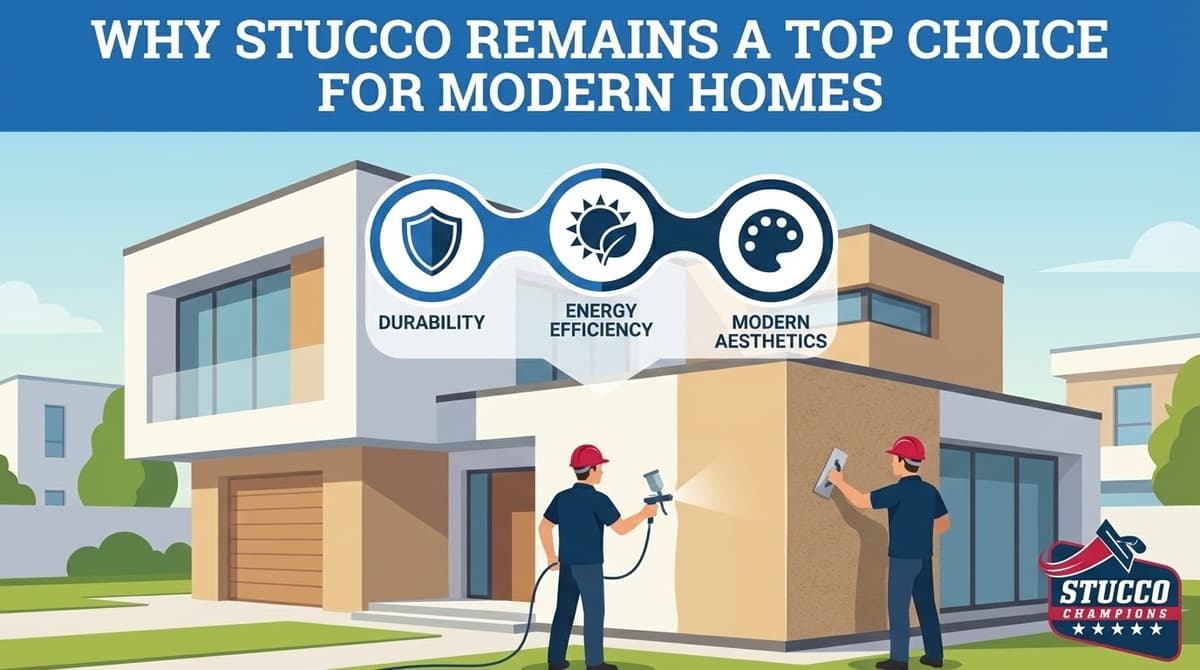
Homeowners today want exteriors that balance beauty, durability, and return on investment (ROI). While fiber cement siding and brick have their place, stucco remains the dominant choice for Southern California homes for a reason.
At Stucco Champions, we see firsthand why this centuries-old material continues to outperform modern alternatives. It isn't just about tradition; it is about engineering. Stucco is uniquely suited to handle the specific challenges of our climate: **Wildfires, Earthquakes, and Extreme Heat.** Here is the professional breakdown of why stucco is the smart choice for your renovation.
Free Assessment
Noticing Stucco Damage?
Get a free on-site assessment from a licensed contractor. $0 deposit, no obligation.
GET FREE ASSESSMENT1. Timeless Aesthetic Appeal
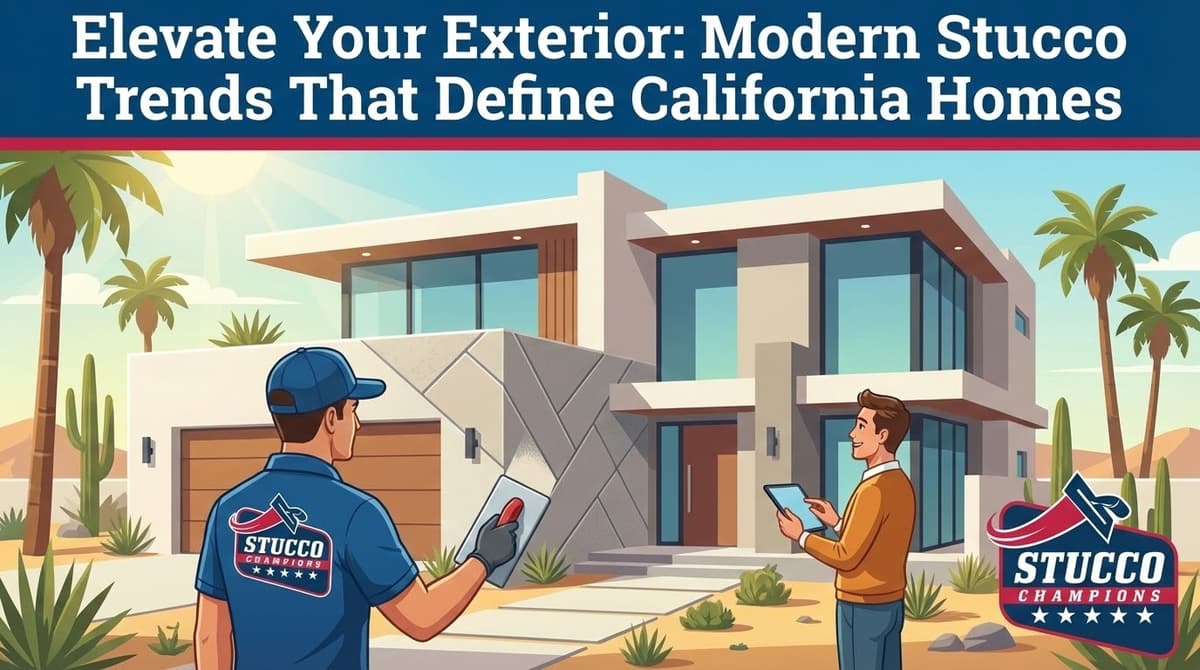
Stucco is a chameleon. It fits the sharp, cubic angles of a Modern Contemporary home just as well as the soft arches of a Spanish Colonial:
- Versatility: Whether you want the sleek, cloud-like look of a Santa Barbara Smooth finish or the textured durability of a Sand Finish, stucco is hand-troweled to your exact specification.
- Mixed Materials: Modern design often pairs smooth stucco with wood cladding or stone veneer. Stucco acts as the perfect neutral canvas to make those expensive accents pop.
2. Energy Efficiency: Thermal Mass vs. Insulation
There is a common misconception that cement stucco is a high insulator. By itself, solid cement plaster has a low R-value. However, its strength lies in **Thermal Mass**:
- The Physics: Solid stucco walls absorb heat during the scorching midday sun (keeping the interior cool) and slowly release that stored heat at night when temperatures drop. This "thermal lag" is ideal for the high-desert climate of the Inland Empire.
- Title 24 Compliance: When paired with modern "One-Coat" systems (which include 1-inch EPS foam board), stucco meets California’s strict Title 24 energy efficiency standards, significantly lowering HVAC costs. (Source: U.S. Department of Energy).
3. Fire Resistance (Crucial for SoCal)
In the Wildland-Urban Interface (WUI) zones of California, fire safety is paramount.
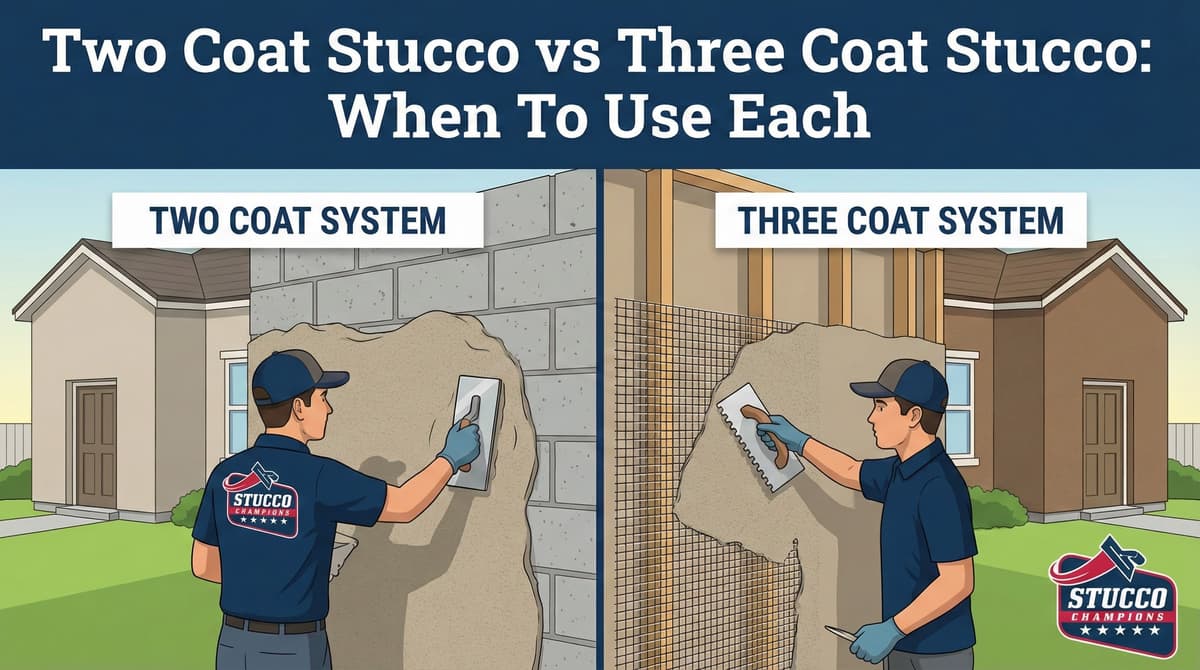
A standard 7/8-inch traditional three-coat stucco system (complying with **ASTM C926** and **ASTM E119**) provides a **1-hour fire-resistance rating**, creating a non-combustible concrete shell that protects against radiant heat and blowing embers in California’s Wildland-Urban Interface (WUI) zones (complying with California Building Code **Chapter 7A**).
4. Low Maintenance (If Done Right)
Stucco is incredibly low-stress—provided you don't suffocate it:
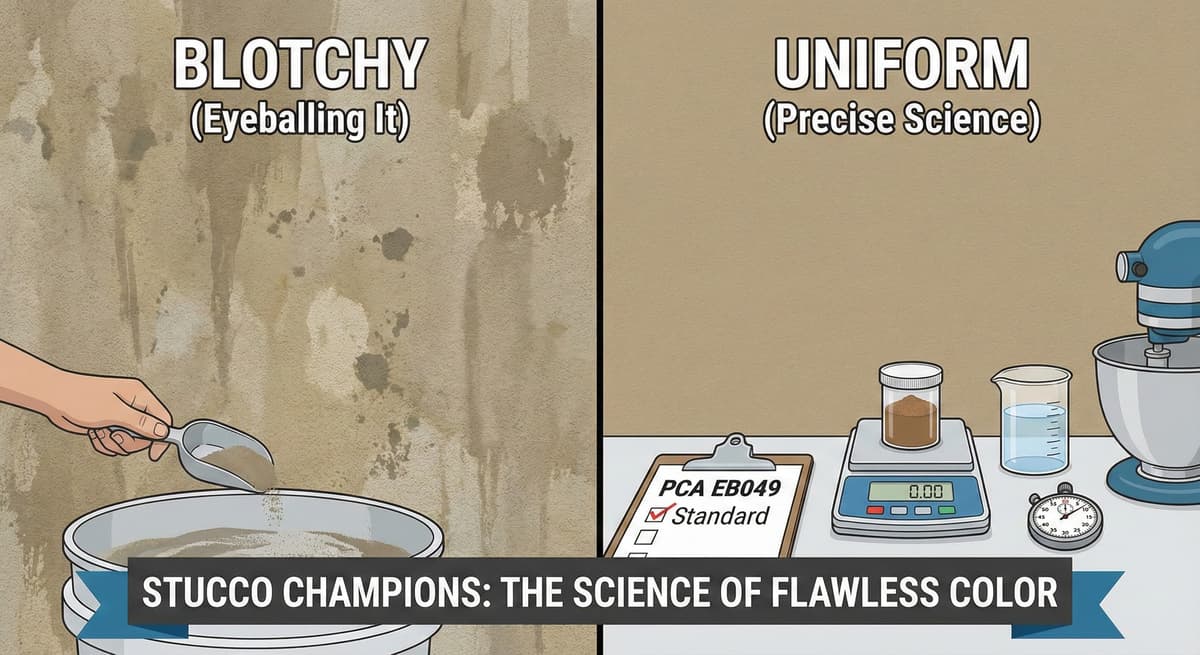
- The "No Paint" Advantage: Traditional stucco is integrally colored (the pigment is mixed into the cement). It does not chip or peel like painted wood.
- Maintenance Protocol: Instead of repainting every few years, we recommend a traditional fog coat (such as **Omega SuperFog**) every 10–15 years. This is a cement-based stain that refreshes the color without sealing the pores, allowing the wall to "breathe" and preventing rot. Never apply standard exterior latex paint, as it traps moisture behind the paint film, leading to delamination and rot.
- Weep Screed Maintenance: Installing foundation weep screeds complying with **ASTM C1063** (maintaining 4" clearance above earth and 2" above paved concrete) ensures the drainage plane function is kept clear.
5. Durability and Seismic Lifespan
When installed according to **ASTM C926** and **ASTM C1063** standards, a stucco wall can easily last 50 to 80 years.
Seismic Strength: The metal wire lath mesh embedded in the stucco adds "shear strength" to the walls. This helps the home resist racking during earthquakes—something brittle brick veneers struggle with. Allowable shear values under code (IBC/CBC Table 2306.3) indicate that stucco contributes up to 180 to 200 pounds per linear foot of shear strength to the structure.
Stucco vs. The Alternatives
How does it stack up against other popular finishes in the California market?
| Feature | Stucco | Vinyl Siding | Fiber Cement | Wood Siding |
|---|---|---|---|---|
| Lifespan | 50–80 Years | 20–40 Years | 50 Years | 20–40 Years |
| Fire Resistance | Excellent (1-Hr) | Poor (Melts) | Good | Poor |
| Seismic Safety | Good (Shear strength) | Good (Flexible) | Heavy | Good |
| Est. Cost (Sq Ft) | $11 – $19 | $7 – $12 | $10 – $16 | $12 – $20 |
Quick Checklist for Homeowners
If you are considering stucco for a new build or a remodel, ask your contractor these questions:
- The System: Are you installing a "Three-Coat" system (traditional, strongest) or a "One-Coat" system (foam-backed, energy-efficient)?
- The Finish: Have you seen physical samples of the texture? (Smooth finishes show cracks more easily; rough finishes hide them).
- The Color: Are you using a synthetic acrylic finish (for dark, fade-resistant colors) or traditional cement (for breathable, earth tones)?
Conclusion
Stucco remains the top choice for modern homes because it delivers the perfect mix of style, strength, energy efficiency, and affordability. Backed by professional installation, it protects and enhances your home for decades.
Read our guide on Elevate Your Exterior: Modern Stucco Trends to see how stucco fits into the broader design landscape.
A note on fog coat: Stucco Champions does not fog coat older or previously repaired walls. On aged stucco a fog coat telegraphs existing cracks, patch lines, and prior repairs, and it bonds poorly to a rough, chalky, or previously coated surface, so it can dust off or peel. Those walls get a fresh finish coat (re-stucco) instead.
Frequently Asked Questions About Stucco
How much does stucco repair cost in Orange County and Los Angeles?+
Stucco repair typically ranges from $500 for minor crack patching to $5,000+ for full re-stucco of a single elevation. The exact cost depends on the damage type (hairline cracks, water damage, delamination, weep screed failure), the square footage involved, and whether the original three-coat or one-coat stucco system needs to be matched. Stucco Champions provides fixed-price written estimates after a free on-site assessment — no hourly billing, no surprise change orders. See our stucco repair cost guide for detailed pricing by repair type.
How long does stucco last in Southern California?+
Properly installed three-coat stucco lasts 50-80+ years in Southern California's climate. The most common failure points aren't the stucco itself — they're the supporting components: corroded weep screed, deteriorated building paper behind the stucco, and improperly sealed window flashing. Most "stucco failures" are actually moisture-intrusion failures that start at one of these points. Annual visual inspection catches problems before they spread, which is why we offer free weep screed assessments for homeowners in our service area.
Can I repair stucco myself, or do I need a contractor?+
Hairline cracks under 1/8 inch wide can be sealed with elastomeric caulk by a homeowner. Anything larger — pattern cracks, delamination (where stucco pulls away from the wall), water-damaged areas, or chimney/window leak repairs — requires a licensed contractor. Improper DIY repair on these is the #1 cause of repeat failures because the underlying cause (usually moisture) isn't addressed. California's CSLB requires a license for any stucco work over $500. Looking for a highly-rated stucco contractor in Southern California? We are a CSLB-licensed and insured team ready to help.
How do I know if I need stucco repair vs. full re-stucco?+
If less than 30% of an elevation has visible damage, repair is the right call. If you see large areas of cracking, multiple zones of delamination, or the underlying paper and lath have rotted across an entire wall, full re-stucco of that elevation is more cost-effective long-term. Our free assessment includes a moisture survey and lath inspection so you get a defensible recommendation either way — not just a quote pushing whichever option costs more.
Do you offer warranties on stucco work?+
Approved stucco repair work includes a 1-year written workmanship warranty. The applicable terms are documented with the approved scope. Stucco Champions is CSLB licensed and insured; verify license #1122006 through the official state lookup. Request a free estimate to review the scope and warranty terms before you sign.
How long does a stucco repair take?+
Most patch repairs are completed in 1-2 days, including a 24-hour cure time before texture matching and color application. Full re-stucco of a single elevation runs 5-7 working days because each coat (scratch, brown, finish) needs to cure properly before the next is applied. We schedule around weather — California stucco needs daytime temperatures above 50°F with no rain forecast for at least 24 hours after each coat. Our crew shows up on time, every time.
Stucco Diagnostics & Calculators
Diagnose specific wall damage symptoms or estimate job scope with our free guides and calculators.
Related Professional Services
A licensed assessment identifies the cause before the finish is opened or replaced.