Nails in Stucco: The Ultimate Guide to Lath Fasteners
Written by Stucco Champions - Southern California's Authority on Exterior Plastering.
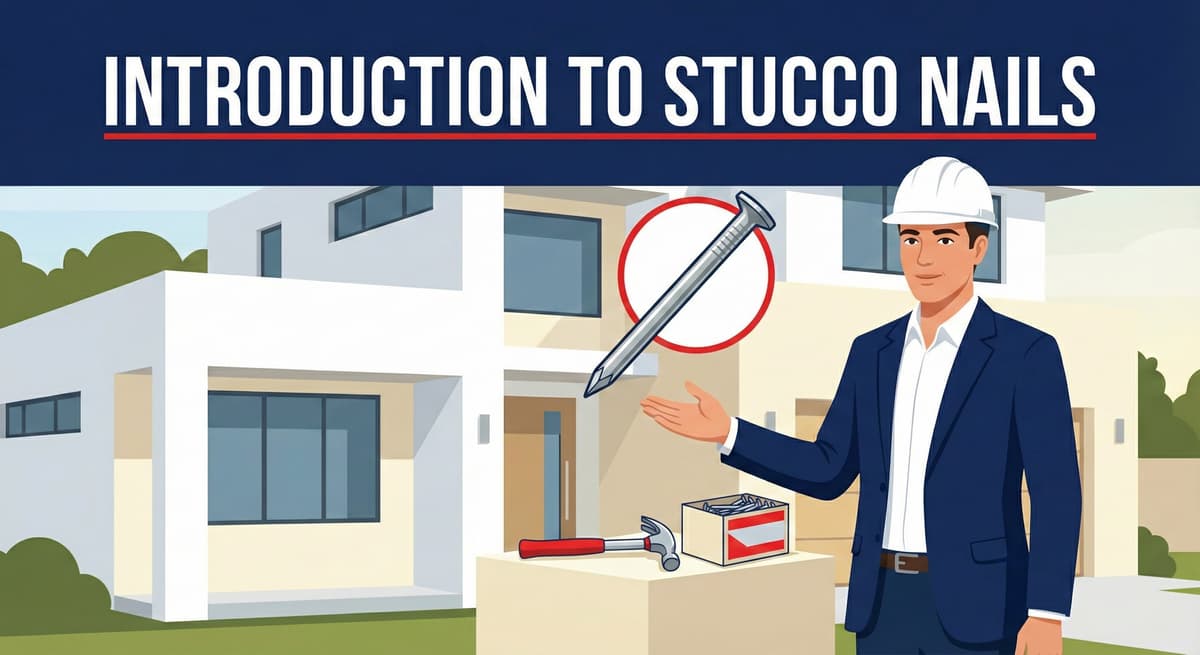
Choosing the correct nails in stucco construction is not a casual decision. These highly specialized, corrosion-resistant fasteners are designed specifically to hold heavy steel wire lath in place before the wet cement scratch coat is applied.
The type of nails in stucco installations depends entirely on the structural substrate behind your house: wood framing, OSB sheathing, solid concrete, or an existing repair patch.
In professional plastering, the fastener does much more than temporarily pin the wire to the wall. It must hold the massive dead weight of wet cement securely, resist aggressive alkaline corrosion from the plaster, preserve the waterproof drainage plane, and allow the cement to fully embed around the wire.
This guide explains exactly how to select the best nails in stucco repairs, why standard carpentry nails fail catastrophically, and how your fastener choice dictates the long-term survival of the plaster.
Quick Answer: What Are the Best Nails in Stucco Installs?
For standard wood-backed exterior walls, a hot-dipped galvanized roofing nail (or approved galvanized furring nail) is the preferred choice for nails in stucco lathing. Its wide, flat head physically traps the wire lath without slipping through the mesh grid. For concrete or cinder block, hardened masonry nails or concrete anchors are absolutely required. Regular bright steel nails, finish nails, drywall screws, and narrow framing nails should never be used as nails in stucco exteriors.
Free Assessment
Noticing Stucco Damage?
Get a free on-site assessment from a licensed contractor. $0 deposit, no obligation.
GET FREE ASSESSMENTStucco Nails vs. Staples vs. Screws
While galvanized nails in stucco applications are the traditional standard, they are not the only lath fastener allowed by code. In modern, high-speed production work, plastering crews often use pneumatic galvanized wide-crown staples because they are incredibly fast on wood-sheathed homes.
However, swinging a hammer to drive dedicated nails in stucco patching remains absolutely critical for small repairs, tight architectural corners, window openings, and any scenario where a bulky staple gun simply cannot fit.
If you are rebuilding a rotted wall section, review our full stucco repair materials checklist before purchasing your fasteners.
1. Why Regular Nails Fail (The Rust Jacking Problem)
Standard "bright" steel carpentry nails are useless outdoors. Stucco is installed extremely wet, and exterior walls are constantly exposed to rain and coastal fog. If you use non-galvanized nails in stucco repairs, they will rust rapidly inside the alkaline cement.
Rusting steel expands to roughly 4x its original volume. When improper, non-galvanized nails in stucco corrode, this massive expansion physically cracks the finish coat from the inside out, creating weeping orange rust stains on the surface. This catastrophic structural failure is called "Rust Jacking."
For this exact reason, all nails in stucco usage must be heavily corrosion-resistant (usually hot-dipped galvanized). In aggressive coastal marine environments, upgrading to stainless steel fasteners is highly recommended by building codes.
2. Nail Head Size Matters
The entire functional point of nails in stucco lathing is that the head of the fastener must physically trap the metal wire mesh against the wall.
A finish nail or a standard framing nail will instantly slip straight through the 1-inch hexagonal openings in the wire mesh, providing zero holding power. This is why standard galvanized roofing nails are the most common substitute for dedicated furring nails in DIY repairs: the incredibly wide, flat head acts like a built-in steel washer, pinning the wire tight without tearing the waterproof building paper behind it.
3. Choosing Nails in Stucco Framing (Wood)
When attaching metal lath to wood studs or plywood, your nails in stucco construction must penetrate the solid wood deep enough to hold the dead weight of wet cement (usually requiring 1.5 inches of penetration). Common wood-wall options include:
- Hot-dipped galvanized roofing nails: The most accessible nails in stucco patching and small hand-nailed repairs.
- Furring Nails: Highly specialized nails that feature a built-in cardboard or metal "wad" that holds the wire exactly 1/4" away from the wall, allowing the cement to flow completely behind the wire.
- Galvanized wide-crown staples: The pneumatic alternative to nails for fast, large-scale production housing.
For specific repair contexts on wood frames, see our stucco patching guide.
4. Choosing Nails in Stucco Masonry (Concrete/Block)
Standard roofing nails will instantly bend or shatter if you try to hammer them into solid concrete. If your substrate is masonry, your nails in stucco attachment must be engineered for extreme hardness.
- Hardened masonry nails: Heat-treated steel nails designed to bite directly into mortar joints or cinder block.
- Fluted masonry nails: Grooved shanks create massive friction as they are forcefully driven into hard concrete.
- Concrete screws (Tapcons): Often used when drilling is safer than hammering, providing the ultimate mechanical hold for heavy wire lath on older block walls.
5. The Vital Importance of Furring Nails
Stucco wire mesh needs physical space for the wet plaster to "key" behind the wire. If the wire lath is nailed completely flat and tight against the waterproof paper, the scratch coat cannot embed around it, destroying the structural integrity of the wall.
If you are not using "self-furring" dimpled lath, you absolutely must use specialized furring nails. These unique nails in stucco spacing ensures the wire sits exactly 1/4 inch off the wall, creating the necessary gap for the cement to lock in.
6. What NEVER to Use on Stucco Lath
Using the wrong fastener guarantees a failed stucco job. Never use these in place of proper nails in stucco construction:
- Bright common nails: They will rust, expand, and destroy the wall within a year.
- Finish nails: The tiny heads will slip right through the wire mesh.
- Drywall screws: They snap easily under shear weight and rust instantly outdoors.
- Interior office staples: They completely lack the gauge thickness and galvanization required for heavy exterior plaster.
Conclusion: The Anchor of Your Wall
The best nails in stucco applications aren't just strong; they are corrosion-resistant, feature a wide head, and are perfectly matched to your building's exact substrate. For wood repairs, rely on galvanized roofing nails or dedicated furring nails. By choosing the correct fasteners, you ensure your wire lath remains permanently anchored to the house, preventing severe cracking and delamination for decades.
Need help with a structural exterior repair? Contact Stucco Champions for a professional evaluation of your wall's lath and fastener system.
Frequently Asked Questions About Stucco
How much does stucco repair cost in Orange County and Los Angeles?+
Stucco repair typically ranges from $500 for minor crack patching to $5,000+ for full re-stucco of a single elevation. The exact cost depends on the damage type (hairline cracks, water damage, delamination, weep screed failure), the square footage involved, and whether the original three-coat or one-coat stucco system needs to be matched. Stucco Champions provides fixed-price written estimates after a free on-site assessment — no hourly billing, no surprise change orders. See our stucco repair cost guide for detailed pricing by repair type.
How long does stucco last in Southern California?+
Properly installed three-coat stucco lasts 50-80+ years in Southern California's climate. The most common failure points aren't the stucco itself — they're the supporting components: corroded weep screed, deteriorated building paper behind the stucco, and improperly sealed window flashing. Most "stucco failures" are actually moisture-intrusion failures that start at one of these points. Annual visual inspection catches problems before they spread, which is why we offer free weep screed assessments for homeowners in our service area.
Can I repair stucco myself, or do I need a contractor?+
Hairline cracks under 1/8 inch wide can be sealed with elastomeric caulk by a homeowner. Anything larger — pattern cracks, delamination (where stucco pulls away from the wall), water-damaged areas, or chimney/window leak repairs — requires a licensed contractor. Improper DIY repair on these is the #1 cause of repeat failures because the underlying cause (usually moisture) isn't addressed. California's CSLB requires a license for any stucco work over $500. Looking for a highly-rated stucco contractor in Southern California? We are a CSLB-licensed and insured team ready to help.
How do I know if I need stucco repair vs. full re-stucco?+
If less than 30% of an elevation has visible damage, repair is the right call. If you see large areas of cracking, multiple zones of delamination, or the underlying paper and lath have rotted across an entire wall, full re-stucco of that elevation is more cost-effective long-term. Our free assessment includes a moisture survey and lath inspection so you get a defensible recommendation either way — not just a quote pushing whichever option costs more.
Do you offer warranties on stucco work?+
Approved stucco repair work includes a 1-year written workmanship warranty. The applicable terms are documented with the approved scope. Stucco Champions is CSLB licensed and insured; verify license #1122006 through the official state lookup. Request a free estimate to review the scope and warranty terms before you sign.
How long does a stucco repair take?+
Most patch repairs are completed in 1-2 days, including a 24-hour cure time before texture matching and color application. Full re-stucco of a single elevation runs 5-7 working days because each coat (scratch, brown, finish) needs to cure properly before the next is applied. We schedule around weather — California stucco needs daytime temperatures above 50°F with no rain forecast for at least 24 hours after each coat. Our crew shows up on time, every time.
Stucco Diagnostics & Calculators
Diagnose specific wall damage symptoms or estimate job scope with our free guides and calculators.
Related Professional Services
A licensed assessment identifies the cause before the finish is opened or replaced.