Stucco Window Flashing: Prevent Leaks and Water Damage
Written by Stucco Champions — Southern California’s Authority on Exterior Plastering.
Stucco Window Flashing: Prevent Leaks and Water Damage
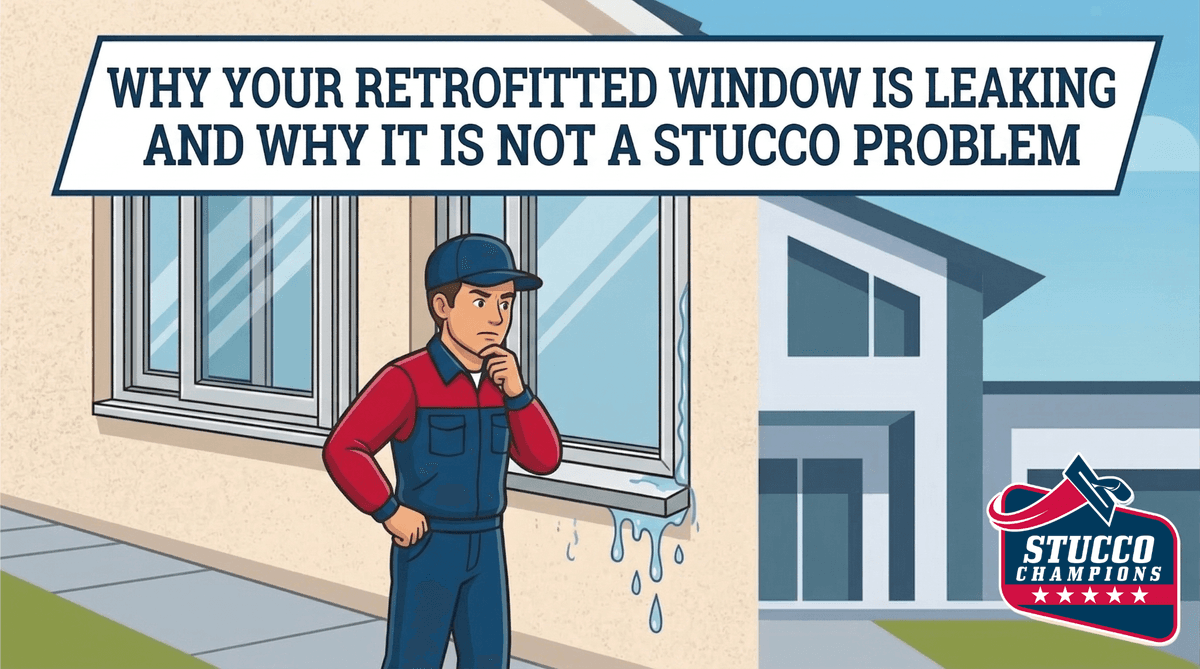
In Southern California, water damage rarely comes from a hole in the middle of a wall. It almost always starts at an opening: a window or a door. Stucco is a reservoir cladding; it absorbs moisture. If the connection between the window frame and the stucco system is not engineered correctly, that moisture will bypass the exterior and rot your framing studs.
Proper window flashing is the most critical detail in the lathing phase. This guide breaks down the "Sequence of Operations" required to create a watertight seal, and how to spot if your home is at risk.
1. The Principle of "Positive Drainage"
Water follows gravity. The entire goal of flashing is to ensure that every layer overlaps the layer below it, shedding water outward. This is called Shingle Lapping.
The Failure: Reverse Lapping. This happens when the top layer is tucked behind the bottom layer. If a window flange is installed on top of the paper without a head flashing, water running down the wall flows behind the window and into your drywall.
Free Assessment
Noticing Stucco Damage?
Get a free on-site assessment from a licensed contractor. $0 deposit, no obligation.
GET FREE ASSESSMENT2. The Installation Sequence (New Construction)
To create a compliant seal, we follow a strict order of operations:
Step A: The Sill Pan
Before the window goes in, we install a waterproof membrane or rigid pan on the bottom sill. If water leaks through the window unit itself (which happens), the pan catches it and directs it outside.
Step B: Flange Integration
The window is set. Now, we apply Self-Adhered Flashing Tape (like Fortiflash or Moistop) over the side flanges (jambs).
Critical: Do not tape the bottom flange! We leave the bottom open or use a specific drainage detail to allow trapped water to escape.
Step C: The Head Flashing (Z-Bar)
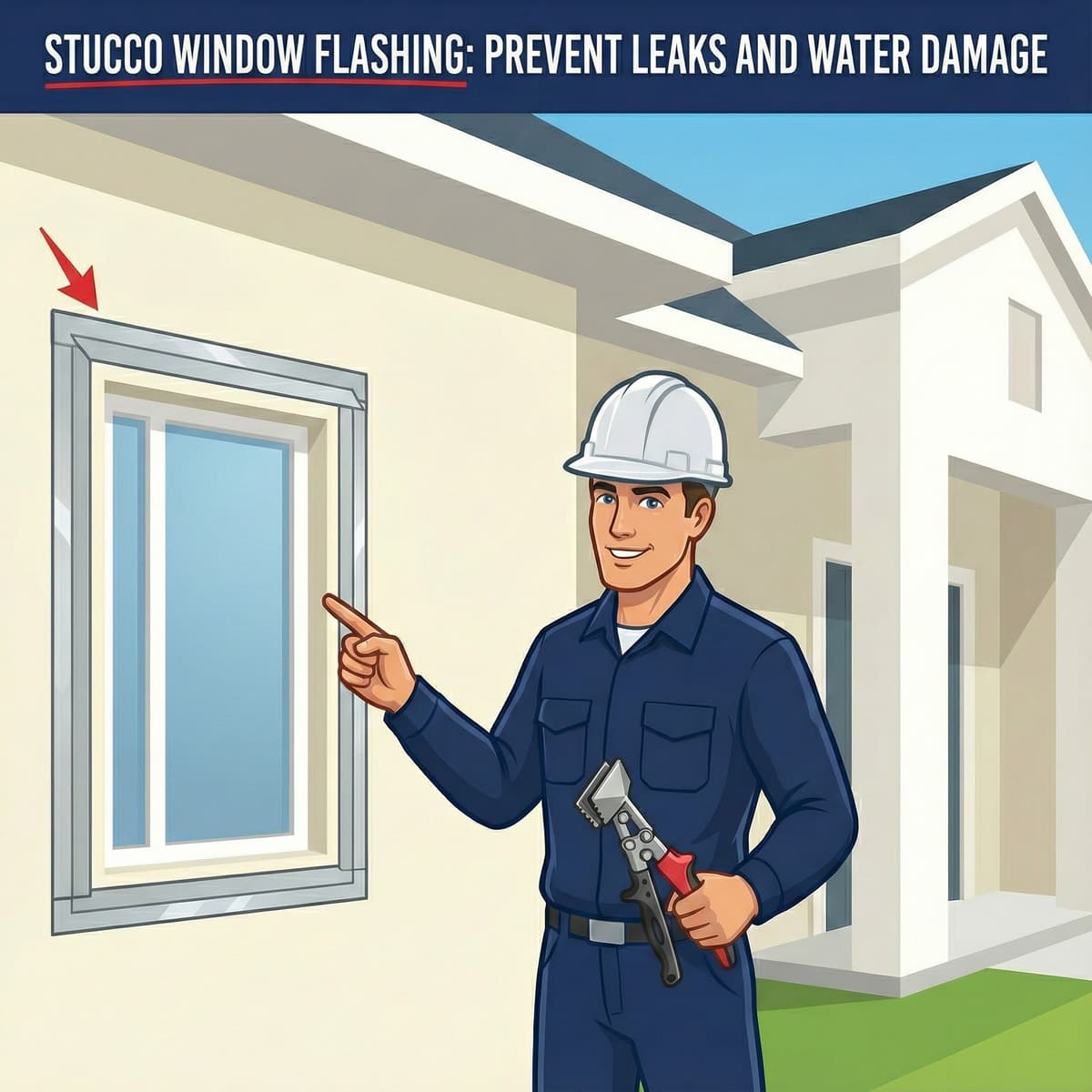
A metal Z-Bar Drip Cap must be installed at the top of the window. This metal kicks water away from the glass.
The Tie-In: The building paper coming down from the roof must overlap the Z-Bar. The Z-Bar must overlap the window header. This creates the continuous cascade.
3. Integrating Two Layers of Paper
Stucco requires two layers of Grade D paper. How do they fit with the window?
- Layer 1: Goes under the window nailing fin (or flush with the rough opening).
- Layer 2: Goes over the window nailing fin and flashing tape.
This "sandwich" technique ensures that even if water gets past the first layer of paper, the flange is protected.
4. The Termination Gap (ASTM C1063)
Stucco should never touch the window frame directly.
⚠️ The Caulk JointWe install a Plaster Stop (Casing Bead) around the perimeter of the window, leaving a 3/8" gap between the metal and the window frame.
This gap is filled with a Backer Rod and Polyurethane Sealant. This allows the window to expand and contract in the sun without cracking the stucco. If you stucco tight against vinyl windows, the vibration will eventually crack the bond.
5. Can You Fix Bad Flashing Without Removing Stucco?
Homeowners often ask if we can just "caulk over" a leak.
The Answer: No.
Caulk is a surface seal. If the flashing behind the wall is reverse-lapped, caulking the surface just traps the water inside, accelerating dry rot.
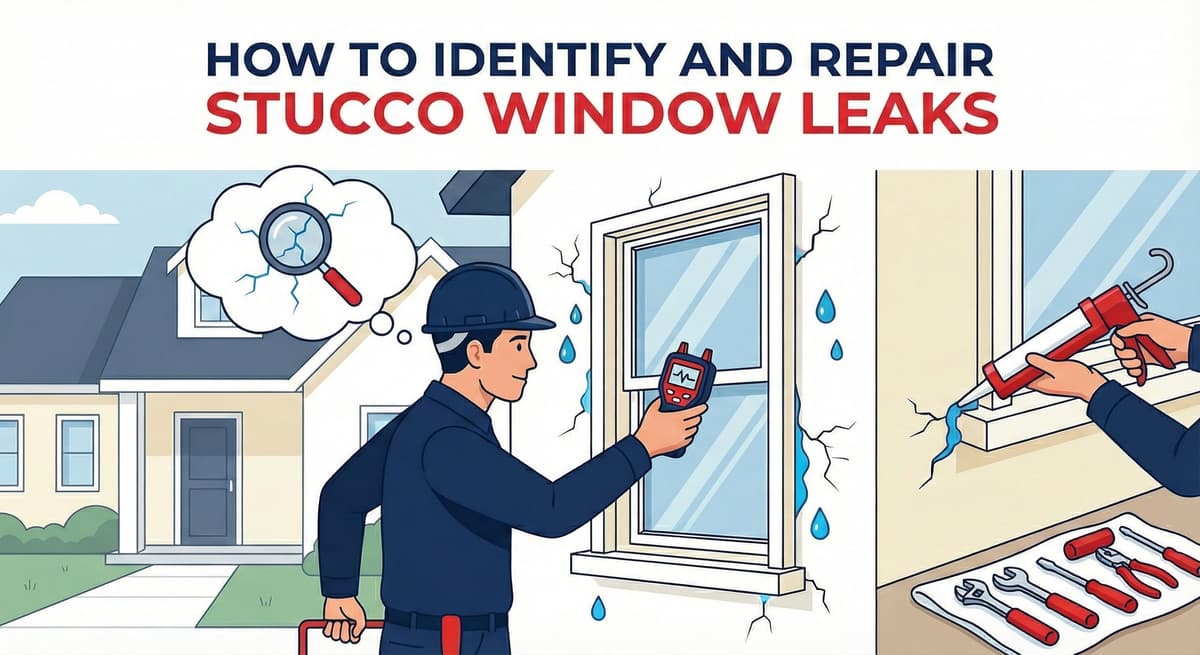
The Fix: We must perform a "Cut-Back". We use diamond blades to cut 6-12 inches of stucco away from the window perimeter. This exposes the nailing fin. We then install new flashing tape, proper Z-bar, and new paper before patching the stucco. It is surgery, but it is the only way to stop the leak permanently.
Conclusion: It’s All About the Sequence
Window flashing is invisible once the house is finished, but it is the most important component of the envelope. Whether you are replacing windows or building new, ensure your contractor follows the "Shingle Lap" protocol. Water always wins against a bad lap.
Related ResourcesLast week, we shared Weather Resistant Building Paper Guide. Flashing relies on the paper system to work; read about the two layers here.