Stucco Repair: Common Problems & Prevention
Written by Stucco Champions — Southern California’s Authority on Exterior Plastering.
Stucco Problems 101: How to Prevent Failures Before They Start
Stucco is a robust, 50-year cladding system designed to withstand fire, wind, and impact. However, like any masonry product, it is only as strong as its weakest link. In Southern California, the primary enemies of stucco are not time and age, but water and movement.
Most expensive repairs start as minor maintenance oversights. This guide breaks down the most common failure points we see in the field—cracking, bubbling, and staining—and the technical steps required to prevent them.
Spotting any of these issues on your home? Our free Stucco Health Assessment tells you what's happening.1. Cracking: Stress vs. Structure
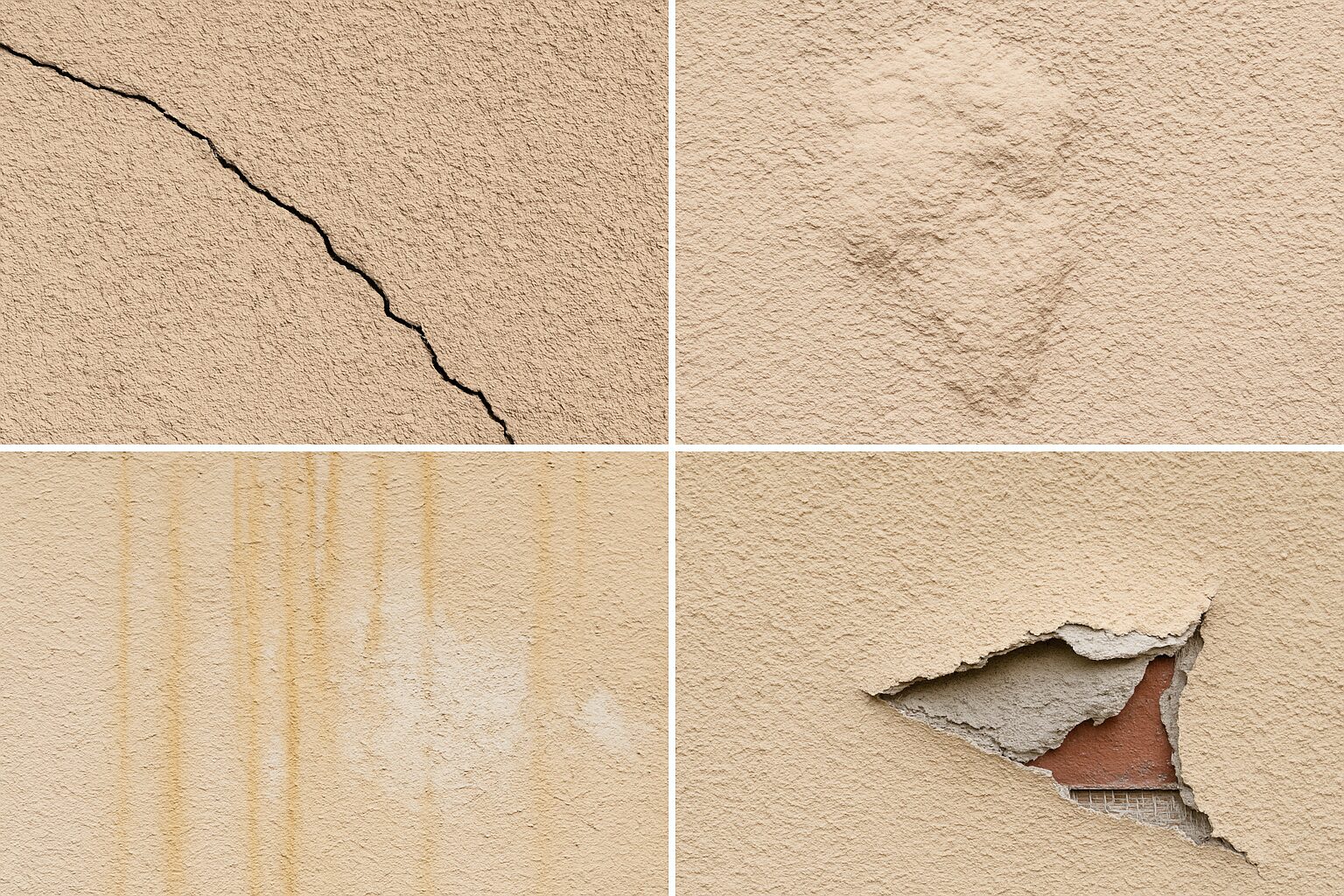
All concrete products shrink as they cure. Hairline cracks are normal. However, specific crack patterns indicate deeper issues.
- Hairline (Spiderweb): Usually cosmetic. Caused by rapid hydration (drying too fast) or thermal expansion. Prevent by using Acrylic Finish coats that flex.
- Stair-Step (Diagonal): Structural. Often caused by foundation settling or a lack of "butterfly" lath reinforcement at window corners.
- Horizontal Lines: Lathing failure. Indicates the wire mesh sheets were not overlapped correctly (minimum 2 inches), creating a weak seam.
Free Assessment
Noticing Stucco Damage?
Get a free on-site assessment from a licensed contractor. $0 deposit, no obligation.
GET FREE ASSESSMENT2. Bubbling (Delamination)
If you see blisters or bulges in the paint, especially near the ground, your wall is drowning.
The Physics: Moisture gets trapped behind the paint film. As the sun heats the wall, the water turns to vapor and expands, pushing the coating off.
Prevention: Never use cheap, non-breathable latex paint. Use Fog Coat or High-Permeability Acrylics that allow the wall to exhale.
3. Efflorescence & Staining
White, chalky powder on your stucco is salt.
The Cause: Water moving through the cement dissolves natural salts and deposits them on the surface as it evaporates.
The Fix: Check your sprinklers. Constant wetting/drying cycles are the #1 cause. Also, verify your roof gutters are not dumping water directly onto the facade.
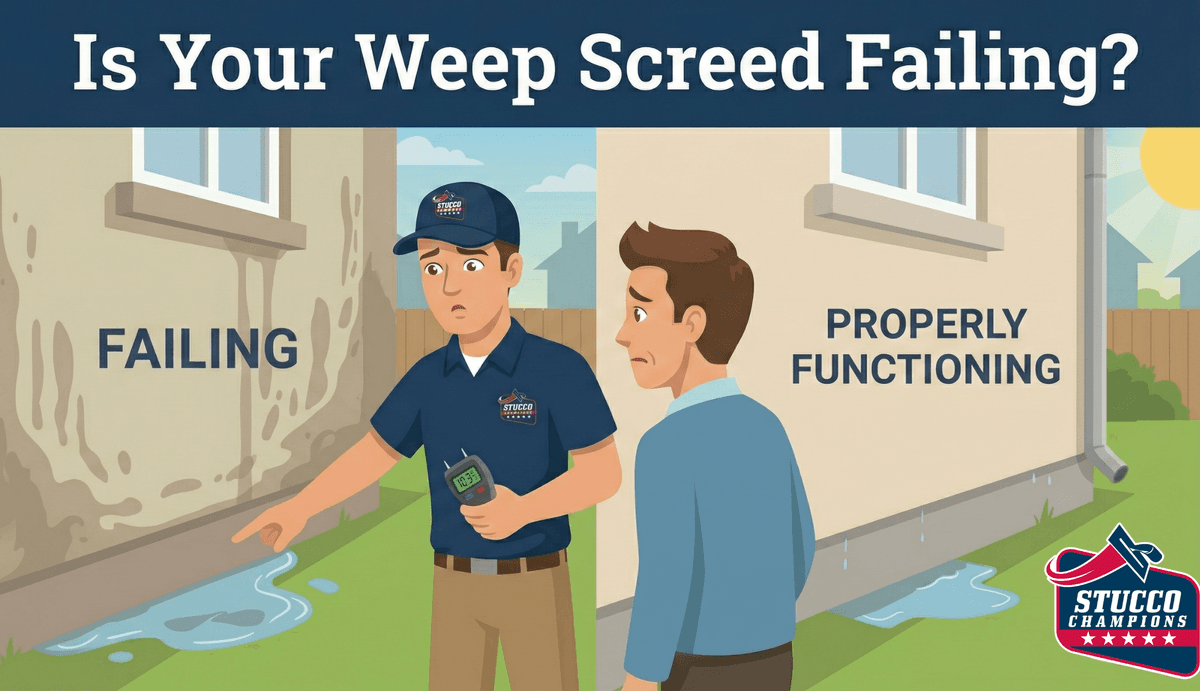
4. The "Weep Screed" Blockage
The most critical failure point in modern homes is landscaping.
The Code: You must maintain a 4-inch clearance between the metal weep screed and the soil.
The Risk: If you bury the screed with mulch or concrete, you block the drainage holes. Water backs up into the wall, rotting the mudsill and inviting termites.
- Annually: Clear soil away from the foundation.
- Semi-Annually: Inspect caulking around windows. If it's cracked, replace with Polyurethane sealant.
- Always: Keep sprinklers aimed away from the house.
5. Cost Reality: Maintenance vs. Repair
Spending $500 a year on maintenance saves you $15,000 in structural repairs.
| Action | Cost Estimate | Frequency |
|---|---|---|
| Preventative Sealing | $300 - $800 | Every 3-5 Years |
| Full Restucco | $11 - $19 / sq ft | Every 25-50 Years |
| Structural Rot Repair | $5,000 - $20,000+ | As needed (Failure) |
Conclusion: Be Proactive
Stucco is resilient, but it isn't magic. By managing water flow (sprinklers, gutters, weep screeds) and sealing cracks early, you can extend the life of your exterior indefinitely. Ignore the signs, and the water will find a way in.
Think Your Stucco Might Need Attention?
Take our free interactive assessment — it identifies problems and recommends next steps in just 60 seconds.
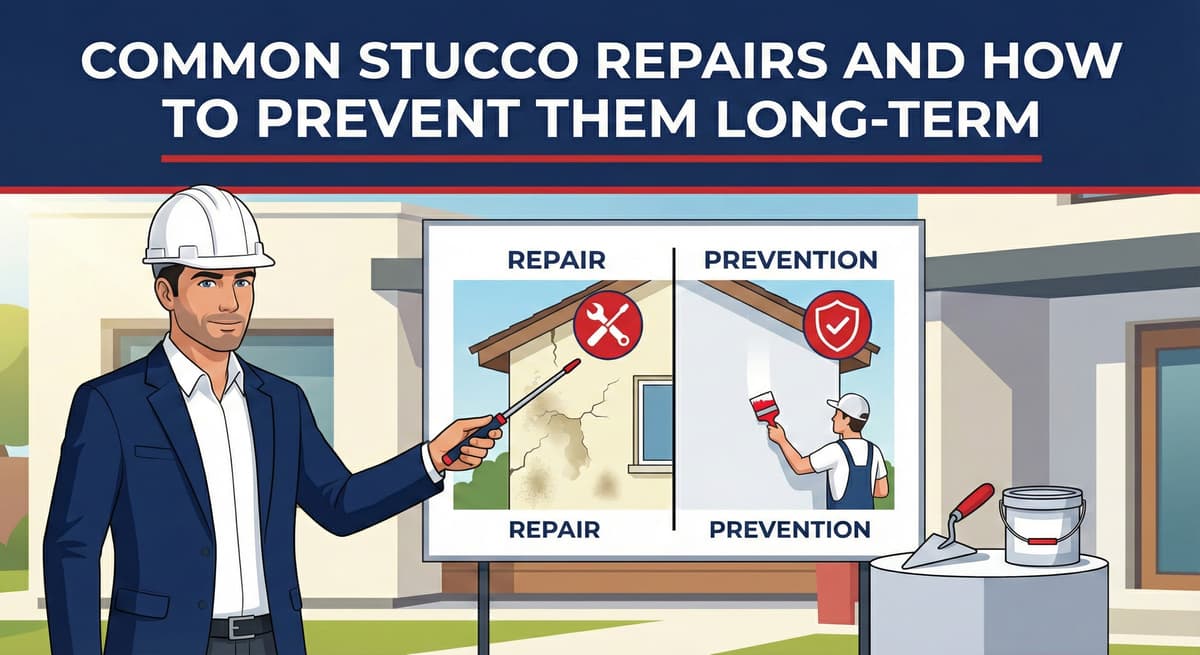
Common Stucco Repairs and How to Prevent Them Long-Term
Stucco is one of the most durable and visually appealing finishes for homes and commercial properties, but like any exterior material, it can develop issues over time. Understanding the most common stucco repairs — and knowing how to prevent them — will help homeowners protect their investment and avoid expensive long-term damage.
The Most Common Stucco Repairs
1. Cracks
Cracking is the most frequent issue homeowners notice. Cracks can range from small hairline fractures to larger, more noticeable breaks.
-
Causes: Building settling, seasonal temperature changes, or improper application.
-
Risks if Ignored: Water intrusion that can lead to mold, wood rot, and costly structural repairs.
Tip: Small cracks (under 1/8 inch) can sometimes be patched, but larger cracks often require professional repair to prevent hidden moisture damage.
2. Bubbling or Blistering
Bubbling occurs when moisture becomes trapped beneath the stucco surface, pushing it outward.
-
Causes: Poor waterproofing, inadequate drainage, or missing weep screeds (metal flashing at the bottom of stucco walls designed to let water drain).
-
Risks if Ignored: Persistent moisture can weaken the bond between stucco and the wall, leading to major delamination.
3. Staining and Efflorescence
Efflorescence appears as a white, chalky residue, while dark stains may indicate mildew or algae.
-
Causes: Water moving through stucco and bringing salts to the surface, or poor ventilation in shaded, damp areas.
-
Risks if Ignored: Beyond cosmetic issues, staining may signal ongoing water intrusion problems.
4. Delamination (Stucco Pulling Away)
Entire sections of stucco can separate from the wall, a severe problem requiring immediate attention.
-
Causes: Improper bonding during application, long-term moisture buildup, or lack of expansion joints.
-
Risks if Ignored: Falling stucco creates safety hazards and usually requires full replacement.
5. Impact Damage
Stucco can chip or break when struck by vehicles, equipment, or even repeated sports activity near walls.
-
Causes: Direct force or physical impact.
-
Risks if Ignored: Localized cracks will expand, opening pathways for water infiltration.
How to Prevent Long-Term Stucco Issues
1. Schedule Regular Inspections
Professional inspections once a year can catch small issues before they escalate. Many contractors, including Stucco Champions, recommend documenting inspections with photos for future reference.
2. Ensure Proper Drainage
Keep gutters clear and ensure downspouts direct water away from stucco walls. Check that your home has functioning weep screeds, especially if you live in a wet climate.
3. Use the Right System
The traditional three-coat stucco system — scratch coat, brown coat, and finish coat — provides superior strength and breathability compared to one-coat applications. This method reduces cracking and helps moisture escape naturally.
4. Seal and Paint Stucco as Needed
Applying breathable sealants or elastomeric paint creates a protective barrier while allowing moisture to evaporate. This is especially important in coastal regions where salt and moisture accelerate wear.
5. Act Quickly on Minor Issues
Fixing a small crack now is far less expensive than replacing an entire wall later. Homeowners should take proactive steps at the first signs of damage.
For more information on best practices in stucco repair and installation, the ASTM International Stucco Standards provide detailed guidelines followed by professionals across the industry.
Cost Considerations: Prevention vs. Repair
Preventative maintenance like inspections and sealing typically costs a few hundred dollars per year. By contrast, full stucco repair or restuccoing can range from $8 to $18 per square foot depending on finish type and complexity. Investing in prevention not only saves money but also extends the life of your stucco system by decades.
When to Call a Professional
While small cosmetic cracks may be patched by homeowners, most stucco issues — especially bubbling, delamination, or widespread staining — require professional attention. A licensed stucco contractor has the tools, materials, and expertise to identify root causes, not just cover up surface problems.
Ready to Simplify Your Stucco Work?
Contact Stucco Champions today for a free consultation!
Visit us at Stucco Champions for helpful resources and to learn more about our services.