Stucco Finish Coat Guide: Texture, Color, and Application
Written by Stucco Champions — Southern California’s Authority on Exterior Plastering.
Stucco Finish Coat Guide: Texture, Color, and Application
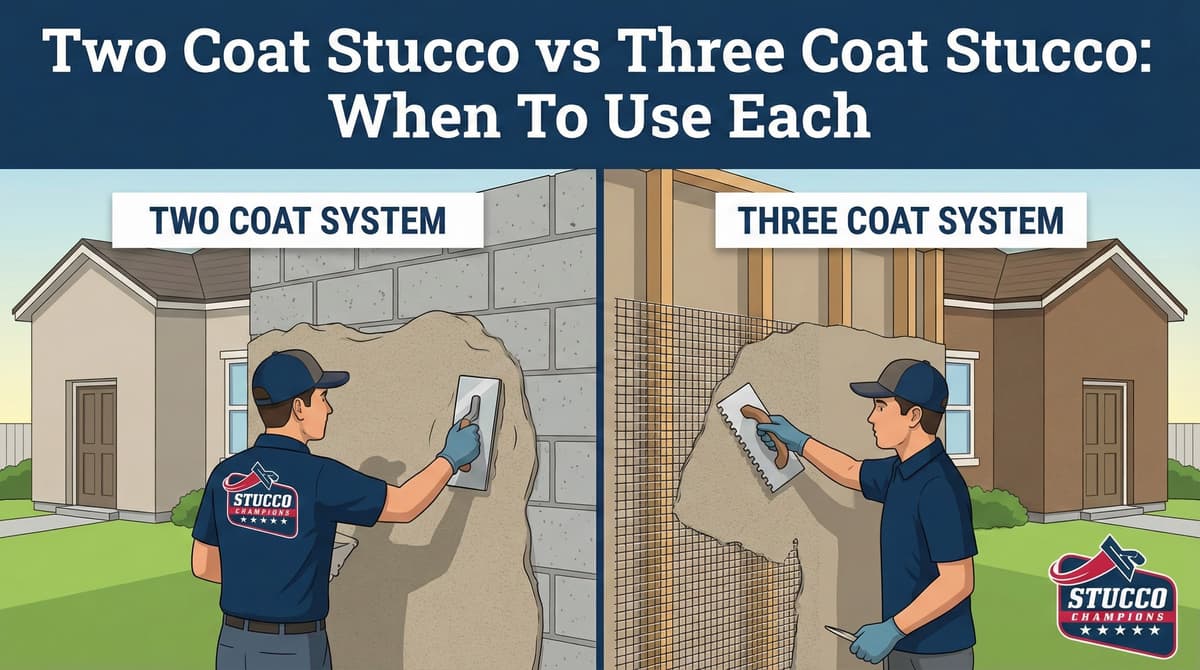
In a Three-Coat Stucco System, the first two layers (Scratch and Brown) provide the strength, but the Finish Coat provides the personality. It is the decorative skin of your home, responsible for color retention, water shedding, and curb appeal.
Choosing the right finish involves more than just picking a color swatch. You must decide between traditional cement (breathable) and acrylic (flexible), and select a texture that suits your architecture. This guide breaks down the options.
1. Material Science: Cement vs. Acrylic
The most critical decision is the chemistry of the finish coat.
Free Assessment
Noticing Stucco Damage?
Get a free on-site assessment from a licensed contractor. $0 deposit, no obligation.
GET FREE ASSESSMENTTraditional Cement Finish (The "Old World" Look)
Made of white Portland cement, lime, sand, and pigment.
Pros: Highly breathable (permeable), fire-resistant, and low maintenance. It fades naturally and can be refreshed with Fog Coat.
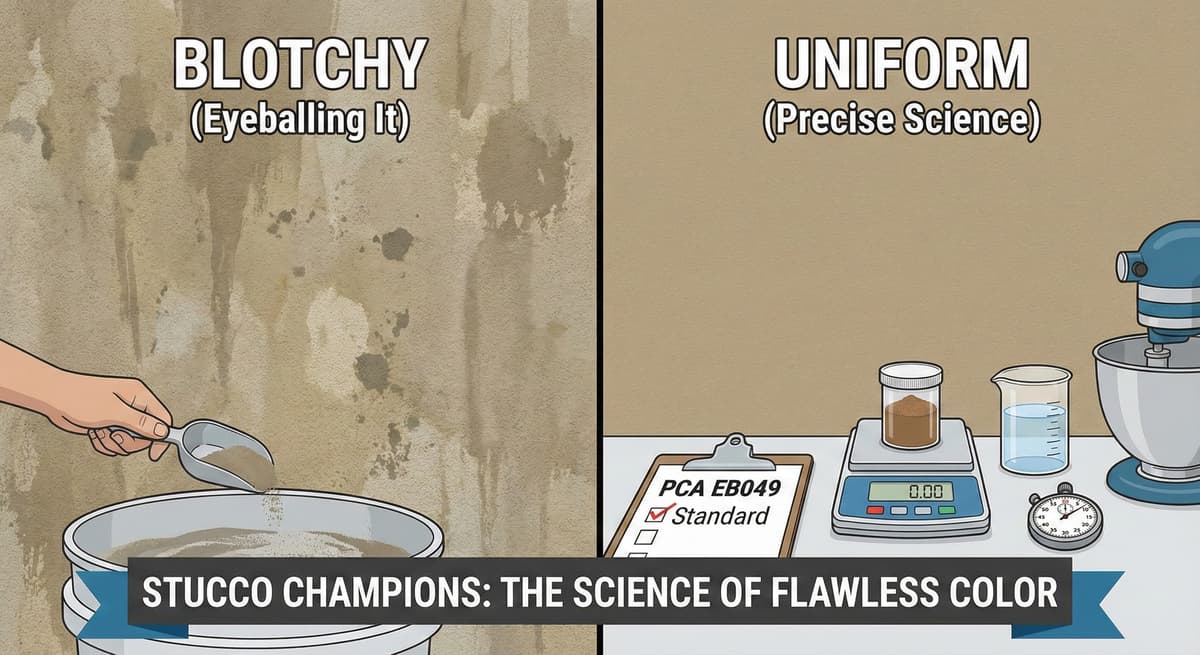
Cons: Rigid (prone to hairline cracks) and colors will "mottle" (vary in tone).
Acrylic/Synthetic Finish (The "Modern" Look)
Made of acrylic resins and crushed quartz aggregate.
Pros: Flexible (bridges small cracks), uniform color (no mottling), and holds dark colors without fading.
Cons: Less breathable. Requires specific waterproofing details to prevent trapped moisture.
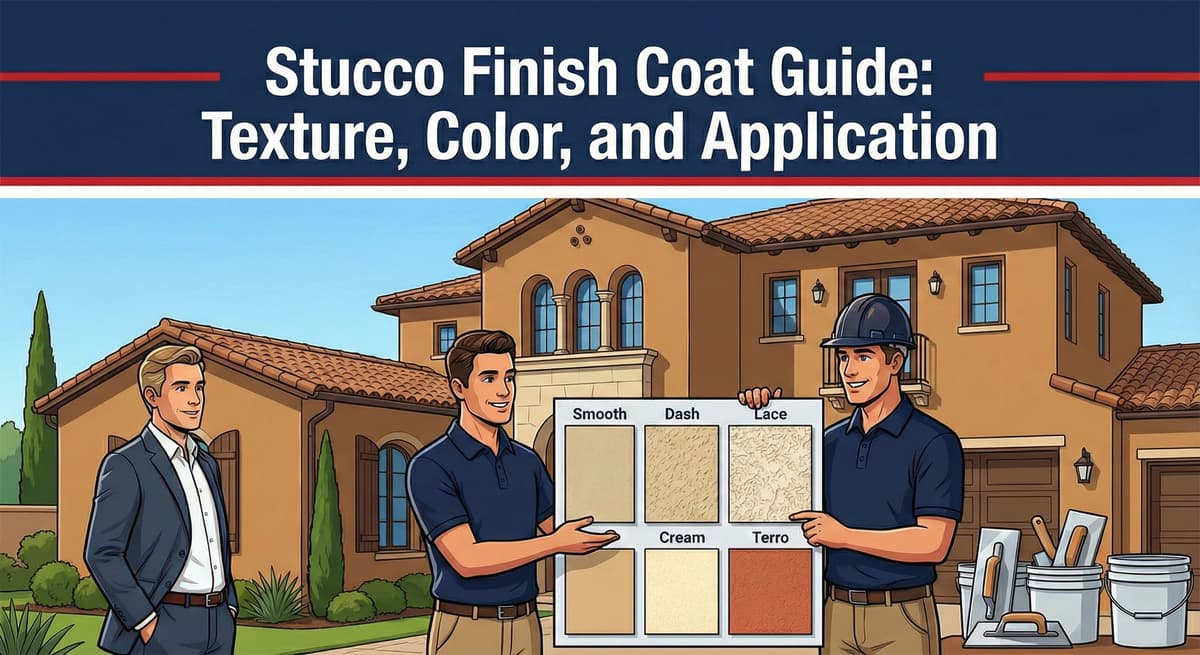
2. Texture Selection Matrix
Texture affects maintenance and aesthetics. Choose wisely based on your home's style.
| Texture Type | Visual Profile | Best For | Maintenance |
|---|---|---|---|
| Smooth (Santa Barbara) | Glassy, undulating trowel marks. | Spanish/Modern Custom Homes | High (Shows dirt/cracks) |
| Sand (Float) | Uniform grit like sandpaper. | Contemporary/Tract Homes | Low (Easy to clean) |
| Lace (Skip Trowel) | Flattened islands of texture. | Hiding imperfections in older homes | Medium (Traps some dirt) |
| Dash (Knockdown) | Heavy pebbled spray texture. | Commercial/Industrial | Medium (Hard to patch) |
The thickness of the finish coat (approx 1/8") is determined by the size of the sand grain (aggregate).
Fine (20/30 Mesh): For smooth/sand finishes.
Coarse (16/20 Mesh): For heavy lace or commercial textures.
3. Application: The Art of the Trowel
Hand Troweled: Required for Smooth, Sand, and Lace finishes. The plasterer applies the material and then "floats" it with a sponge or hard rubber float to bring out the texture.
Machine Sprayed: Required for Dash finishes. A hopper gun blasts the material onto the wall for a uniform, pebbled look.
4. Curing and Protection
Cement Finish: Must be misted with water for 48 hours to slow down hydration and prevent shrinkage cracks.
Acrylic Finish: Cures by air drying (24-48 hours). Do not wet it. It must be protected from rain until fully dry.
Conclusion: The Final Seal
The finish coat is your home's first line of defense against the sun and rain. Whether you choose the rustic charm of cement or the sleek uniformity of acrylic, ensuring a consistent application thickness (1/8") is key to longevity.
Related ResourcesMissed the previous steps? Read Step 2: The Brown Coat to understand the base layer.