How to Change Stucco Color Without Paint: Best Methods
Written by Stucco Champions — Southern California’s Authority on Exterior Plastering.
Change Stucco Color Without Paint: The Science of Staining
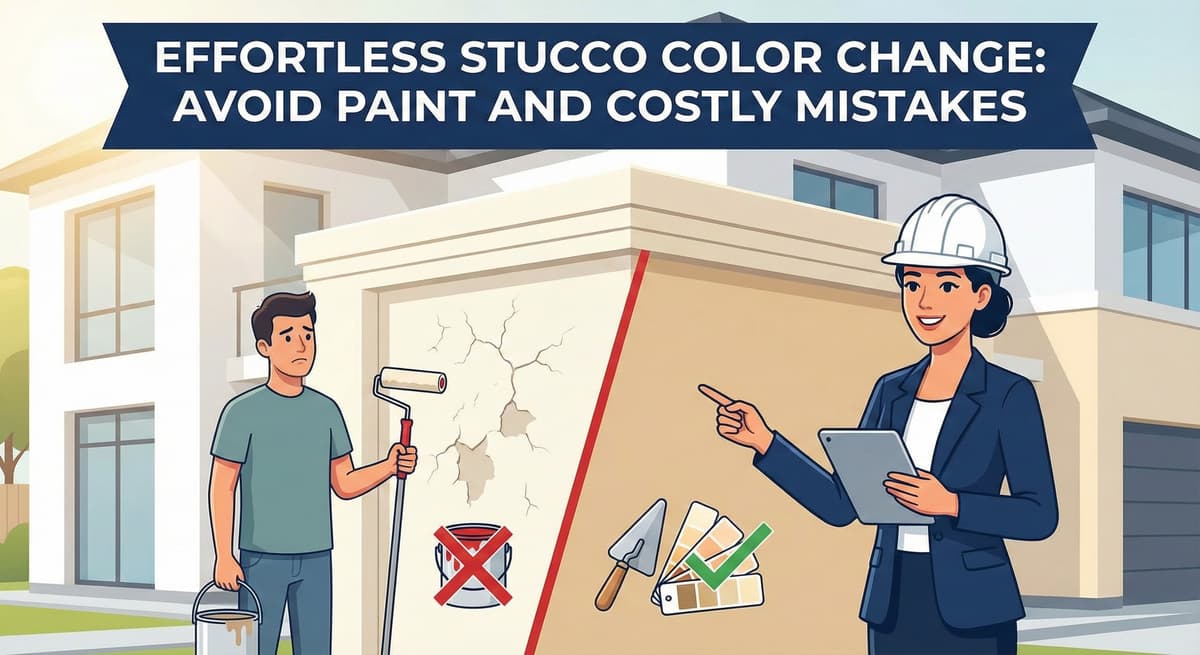
Painting stucco is often a mistake. It covers the beautiful texture, seals the pores, and creates a lifetime maintenance cycle of peeling and chipping. But what if you hate the color of your home?
You can change the color of traditional stucco without painting it. The solution lies in Cementitious Stains (Fog Coats) and penetrating dyes. These materials soak into the wall rather than sitting on top, preserving the breathability and texture of the masonry. This guide explains how to recolor your home the right way.
1. The "Water Test": Are You Eligible?
Before you buy material, you must determine if your stucco is porous. Stains work by absorption.
The Test: Splash water on your wall.
It darkens immediately? Your wall is open-pore cement. You can stain/fog coat it.
It beads up? Your wall is sealed, painted, or acrylic. You cannot use these methods. You must use paint or re-stucco.
Free Assessment
Noticing Stucco Damage?
Get a free on-site assessment from a licensed contractor. $0 deposit, no obligation.
GET FREE ASSESSMENT2. Option A: Fog Coat (The Industry Standard)
This is what professionals use to correct color issues on new homes.
What it is: A blend of Portland cement, lime, and pigment (no sand).
How it works: It is mixed with water and sprayed onto the wall. It bonds integrally with the existing stucco, effectively becoming a new layer of the wall itself.
- Pros: Zero maintenance. It will never peel. It keeps the sharp texture of the sand finish visible.
- Cons: Limited color range. You generally cannot go lighter (e.g., turning a dark brown house white). It works best for refreshing or darkening the existing tone.
3. Option B: Stucco Dyes (The Custom Tints)
Dyes are translucent liquids that penetrate deep into the cement matrix.
Best For: Creating a mottled, "Old World" Tuscan look.
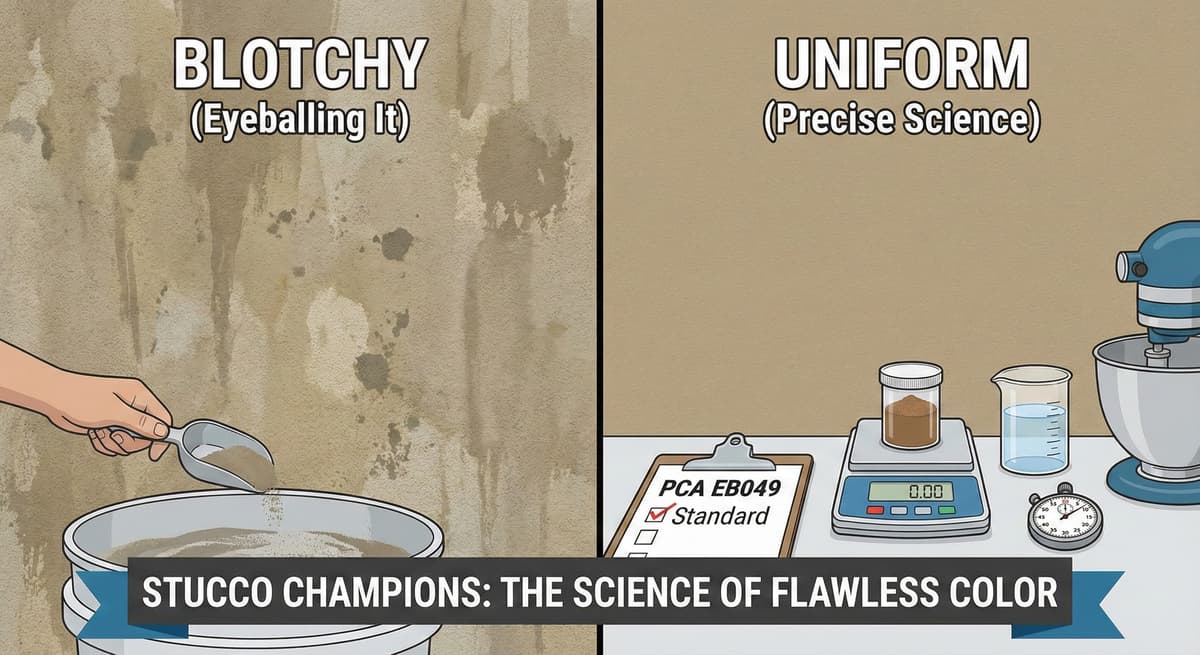
The Risk: Dyes are unforgiving. If the wall has varying porosity (e.g., patch repairs vs. original wall), the dye will absorb unevenly, creating dark blotches. We only recommend dyes for experienced applicators or rustic designs where variation is desired.
4. Why "No Paint" Matters
Why go through this trouble instead of just rolling on latex paint?
- Permeability: Stucco needs to breathe. Paint creates a film that traps moisture. Fog coat leaves the pores open.
- Longevity: Paint lasts 7-10 years before fading or peeling. Fog coat lasts 15-20 years and fades naturally like stone.
- Value: Purists and buyers value the look of authentic masonry over "painted concrete."
5. The Application Protocol
Applying Fog Coat is different than painting.
- Clean: Pressure wash the wall to remove dirt that blocks absorption.
- Mist: Pre-wet the wall with a hose to cool it down (prevent flash drying).
- Spray: Apply the fog coat with a pneumatic sprayer or garden sprayer in light, overlapping passes.
- Cure: Keep the wall damp for 24 hours to allow the new cement to hydrate and bond.
Fog Coat dries lighter than it looks wet. It typically takes 3-4 days to reach its final cured color. Do not panic if it looks dark on day one. Always test a discreet area first.
Conclusion: Respect the Masonry
Changing your stucco color without paint is the best way to honor the material. It keeps your home breathable, lowers maintenance costs, and maintains the authentic beauty of the plaster. If your home passes the water test, put down the roller and pick up the sprayer.
Ready to Change Your Stucco Color?
Get a quick cost estimate for fog coat or color change — no phone call required.