

Written by Stucco Champions — Southern California’s Authority on Exterior Plastering.
Weep Screed Assessment Guide: Is Your Home's "Exit Door" Jammed?
If you live in a stucco home, there is a metal strip running along the very bottom of your exterior walls. Most homeowners ignore it, cover it with dirt, or accidentally crush it with a weed whacker. That metal strip is the Weep Screed, and it is the single most important component of your home’s moisture defense system.
Think of the weep screed as the "Exit Door" for water. Stucco is porous; it absorbs water like a sponge. Gravity pulls that water down the wall, and the weep screed directs it out of the wall assembly and away from your foundation. But what happens when that exit door is jammed shut?
1. Physical Damage: The "Crimped Hose" Effect
Walk around your home and look at the bottom edge of the metal. Is the V-shaped drip edge bent upward, flattened, or smashed tight against the concrete? This is usually caused by landscaping crews or careless hardscape installation.
The drainage holes are located at the very bottom of that V-fold. When the metal is crushed upward, those holes are clamped shut. Imagine stepping on a running garden hose. The water has nowhere to go, so it builds up pressure. In your wall, this trapped water pools inside the cavity, soaking backward into the wood sill plate and framing.
2. Rust & Corrosion: The "Rotted Shield"
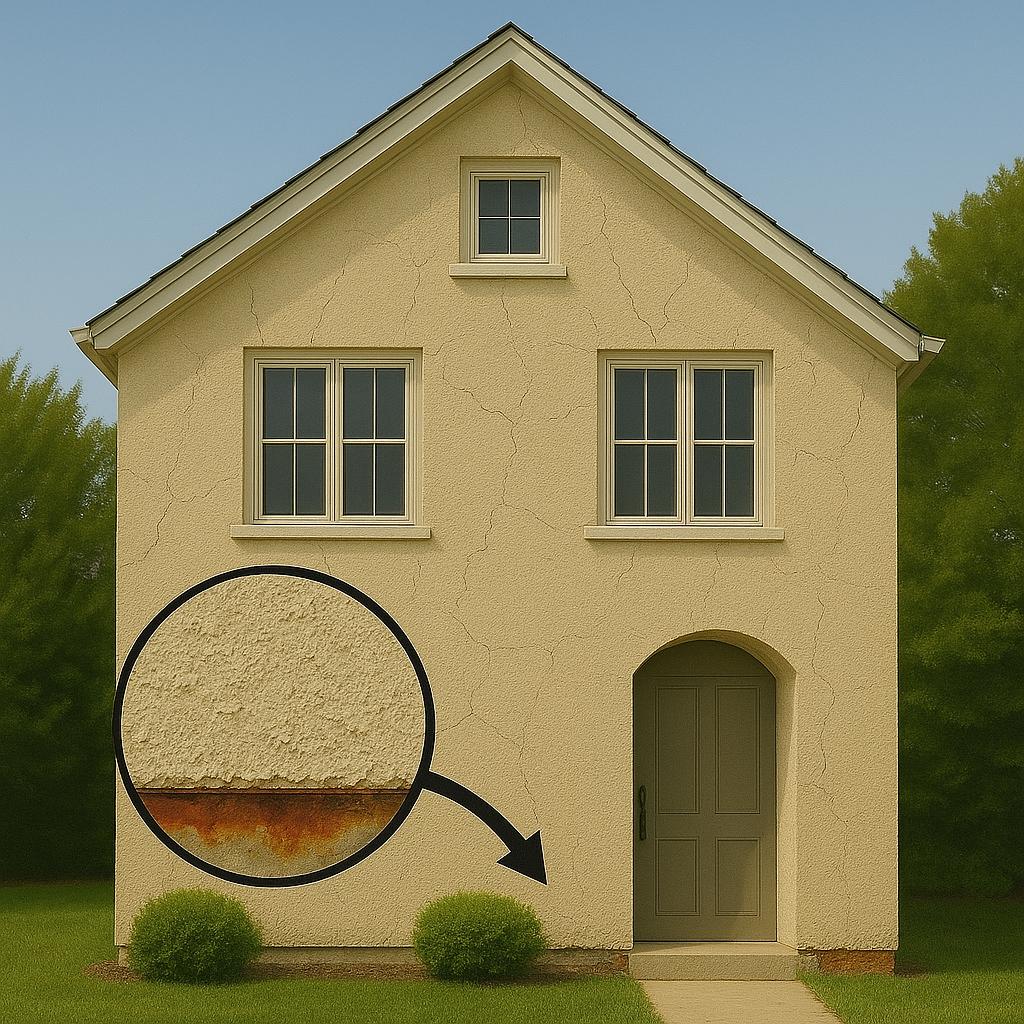
In coastal areas like Newport Beach, check for dark red or brown flaking metal (scale rust) or visible jagged holes eaten through the bottom edge.
The Canary in the Coal Mine: The weep screed is made of heavy-gauge galvanized steel. If that thick steel has rusted through, the much thinner wire mesh (lath) holding your stucco up behind the wall has likely disintegrated entirely.
Pest Entry: Once rust eats a hole through the metal, you have an open door. Mice, ants, and termites can walk right through the rust holes and nest inside your insulated walls.
3. Gaps & Separation: The "Hidden Highway"
Take a pen or a thin stick. Can you slide it behind the metal screed, between the metal and the concrete foundation?
The Termite Risk: This gap is a dangerous entry point. Subterranean termites are blind and die if exposed to sunlight. Usually, they build visible "mud tubes" to climb foundations. However, a gap behind your weep screed acts as a pre-built, covered tunnel. Termites can travel from the damp soil straight into your wood framing in total darkness, hidden from inspection.
4. Buried Stucco: The Wicking Effect
According to ASTM C1063 and the California Residential Code, you must maintain clearance at the foundation line:
4 Inches above earth/soil.
2 Inches above paved surfaces.
If you have built a flower bed, added a concrete patio, or let the grass grow higher than the weep screed, you have "buried the drain." This causes Wicking. The stucco acts like a hard sponge, sucking moisture upwards from the damp soil against gravity, pulling water directly into your home's structure.
Conclusion: Protect the Perimeter
Your weep screed is the fail-safe for your entire exterior. If it is bent, rusted, or buried, the system fails. Regular inspection of this metal perimeter is the cheapest way to prevent five-figure dry rot repairs.
Last week, we shared How to Repair & Replace Damaged Weep Screed. If your inspection found damage, learn the surgical process to fix it.
📋 Weep Screed Checklist
Answer these 5 questions, then click "Analyze My Home" to see if your system is at risk.
📋 Your Diagnosis Report
Bottom Line: Weep holes allow water to exit. Gaps and rust allow pests and water to enter.
Schedule a Professional Inspection →