

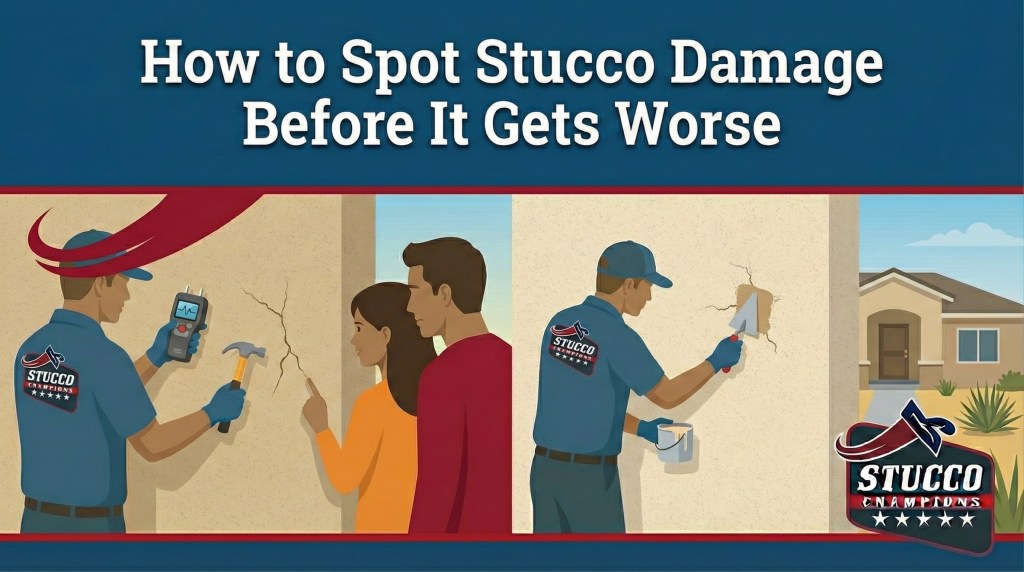
Written by Stucco Champions — Southern California’s Authority on Exterior Plastering.
How to Spot and Fix Stucco Damage Before It Gets Worse
Stucco is one of the most robust cladding systems available, designed to withstand fire, wind, and impact. However, it is not invincible. In Southern California, small issues like hairline cracks or blocked weep screeds can silently evolve into major structural failures.
The key to saving money is early detection. Most homeowners don't notice damage until a chunk of wall falls off. This guide explains how to identify the subtle warning signs of stucco failure and the specific repair protocols required to fix them.
1. The Warning Signs: What to Look For
Stucco failure is progressive. It starts small and grows exponentially once water enters the system.
| Sign of Damage | Visual Clue | Why It Matters |
|---|---|---|
| Cracks | Thin, spiderweb lines or stair-step patterns. | Allows water to rust the wire lath. |
| Bubbling | Raised blisters in the paint, usually near the ground. | Indicates trapped moisture trying to escape. |
| Staining | Dark brown streaks or white powder (efflorescence). | Signals active water leaks or salt leaching. |
| Crumbling | Sand falling off when you touch the wall. | The cement bond has failed (delamination). |
| Weep Screed Issues | Buried in dirt or rusted metal. | Blocks drainage, causing rot in the mudsill. |
2. The Root Causes
Stucco rarely fails on its own. It fails because of external factors:
- Moisture Intrusion: Failed window flashing or lack of weep screeds trap water inside the wall.
- Seismic Movement: Ground tremors cause shear stress, cracking the rigid cement shell.
- Sprinkler Damage: Constant wetting from landscaping cycles breaks down the waterproof paper.
3. Repair vs. Re-Stucco: The Decision Matrix
Not every crack requires a whole new house. Use this guide to determine the scope.
| Option | Best For | Average Cost | Lifespan |
|---|---|---|---|
| Spot Repair | Isolated impact damage or single window leaks. | $650 – $1,500 | 10+ Years (if blended well) |
| Full Re-Stucco | Widespread cracking (>30% of wall), delamination, or dated texture. | $11 – $19 per sq. ft. | 50+ Years |
If you see Rust Stains bleeding through the stucco, a surface patch will not work. This is "Rust Jacking"—the internal wire mesh is corroding. You must cut out the stucco until you find clean metal, or the rust will continue to spread like a cancer.
4. Prevention: Extend Your Stucco's Life
Maintenance is cheaper than repair.
- Clear the Weep Screed: Dig soil back 4 inches from the foundation.
- Adjust Sprinklers: Ensure water hits plants, not the wall.
- Seal Cracks Early: Use a high-quality textured acrylic sealant on hairline cracks before they widen.
- Soft Wash: Clean the walls annually to remove salt and mold that eat away at the finish.
Conclusion: Act Fast
A small crack is a $5 tube of caulk. A rotted wall is a $10,000 framing repair. By inspecting your home twice a year and addressing signs of damage immediately, you protect the structural integrity of your biggest investment.
Last week, we shared Identifying and Repairing Stucco Cracks. Learn the specific techniques for fixing fractures.
Need stucco repair in Southern California? Stucco Champions proudly serves homeowners throughout Orange County, Los Angeles, Riverside, and San Bernardino counties. Check out our Service Areas page to see all the cities we cover.