What Homeowners Need to Know Before Starting Stucco Work: The Pre-Construction Checklist
Written by Stucco Champions — Southern California’s Authority on Exterior Plastering.
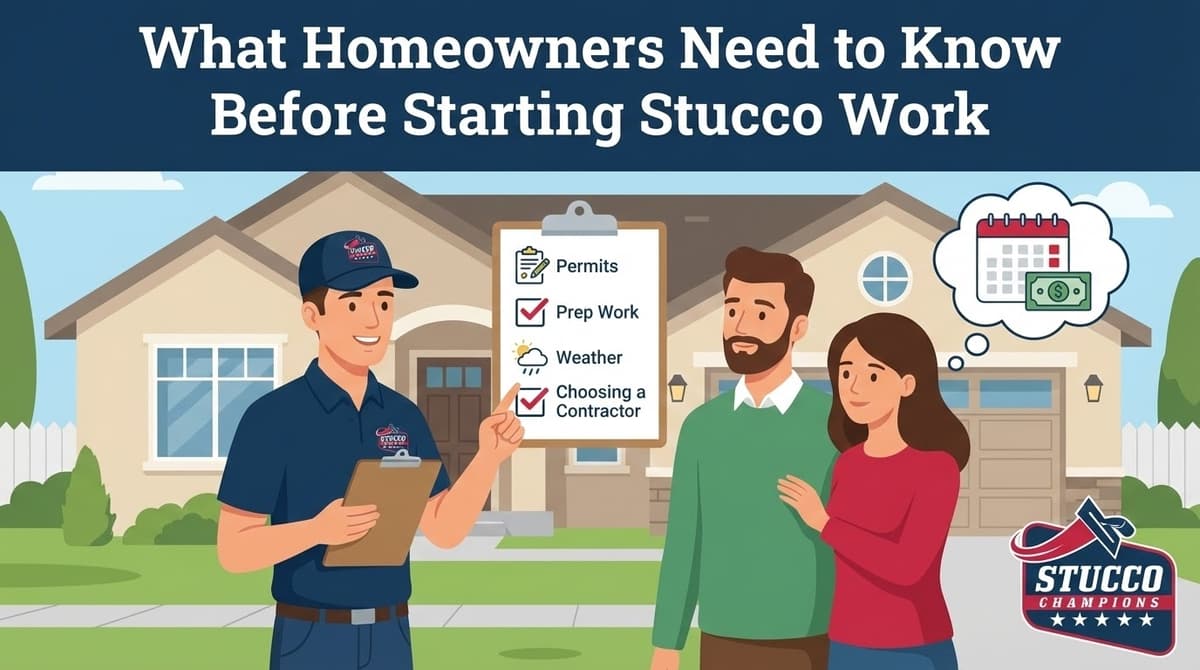
What Homeowners Need to Know Before Starting Stucco Work: The Pre-Construction Checklist
Stucco is the defining feature of Southern California architecture. It is robust, fire-resistant, and when done correctly, incredibly beautiful. But for the uninitiated homeowner, a stucco project can feel like a black box. Is it just mud on a wall? Why are there so many layers? Why does the price vary so wildly?
Before you sign a contract or demo a wall, you need to understand the mechanics of the system. Stucco is not just a finish; it is an engineered envelope. This guide breaks down the critical "Need to Know" facts before you break ground.
1. Understand the "Why" (The Benefits)
Stucco is chosen in this region for engineering reasons, not just aesthetics.
Fire Resistance: A 7/8" thick cement wall provides a 1-hour fire rating, critical for WUI (Wildland-Urban Interface) zones.
Thermal Mass: It absorbs heat during the day and releases it at night, regulating indoor temperatures.
Durability: Unlike wood (rot) or vinyl (melt), stucco is rock. It withstands our UV radiation for 50+ years.
Free Assessment
Noticing Stucco Damage?
Get a free on-site assessment from a licensed contractor. 0 deposit, no money upfront, progress payments only.
GET FREE ASSESSMENT2. Finish Selection Matrix
The texture you choose dictates the maintenance you will perform. Do not choose based on looks alone.
| Finish Type | Visual Style | Cost | Maintenance |
|---|---|---|---|
| Smooth (Santa Barbara) | Modern / Spanish | $$$ (High) | High (Shows dirt/cracks) |
| Sand (Float) | Contemporary / Clean | $$ (Medium) | Low (Easy to clean) |
| Lace / Skip | Traditional / Rustic | $ (Low) | Medium (Forgiving on repairs) |
3. The Hidden Layers (Prep is Everything)
If a contractor quotes you a low price, they are likely cutting corners here. The layers under the stucco determine if your house rots.
- Waterproofing: We strictly adhere to the code requirement for Two Layers of Grade D Paper. This creates a drainage plane. Never accept a single layer of paper over plywood.
- Weep Screeds: The metal at the bottom of the wall must be 4 inches above the earth. If your current stucco goes into the dirt, it must be retrofitted.
- Lath: Galvanized wire mesh must be furred out to allow the cement to key behind it.
4. The Three-Coat System Mandate
For custom homes and high-durability needs, we use the Three-Coat System (ASTM C926).
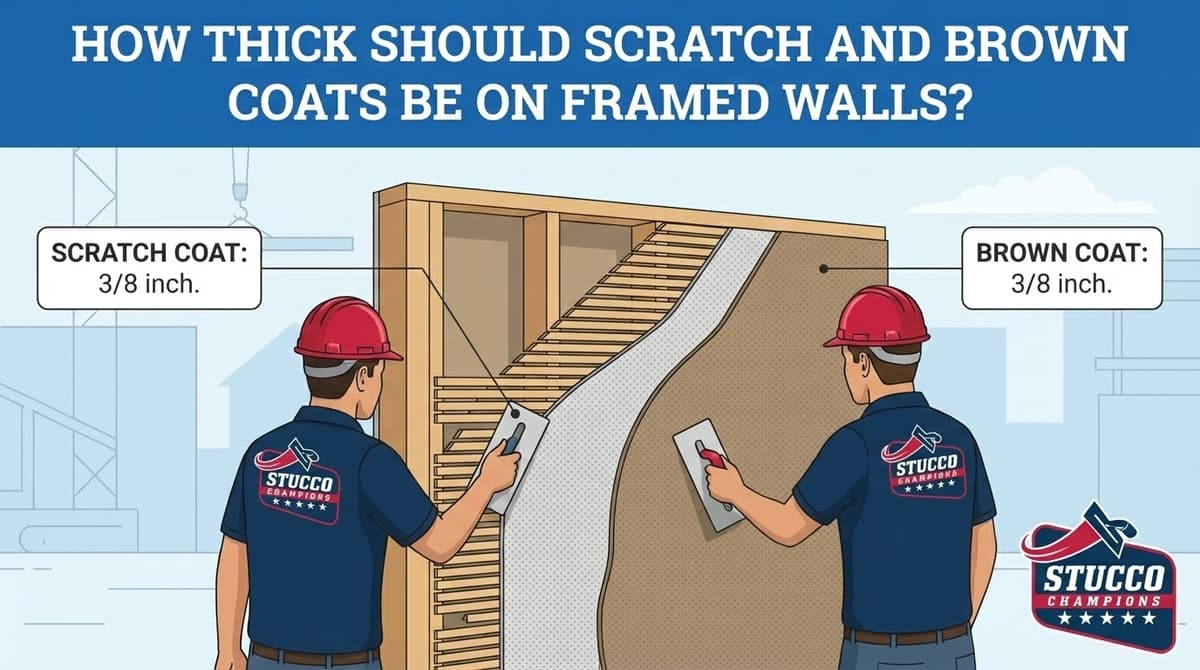
1. Scratch Coat: Embeds the wire.
2. Brown Coat: Levels the wall.
3. Finish Coat: Adds color and texture.
Note: You cannot rush this. There are mandatory curing times (48 hours to 7 days) between coats to prevent cracking.
5. The Contractor Vetting Matrix
Ask these specific questions to determine if a contractor is a pro or a handyman.
| Question to Ask | The Right Answer | The Red Flag |
|---|---|---|
| What waterproofing do you use? | "Two layers of 60-minute Grade D paper." | "Just one layer" or "Tyvek only." |
| How do you handle cracks? | "Full cut-out repair or mesh reinforcement." | "We just caulk them." |
| Do you use a bonding agent? | "Yes, especially over painted surfaces." | "No, the stucco sticks fine." |
6. Weather and Timing
Stucco relies on hydration.
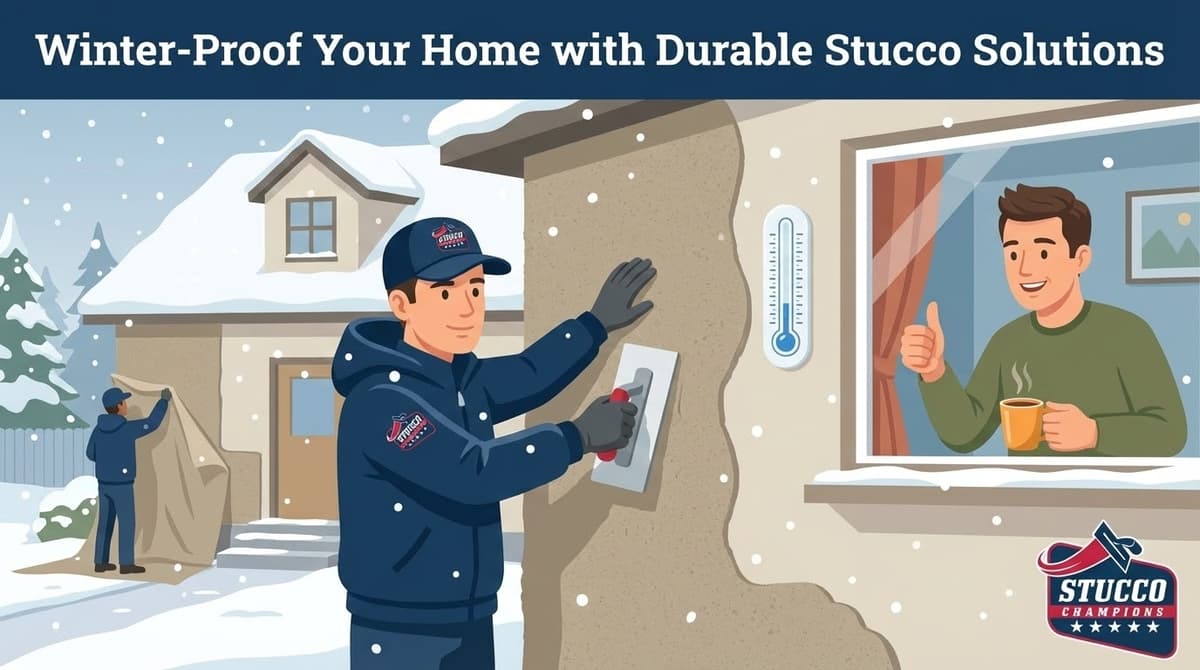
Ideal Weather: Cool, overcast days (Spring/Fall).
The Risk: If applied during a Santa Ana heatwave (90°F+), the water evaporates too fast, leading to weak, crumbly walls. We may need to tent the house or work early mornings during summer.
Conclusion: Education is Protection
Stucco is a permanent modification to your home. By understanding the layers, the finishes, and the code requirements, you can ensure your investment increases your property value rather than becoming a liability.
Related Resources
Ready to start? Read Essential Checklist for a Stucco Project to prepare your home for our arrival.