Understanding Stucco Fog Coating: A Comprehensive Guide
Written by Stucco Champions — Southern California’s Authority on Exterior Plastering.
Understanding Stucco Fog Coating: The Superior Alternative to Painting
If your traditional stucco home looks faded, blotchy, or stained, your first instinct might be to paint it. Stop. Painting creates a surface film that can trap moisture and increase maintenance.
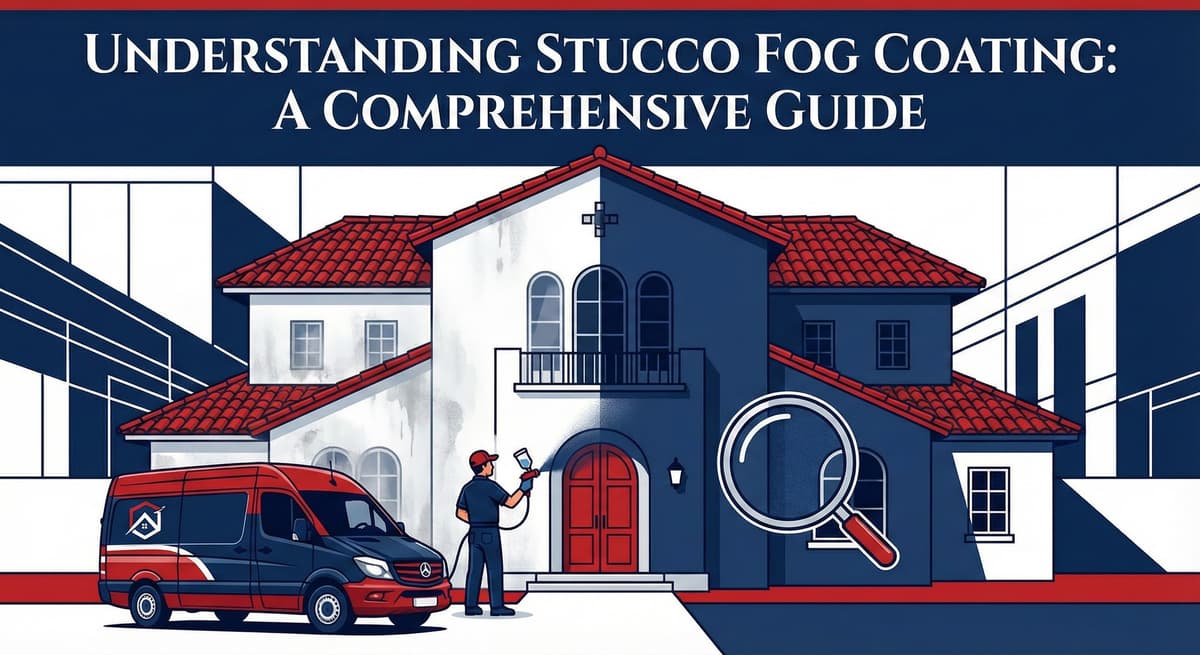
The professional solution for revitalizing traditional stucco is Fog Coating. This is not paint; it is a cementitious re-coloring process that restores the original luster of the wall without sealing the pores. This guide explains the science behind fog coating and why it is the preferred method for maintaining breathable masonry.
1. What Is Fog Coat?
Technically, Fog Coat is a blend of Portland cement, lime, and pigment—minus the sand. It is essentially the same ingredients as your stucco wall, just without the aggregate.
When mixed with water and sprayed onto the wall, it doesn't just sit on top like latex paint; it bonds chemically and physically to the existing porous surface. It acts like a dye, re-staining the stucco to a uniform color while maintaining the crispness of the texture.
Free Assessment
Noticing Stucco Damage?
Get a free on-site assessment from a licensed contractor. $0 deposit, no obligation.
GET FREE ASSESSMENT2. The "Water Test": Is Your Home a Candidate?
Fog coating only works on open-pore, traditional cement stucco. It will not stick to painted surfaces or acrylic finishes.
How to CheckSplash a cup of water on your wall.
It darkens immediately? The wall is porous. You are a candidate for Fog Coating.
It beads up and runs off? The wall is painted or sealed. You cannot use Fog Coat.
3. Why Choose Fog Coat Over Paint?
In Southern California, breathability is key to preventing dry rot.
- Zero Peeling: Because there is no film, there is nothing to peel, flake, or blister.
- Low Maintenance: Once applied, it becomes part of the wall. It lasts 15+ years and fades naturally, just like the original stucco.
- Texture Preservation: Paint fills in the fine texture of stucco, making it look heavy. Fog coat is thin and watery, preserving the sharp "sand" or "lace" appearance.
4. Correcting "New Stucco" Problems
We often use Fog Coat on brand new installations to fix Color Variation.
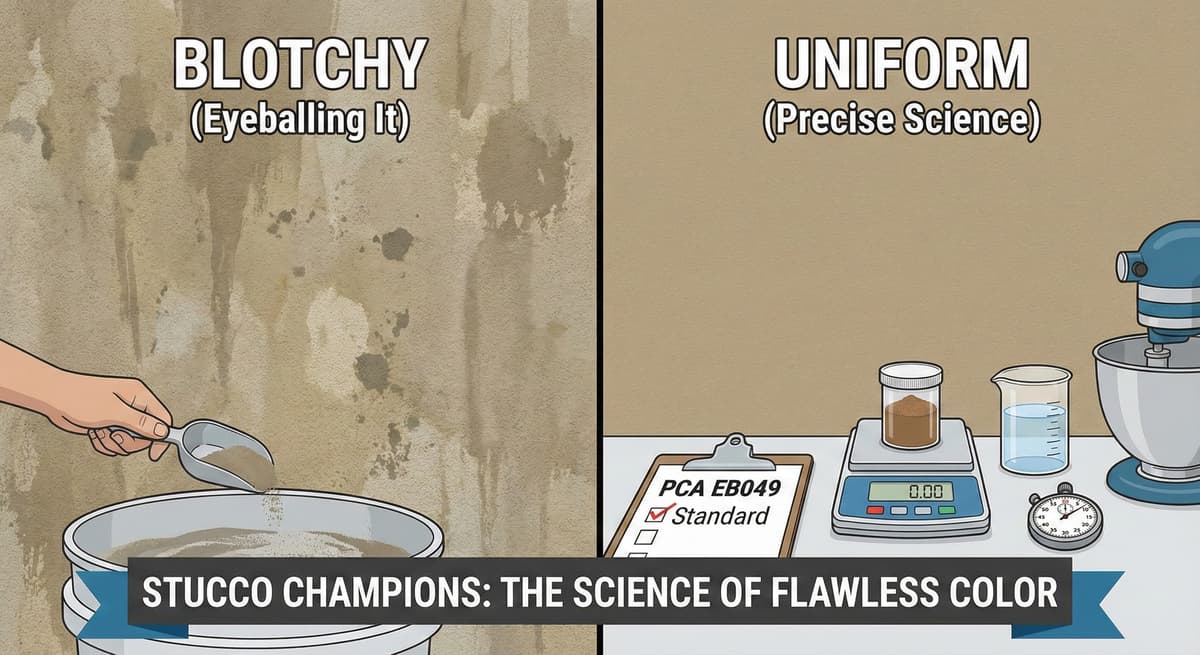
If a new stucco job dries blotchy due to humidity or uneven drying times, a light application of Fog Coat (in the same color) evens out the tone without changing the texture. It is the industry standard for blending repairs and patches.
5. Application: The Garden Sprayer Method
For small areas, homeowners can apply Fog Coat using a standard garden pump sprayer.
- Mix: Combine the powder with water in a bucket until it reaches the consistency of paint. Keep it agitated; cement settles quickly.
- Spray: Apply in a fine mist (hence the name "Fog"). Do not flood the wall.
- Blend: Apply multiple light passes to build up color depth rather than one heavy coat.
You cannot go lighter. Fog coat works best when refreshing the same color or going slightly darker. Trying to turn a dark brown house into a white house with Fog Coat is difficult because the old color will bleed through. For drastic color changes, you may need a specialized bonding primer and a high-perm paint instead.
Conclusion: Respect the Material
Stucco is designed to be a permanent, breathable finish. Painting it turns it into a maintenance item. If your home passes the "Water Test," choose Fog Coating to restore its beauty while respecting its chemistry.
Related ResourcesLast week, we shared Can I Repaint My Stucco? An Expert Guide. If your wall is already painted, read this guide for recoating options.