Stucco Materials at Home Depot: An In-Depth Guide
Written by Stucco Champions — Southern California’s Authority on Exterior Plastering.
Stucco Materials at Home Depot: An In-Depth Technical Guide
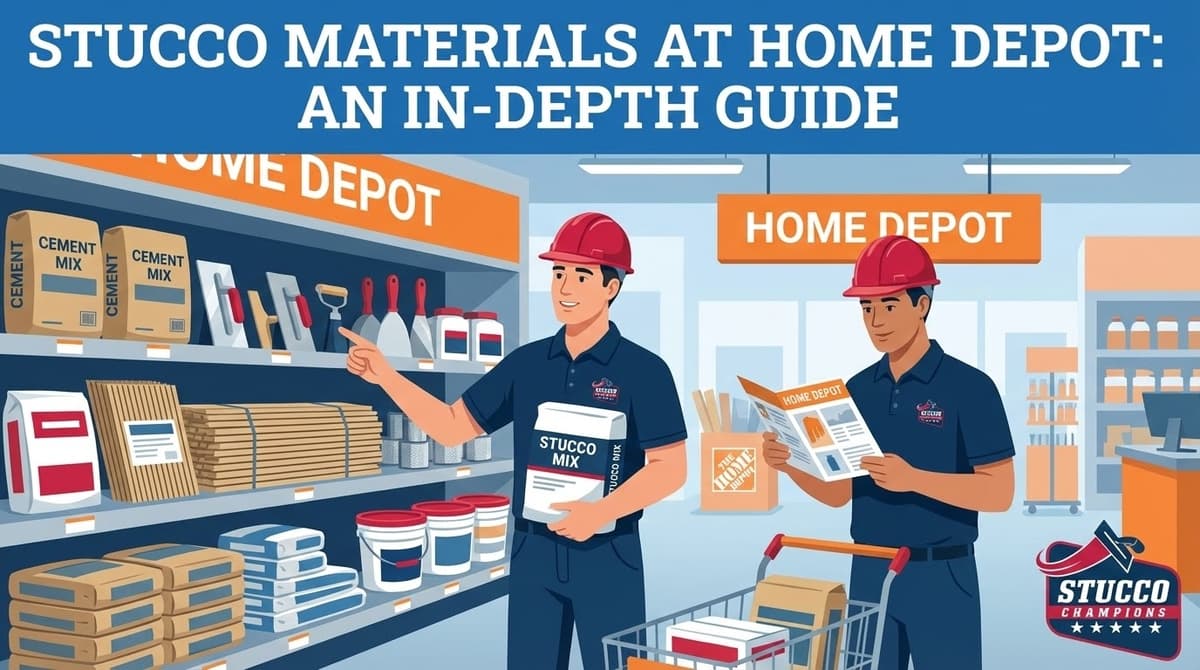
For most weekend warriors, Home Depot is the first stop for supplies. But when it comes to stucco—a system that requires precise engineering and code compliance—relying on a general home improvement store can be risky. While they stock the basics, they often lack the specialized waterproofing and lath components mandated by Southern California building codes.
This guide breaks down what you should buy at Home Depot, and what you should avoid (and source from a professional supply yard instead) to ensure your project stands the test of time.
1. Lath & Accessories: The "Ground" Problem
To patch or build a stucco wall, you need metal trims (weep screeds, casing beads) that match the depth of your system.
⚠️ The 7/8" Shortage
Most traditional homes use a 7/8" Three-Coat System. Home Depot frequently stocks 1/2" or 5/8" accessories (designed for One-Coat/Foam systems). Using a shallow screed on a thick wall will cause the stucco to bulge and crack. Always check the "Ground" measurement on the label before buying.
Free Assessment
Noticing Stucco Damage?
Get a free on-site assessment from a licensed contractor. $0 deposit, no obligation.
GET FREE ASSESSMENT2. Waterproofing: Paper Quality
What they have: Single-ply "10 Minute" or "60 Minute" Grade D paper.
The Issue: California code often requires Two Layers of Grade D paper. Home Depot rolls are typically single-ply. You must wrap the wall twice to meet code, doubling your labor. A professional yard sells "double-ply" rolls (Super Jumbo Tex) that install both layers at once.
3. Wire Mesh: Gauge Matters
The Standard: 17-gauge galvanized woven wire (chicken wire).
The Trap: Home Depot often sells lighter gauge poultry netting in the garden section. Do not use this for stucco; it is too weak to support the weight of cement. Only buy from the "Building Materials" aisle labeled specifically as "Stucco Netting" or "Self-Furred Lath."
4. Cement: Base Coats & Finish Coats
The "Grey Bag" aisle can be confusing. Here is the breakdown:
Safe to Buy:
- Rapid Set Stucco Patch: Excellent for small repairs. Hardens in 20 minutes.
- Quikrete Base Coat: Good for scratch/brown coats on small projects. Pre-sanded, just add water.
- Plastic Cement: If you are mixing your own bulk mud, their 94lb bags of Plastic Cement are industry standard (just add sand).
Avoid (or Use with Caution):
- Finish Stucco (Color): They typically only stock "White" or "Grey" base finish. They do not have factory-tinted colors like LaHabra Platinum or Omega ColorTek. If you need a specific color match (e.g., "Santa Fe" or "Mission"), you must go to a specialized yard. Mixing liquid tint bottles into white cement at home rarely yields a consistent color.
5. Sand: The Hidden Variable
If you are mixing from scratch, you need sand.
Do Not Use: Play Sand. It is too fine and rounded. It has no structural bite.
Do Use: "All-Purpose Sand" or "Concrete Sand" (Washed Plaster Sand). This has the angular grit needed to lock the cement matrix together.
Conclusion: Know the Limits
Home Depot is great for tools (trowels, floats) and emergency patches. But for a full re-stucco or a structural repair, their inventory is often insufficient for professional standards. If you need specific weep screed depths, double-ply paper, or integrated color finishes, save yourself the headache and visit a dedicated Lath & Plaster supply yard.
Related Resources
Last week, we shared Is Stucco Weep Screed Mandatory? Before you buy materials, understand the code requirements for drainage.