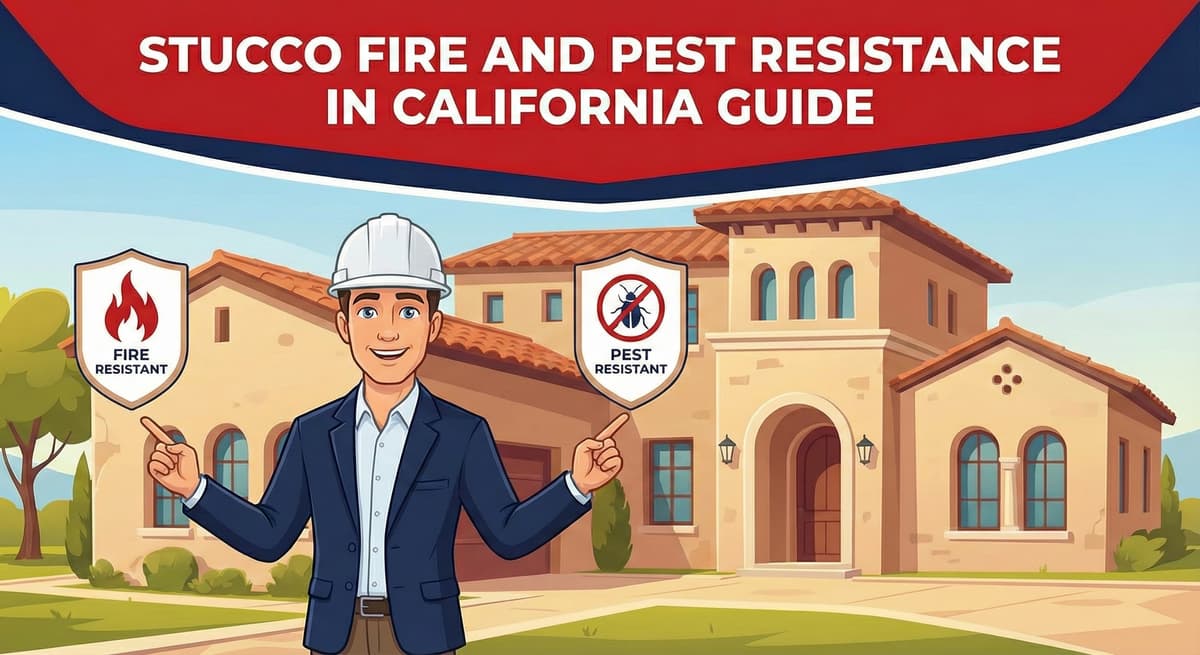
Stucco Fire and Pest Resistance in California Guide
Written by Stucco Champions — Southern California’s Authority on Exterior Plastering.
Fire and Pest Resistance: Why Stucco is California’s Smartest Exterior Choice
In Southern California, choosing an exterior finish is about more than just aesthetics; it is about survival. Between the wildfire risks in our canyons and the subterranean termite activity in our soil, your home’s cladding is its first line of defense.
While wood siding and vinyl are popular in other parts of the country, they fall short in our specific climate. A properly installed Three-Coat Stucco System offers a non-combustible, monolithic shield that protects your investment from the two biggest threats to California real estate: Fire and Pests.
1. The Firewall: Stucco in the WUI Zone
Many homes in Orange, Riverside, and San Diego counties fall into the Wildland-Urban Interface (WUI). Building codes here are strict (Chapter 7A). Stucco is the preferred material for these zones for one simple reason: chemistry.
Free Assessment
Noticing Stucco Damage?
Get a free on-site assessment from a licensed contractor. $0 deposit, no obligation.
GET FREE ASSESSMENTThe 1-Hour Fire Rating
Stucco is composed of Portland cement, sand, lime, and water. It is inherently non-combustible.
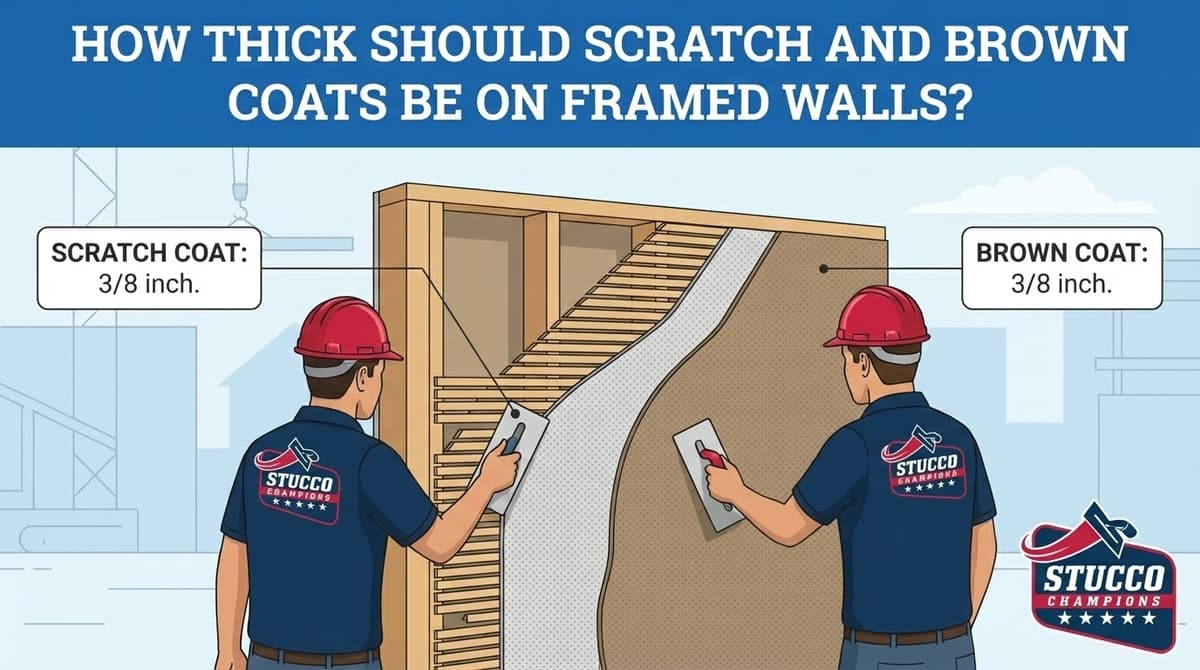
A standard 7/8-inch thick Three-Coat system creates a verified 1-Hour Fire Barrier. This means that in the event of a neighboring structure fire or a passing wildfire front, the stucco protects the combustible wood framing underneath from igniting for at least one hour, giving firefighters critical time to save the home.
Compare this to vinyl (which melts) or wood siding (which adds fuel to the fire).
2. The Fortress: Pest Exclusion
Termites and rodents are opportunists. They look for gaps, seams, and soft wood. Stucco denies them entry.
Termite Defense
Subterranean termites cannot eat cement. Unlike wood siding, which must be constantly treated and sealed, a stucco wall offers zero food source.
The Monolithic Seal: Because stucco is troweled on wet, it dries as a single, seamless sheet. There are no lap joints (like in siding) for bugs to crawl between.
Rodent Barrier
Rats and mice can chew through wood, vinyl, and even some foams. They cannot chew through 7/8" of solid rock reinforced with steel wire. A properly lathed house is essentially wrapped in a steel cage.
⚠️ The Weep Screed VulnerabilityWhile the wall is impenetrable, the bottom edge is critical. We must maintain a 4-inch clearance between the Weep Screed and the soil. If you bury the stucco in mulch, you create a "bridge" for termites to bypass the stucco and enter the framing from below.
3. The Hidden Strength: Code-Compliant Lath
The fire and pest resistance of stucco relies entirely on the lath system underneath. If the lath is loose, the seal breaks.
At Stucco Champions, we adhere to ASTM C1063 standards:
- Galvanized Steel Mesh: We use 17-gauge woven wire that resists corrosion and prevents rodents from gnawing through.
- Two-Layer Waterproofing: We install two layers of Grade D paper (Super Jumbo Tex) to ensure that even if the outer shell cracks during an earthquake, the inner barrier keeps moisture—and the pests attracted to it—out of the wall.
Conclusion: Build for the Environment
If you are building or remodeling in Southern California, you must build for the environment we live in. Stucco provides the thermal mass to handle our heat, the durability to resist our pests, and the non-combustible composition to survive our fire seasons. It is the ultimate armor for your home.
Related ResourcesLast week, we shared What Is a Three-Coat Stucco System? Learn more about the layers that provide this protection.