How to Repair Stucco Cracks Along a Control Joint Guide
Written by Stucco Champions — Southern California’s Authority on Exterior Plastering.
Stucco Cracks and Control Joint Repair Guide
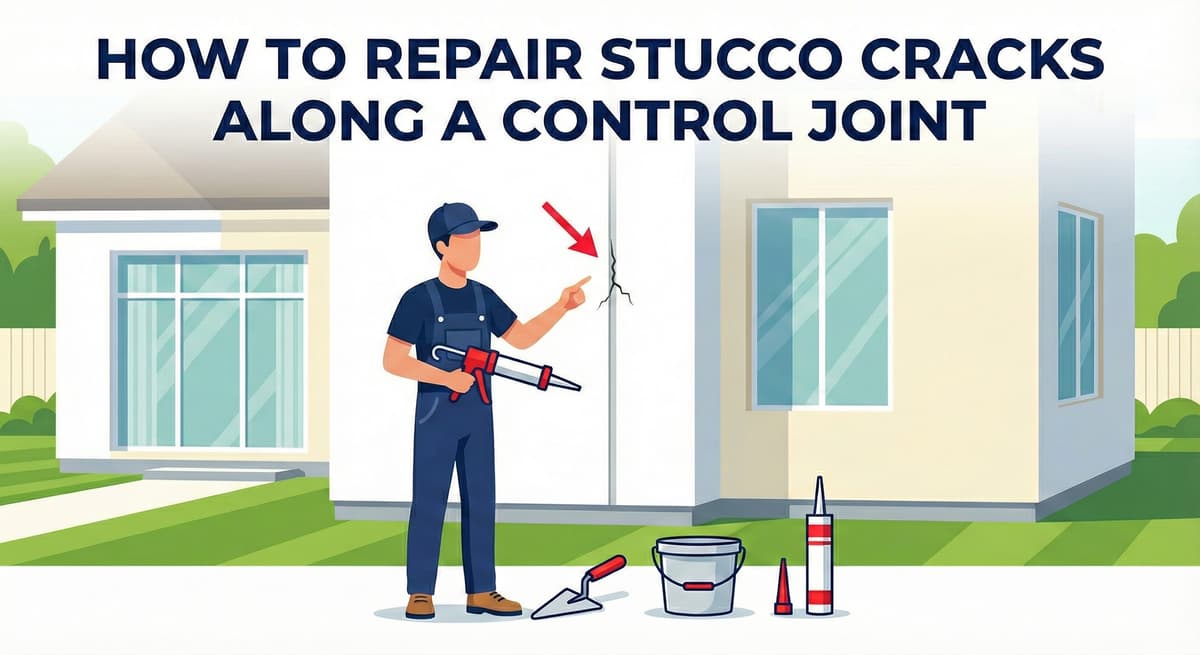
If you notice a hairline crack running alongside the vertical metal channel in your wall, do not panic. That piece of metal is a Control Joint (or Expansion Joint), and its entire purpose is to relieve stress.
However, when the crack opens up wide enough to let water in, or if the stucco separates from the metal flange, it becomes a maintenance issue. In Southern California, where thermal shock (hot days, cool nights) causes rapid expansion, maintaining these joints is critical to preventing moisture intrusion. This guide explains why they crack and how to seal them correctly.
1. The Function of the Control Joint
Concrete shrinks as it cures. Without control joints, a large stucco wall would look like a spiderweb of random cracks.
The Design: We install these joints to force the wall to crack in a straight line inside the channel.
The Failure: Sometimes, the crack forms alongside the metal flange instead of inside it. This happens if the lath wasn't cut properly underneath (a violation of ASTM C1063) or if the installation was sloppy.
Free Assessment
Noticing Stucco Damage?
Get a free on-site assessment from a licensed contractor. $0 deposit, no obligation.
GET FREE ASSESSMENT2. The "No Silicone" Rule
Before you head to the hardware store, you must know what not to buy.
⚠️ WARNING: SiliconeNever use 100% Silicone on stucco.
Silicone leaves a residue that nothing sticks to. If you fill a control joint crack with silicone, you can never paint it or patch it again. It will create a permanent, unpaintable scar on your wall.
3. Step-by-Step Repair Protocol
Fixing a separation crack at a control joint requires precision sealant work.
Step A: Clean and Prep
You cannot seal over dirt.
1. Use a stiff wire brush to remove loose debris and moss from the crack.
2. If there is old failing caulk, dig it out completely with a razor knife.
3. Wipe the metal flange with denatured alcohol to ensure the new sealant bonds to the galvanized steel.
Step B: Select the Right Sealant
You need a sealant that stays flexible but can be painted.
Polyurethane (e.g., Sikaflex): The professional choice. It is sticky, durable, and waterproof. It takes a few days to cure but lasts 20 years.
Textured Acrylic (e.g., Mor-Flexx): Best if the crack is in the stucco finish itself. It has sand in it to blend with the texture.
Step C: Application
1. Cut the nozzle at a 45-degree angle.
2. Inject the sealant deep into the void. Do not just smear it on top.
3. Tooling: Use a wet finger or a caulk spatula to smooth the bead. Ideally, create a slightly concave (inward) joint. This allows the sealant to stretch like a rubber band when the wall expands in the heat.
4. When to Call a Pro
While sealing a small gap is a DIY job, some signs indicate structural failure:
- Displacement: If one side of the joint is sticking out further than the other (offset), the shear wall may be compromised.
- Rust: If brown stains are bleeding from the joint, the lath is corroding inside the wall. Sealing it will only trap the moisture.
Conclusion: Maintenance Matters
Control joints are the moving parts of your home's exterior. Like tires on a car, they wear out. Inspect them annually. Keeping these joints sealed with high-quality polyurethane prevents water from bypassing the weather barrier and rotting the studs.
Related ResourcesLast week, we shared Stucco Control Joints Missing? Should You Worry? If your home lacks these joints entirely, read this to understand the risks.