Mastering Stucco Color Matching: Expert Tips for Flawless Repairs

Written by Stucco Champions — Southern California’s Authority on Exterior Plastering.
Mastering Stucco Color Matching: The Art of Restoration
When repairing a stucco wall, the homeowner’s primary fear is always the same: "Will it look like a patch?"
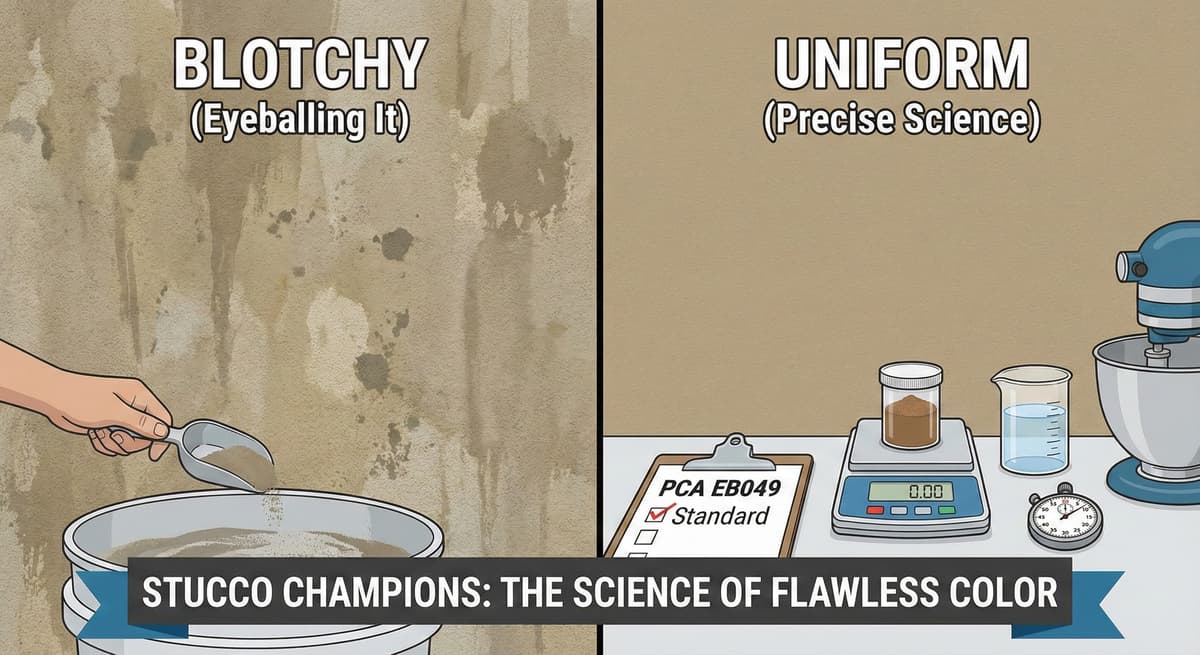
Stucco color matching is a forensic process, not a simple paint job. Because stucco is a cementitious material composed of lime, sand, water, and oxide pigments, it changes chemically over time. Getting it wrong leaves a permanent "scar" on your home's exterior.
At Stucco Champions, we treat every patch as a restoration project. This guide explains the technical challenges of matching aged stucco and the protocols we use to achieve a seamless finish.
1. Why Is Stucco So Hard to Match?
Unlike paint, which is a surface coating, stucco color is integral (mixed in). This makes it susceptible to environmental factors that alter its appearance.
| Factor | Explanation |
|---|---|
| UV Fading & Aging | Sunlight bleaches organic pigments. Even "permanent" iron oxides soften over 10+ years. The wall color today is not the same color that came out of the bag. |
| Batch Variations | Stucco is site-mixed. A slight variation in the water-to-cement ratio changes the hydration rate, which lightens or darkens the final cure. |
| Texture = Color | Texture creates shadow. A rough "Lace" patch will look darker than a smooth wall, even if the pigment is identical. Matching the aggregate is as important as matching the dye. |
⚠️ The Wet/Dry Rule
Do not judge a wet patch. Wet stucco is 3-4 shades darker than dry stucco. We often apply a sample and wait 24-48 hours for full hydration to confirm the match before proceeding with the main repair.
Free Assessment
Noticing Stucco Damage?
Get a free on-site assessment from a licensed contractor. $0 deposit, no obligation.
GET FREE ASSESSMENT2. Real-World Scenario: The Orange County Fade
A recent project in Orange County highlighted this challenge. A 12-year-old home needed a window patch. The original color was "Mission Tan," but years of coastal sun had bleached it to a soft beige.
The Solution: We could not use a standard bag. We performed an on-site custom blend, adjusting the pigment load and applying three test samples with varying sand finishes. The final choice was a custom mix that blended invisibly once cured.
3. Repair Strategies: Patch, Paint, or Recoat?
Depending on the age of the wall, you have three options for color integration.
| Option | Pros | Cons |
|---|---|---|
| Custom Patch | Long-lasting; maintains breathability of the wall. | Requires cure time; exact match is difficult on very old walls. |
| Fog Coat (Restain) | Re-colors the entire wall with cement stain; hides patches perfectly. | Must do the whole wall/elevation for consistency. |
| Full Re-Stucco | Brand new, uniform finish; increases property value. | Higher investment. |
Not sure which path to take? Read our guide comparing Fog Coating vs. Painting Stucco.
4. The Stucco Champions Protocol
We don't guess. We follow a strict matching sequence:
- Inspection: We assess the wall's age, exposure (North vs. South facing), and existing texture.
- Texture ID: We match the sand grain size (16/20 vs 20/30) to ensure the light reflects correctly.
- Sample & Cure: We apply small test patches in discreet areas.
- Feathering: When applying the final patch, we "feather" the edges, thinning the new material out over the old to blur the transition line.
Conclusion: Trust the Eye of the Expert
DIY patch kits rarely work because they lack the specific aggregate and pigment quality of professional materials. At Stucco Champions, we utilize manufacturer resources like LaHabra Stucco Color Charts combined with decades of field experience to ensure your repair disappears into the wall.
Related Resources
Need to fix the crack before worrying about the color? Check out our Comprehensive Guide to Stucco Crack Repair.