6 Benefits of High-Quality Stucco for Long-Last
Written by Stucco Champions — Southern California’s Authority on Exterior Plastering.
The ROI of Stucco: 6 Technical Benefits of a High-Quality Exterior
In the world of exterior cladding, there are two types of stucco: the kind that lasts 50 years, and the kind that cracks in five. The difference isn't just luck—it is engineering.
Whether you are planning a new custom build in Newport Beach or retrofitting a commercial property in Irvine, investing in a premium Three-Coat or EIFS system offers tangible returns. Beyond curb appeal, high-quality stucco provides measurable benefits in thermal performance, fire safety, and structural durability. This guide breaks down the 6 reasons why professional stucco is a smart capital investment.
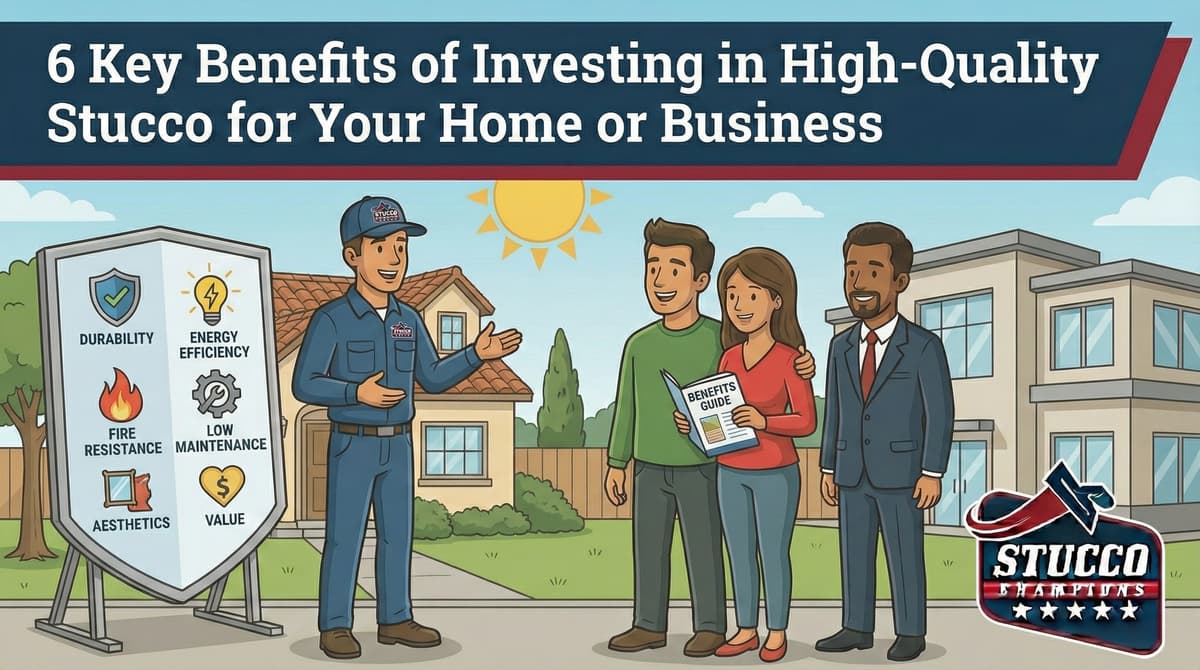
1. Durability: The Seismic Advantage
Southern California homes face a unique stressor: the ground moves. Cheap, rigid stucco will "spiderweb" with cracks during minor tremors. High-quality systems are designed to handle this.
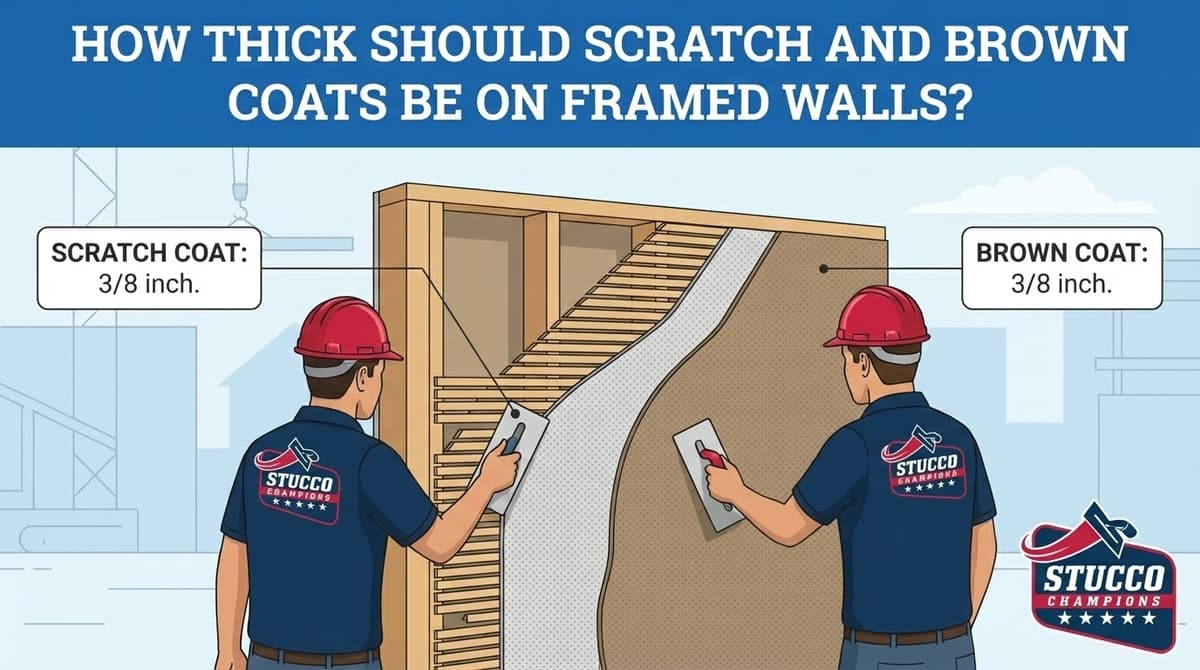
- Shear Strength: A 7/8" thick, wire-reinforced cement wall adds significant shear strength to the wood framing, resisting racking forces.
- Flexibility: Premium systems use Acrylic-Modified Base Coats and finishes. These polymers allow the wall to flex slightly without fracturing, bridging hairline cracks that would otherwise let water in.
Free Assessment
Noticing Stucco Damage?
Get a free on-site assessment from a licensed contractor. $0 deposit, no obligation.
GET FREE ASSESSMENT2. Thermal Mass & Energy Efficiency
Stucco acts as a thermal regulator.
The Physics: A heavy masonry wall absorbs heat slowly during the day ("Thermal Lag") and releases it at night. This keeps the interior cool during peak sun hours.
The Upgrade: For maximum efficiency, we install EIFS (Synthetic Stucco) or One-Coat systems with Continuous Insulation (CI) foam. This breaks the thermal bridge of the wood studs, lowering HVAC costs significantly.
3. Fire Resistance: The WUI Zone Mandate
If you live in a Wildland-Urban Interface (WUI) zone—like the canyons of Laguna or the foothills of Orange—fire safety isn't optional; it's code.
The 1-Hour Rating
A standard 7/8" Three-Coat Stucco system is non-combustible and provides a verified 1-Hour Fire Rating. It protects the combustible wood framing from radiant heat and embers far better than vinyl (which melts) or wood siding (which burns).
4. Water Management: The Envelope
Quality stucco isn't just about the cement; it's about the drainage plane hidden underneath.
The Cheap Way: One layer of paper. Water gets trapped and rots the plywood.
The Champion Way: Two layers of 60-Minute Grade D Paper (Super Jumbo Tex) and a properly installed weep screed. This system manages bulk water intrusion, ensuring the structure remains dry even in coastal fog.
5. Aesthetics & Valuation
Curb appeal translates directly to appraisal value. A patchy, stained exterior signals deferred maintenance.
Customization: High-end stucco allows for architectural detailing—smooth Santa Barbara finishes, deep-set windows, and crisp foam moldings—that elevate a tract home to a custom estate.
| Feature | Standard Stucco | Premium Acrylic |
|---|---|---|
| Color | Fades/Mottles | Fade Resistant/Uniform |
| Texture | Rough/Inconsistent | Consistent Aggregate |
| Maintenance | Repaint every 7 years | Wash annually; permanent color |
6. Low Maintenance Lifestyle
Unlike wood siding that requires sealing every 3 years, a high-quality Integral Color Stucco finish is virtually maintenance-free.
Because the color runs through the material, it does not peel or flake. A simple annual "soft wash" with a garden hose keeps it looking new for decades.
Conclusion: Invest Once
The cost difference between a "builder grade" stucco job and a "custom" specification is often less than 15%, but the lifespan difference is measured in decades. By choosing high-quality materials (Acrylics, 60-Minute Paper) and skilled application (ASTM compliance), you protect your asset against the specific environmental threats of Southern California.
Related Resources
Last week, we shared Stucco Exterior Maintenance Guide. Learn how to care for your investment.