How to Spot and Fix Stucco Damage
Written by Stucco Champions — Southern California’s Authority on Exterior Plastering.
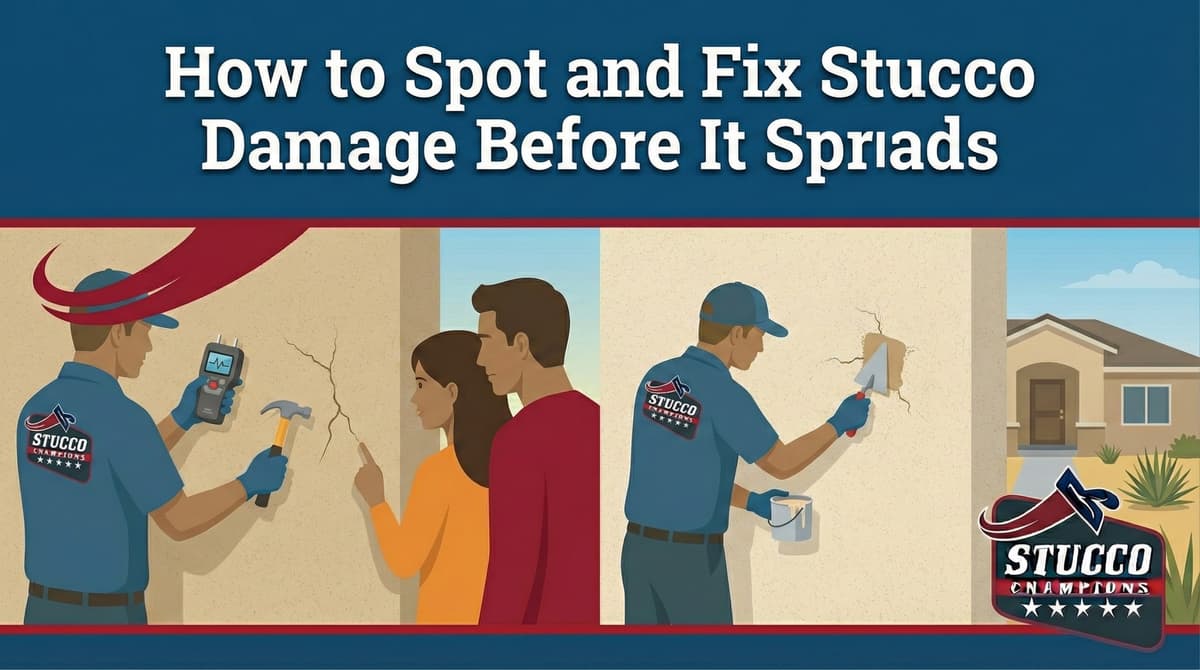
How to Spot and Fix Stucco Damage Before It Spreads
Stucco is renowned for its durability in the Southern California climate, acting as a fire-resistant and thermal-regulating shell. However, it is not invincible. Like any masonry system, it is susceptible to seismic movement, impact, and moisture intrusion.
The key to asset preservation is early detection. A small hairline crack is a minor maintenance item; a delaminated wall is a major capital expenditure. This guide outlines how to identify the early warning signs of stucco failure and the technical protocols for remediation.
1. Visual Diagnostics: Reading the Wall
Damage often starts subtly. Walk your perimeter and look for these indicators:
- Hairline Cracks: Especially radiating from the corners of windows and doors (re-entrant corners).
- Discoloration: Dark stains or white powder (efflorescence) indicate water is moving through the wall.
- Bubbling: If the paint or finish coat is blistering, moisture is trapped behind the surface.
- Impact Damage: Chips near the ground level or garage, often from vehicles or landscaping.
- Mold/Mildew: Green or black growth, particularly on North-facing walls, signals retained moisture.
Free Assessment
Noticing Stucco Damage?
Get a free on-site assessment from a licensed contractor. $0 deposit, no obligation.
GET FREE ASSESSMENT2. Root Cause Analysis
We don't just patch; we diagnose. Stucco failure is usually a symptom of a deeper issue.
- Water Intrusion: Failed window flashing, blocked weep screeds, or lack of kick-out flashing at rooflines.
- Foundation Settlement: Seismic activity or soil expansion shifting the frame.
- Lack of Joints: ASTM C1063 requires control joints to manage stress. If missing, the wall creates its own cracks.
- UV Degradation: The sun breaks down organic binders in paint and acrylics over time.
3. Repair vs. Recoat vs. Replacement
Not every issue requires the same level of intervention. Use this matrix to determine the scope.
| Service Type | What It Involves | Best For |
|---|---|---|
| Stucco Repair | "Cut-out" patching, lath replacement, and texture blending. | Localized impact damage or single window leaks. |
| Stucco Recoat | Applying a new finish layer (fog coat or acrylic) over the entire wall. | Aging stucco with widespread fading but sound structure. |
| Full Replacement | Demolition down to studs, new waterproofing, and 3-coat system. | Severe water damage, dry rot, or widespread delamination. |
4. Case Study: The Water Intrusion Save
A homeowner in Temecula noticed small cracks near their garage. Upon inspection, we identified that the cracks were "telegraphing" from a failed waterproof barrier.
The Fix: Instead of a full replacement, we performed a surgical cut-out of the affected section, installed new Grade D paper and lath, and blended the patch. This targeted repair saved the client over $8,000 compared to a full re-stucco.
5. The Stucco Champions Protocol
Our repair process follows strict ASTM standards:
- Inspection: Moisture testing to ensure the substrate is dry.
- Prep: Square-cutting the damage to expose the lath.
- Application: Using polymer-modified patching compounds for flexibility.
- Blending: Feathering the texture to match the existing finish.
- Sealing: Applying a fog coat or sealant to unify the appearance.
FAQ
Can stucco be repaired in rainy weather?
No. Ideally, we need dry conditions for proper adhesion and curing. We schedule around the forecast to protect the work.
Will the patch match?
Our team specializes in texture matching. While new stucco is chemically different from old, we get as close as possible and often recommend fog coating for a seamless look.
Conclusion: Proactive Maintenance
Stucco damage doesn't have to mean a full replacement. With expert repair and proactive care, your exterior can stay strong and beautiful for decades.
Related Resources
For more on stucco maintenance best practices, visit the Stucco Manufacturers Association.