The Homeowner’s Guide to Choosing the Right Stucco Finish
Written by Stucco Champions — Southern California’s Authority on Exterior Plastering.
Homeowners Guide: How to Choose the Right Stucco Finish
Choosing a stucco finish is more than an aesthetic preference; it is a functional decision that impacts the maintenance and durability of your home. The texture you select determines how water sheds off the wall, how much dirt accumulates, and how easily the surface can be patched in the future.
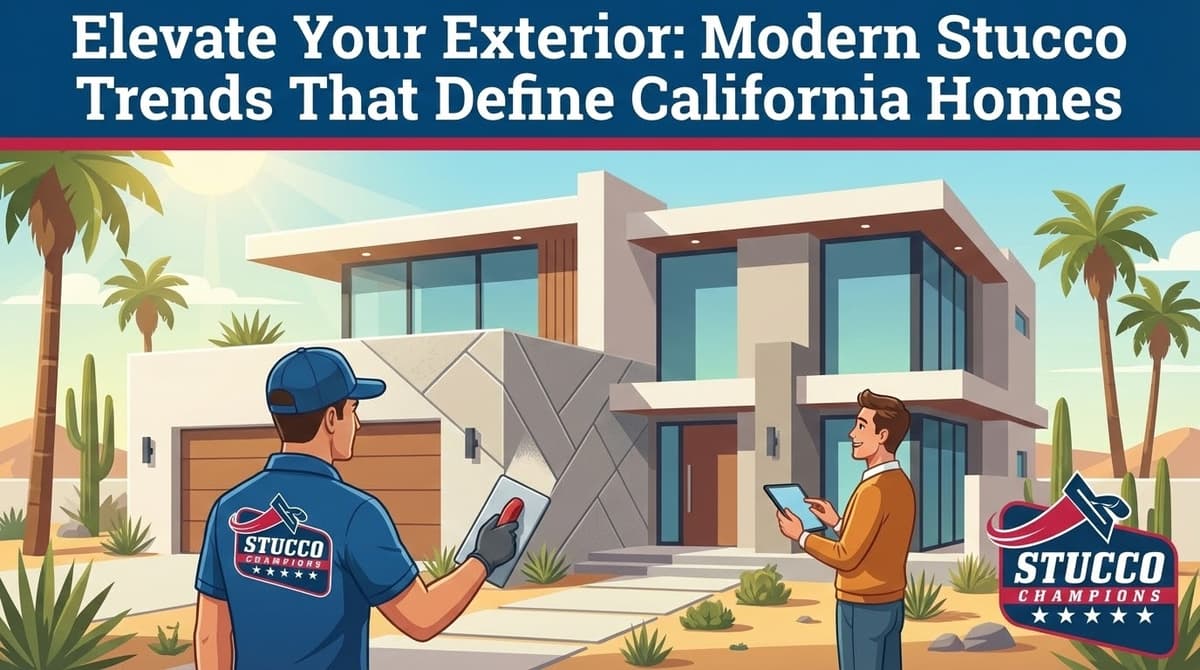
In Southern California, we see a wide spectrum of finishes, from the sleek, modern "Santa Barbara" smooth coat to the rugged, traditional "Spanish Lace." This guide breaks down the technical pros and cons of each texture to help you make an informed decision for your property.
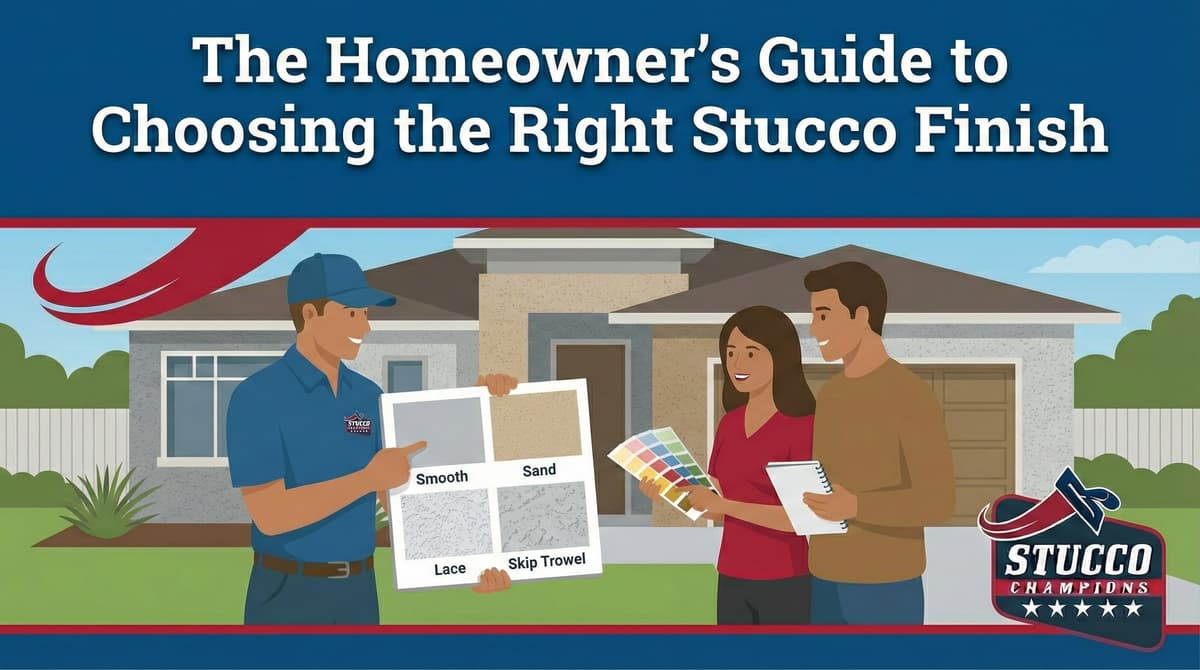
1. The Big Three: Popular Finishes Explained
While there are dozens of custom textures, 90% of homes fall into these three categories:
| Finish Type | Description | Maintenance Level |
|---|---|---|
| Smooth (Santa Barbara) | Glassy, undulating surface mimicking adobe. Requires expert troweling. | High (Shows dirt/cracks) |
| Sand (Float) | Uniform grit, like sandpaper. Modern and clean.
[Image of sand grain size comparison] |
Low (Easy to clean) |
| Lace (Skip Trowel) | Flattened islands of texture. Traditional look. | Medium (Forgiving on repairs) |
Free Assessment
Noticing Stucco Damage?
Get a free on-site assessment from a licensed contractor. $0 deposit, no obligation.
GET FREE ASSESSMENT2. Architectural Compatibility
Your finish should match your home's bones. A mismatch can look jarring.
- Modern / Contemporary: Demands Smooth or Fine Sand finish. Clean lines require a clean surface.
- Spanish Revival / Mediterranean: Traditionally uses Cat Face (smooth with rough inclusions) or Heavy Lace to simulate aged plaster.
- Ranch / Tract Home: Usually Sand Finish or Dash. These textures are uniform and hide the framing imperfections common in tract housing.
3. The "Crack Factor"
This is the most critical conversation we have with clients.
⚠️ The Smooth Stucco Warning
If you choose a Smooth Finish, you must accept hairline cracking. Without aggregate (sand) to relieve tension, smooth cement is brittle. As the house settles or expands in the heat, spiderweb cracks will appear. This is considered "character" in Spanish architecture but a "defect" in modern design. If you want smooth but hate cracks, you must use an Acrylic (Synthetic) Finish.
4. Acrylic vs. Traditional Cement
The material dictates the texture possibilities.
- Traditional Cement: Best for Lace, Cat Face, and Old World textures. It allows for "mottling" (color variation) and breathability.
- Acrylic Finish: Best for Sand Finish. It provides a perfectly uniform color and crack resistance but looks "plastic" if you try to texture it too heavily.
5. Changing Your Finish
Homeowners often ask: "Can I change my rough Lace texture to a Smooth finish?"
The Answer: Yes, but it is expensive. We cannot just skim over the high spots; they will telegraph through. We must grind down the existing texture or apply a heavy "leveling coat" (Brown Coat) to bury the old texture before applying the new smooth finish.
Conclusion: Balance Beauty and Budget
The right finish balances aesthetics with practicality. If you live on a busy street with soot, avoid rough textures that trap dirt. If you are budget-conscious, avoid smooth finishes that require double the labor. At Stucco Champions, we provide physical sample boards so you can see exactly how the light hits the texture before we begin.
Related Resources
Last week, we shared Exploring Stucco Textures and Finishes. See detailed photos of each texture type.
For color ideas, visit Sherwin-Williams Exterior Color Guide.