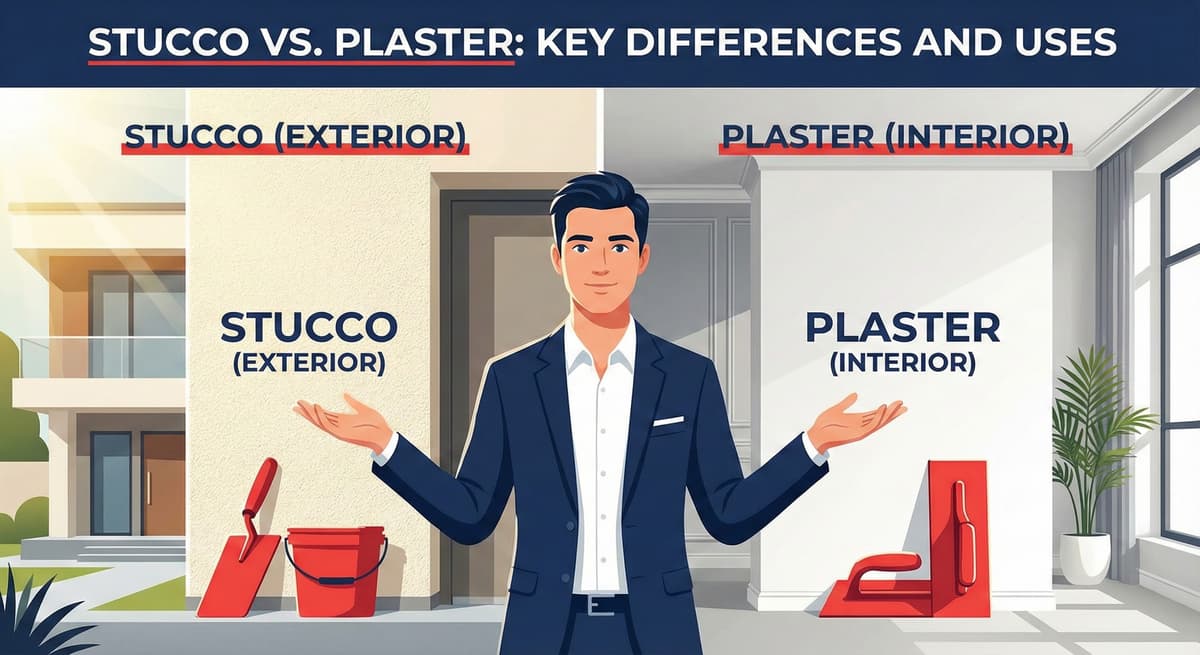
Stucco vs. Plaster: Key Differences and Uses
Written by Stucco Champions — Southern California’s Authority on Exterior Plastering.
Stucco vs. Plaster: A Technical Comparison of Materials
In casual conversation, the terms "stucco" and "plaster" are often used interchangeably to describe any troweled wall finish. However, in the construction trade, they refer to distinct chemical compositions with vastly different performance characteristics.
Understanding the difference is critical for homeowners. Applying interior plaster to an exterior wall will result in rapid failure (dissolution), while using exterior stucco indoors can create an excessively rough, unrefined texture. This guide breaks down the chemistry, application, and limitations of each.
Need stucco work on your SoCal home? Start with a free Stucco Health Assessment.1. The Chemistry: Lime vs. Gypsum
The primary difference lies in the binder.
Free Assessment
Noticing Stucco Damage?
Get a free on-site assessment from a licensed contractor. $0 deposit, no obligation.
GET FREE ASSESSMENTExterior Stucco (Portland Cement Plaster)
Binder: Portland Cement and Lime.
Characteristics: Hard, water-resistant, and breathable. It cures through hydration (chemical reaction with water).
Best Use: Exterior walls, garden walls, and high-moisture areas. It is engineered to withstand rain, UV radiation, and impact.
Interior Plaster (Gypsum Plaster)
Binder: Gypsum.
Characteristics: Softer, smoother, and sets very quickly. It is not water-resistant; water will dissolve the gypsum binder over time.
Best Use: Interior walls, ceilings, and decorative moldings (crown molding). It allows for an ultra-smooth, glass-like finish that is difficult to achieve with sand-heavy stucco.
2. Durability & Weather Resistance
This is the deciding factor for Southern California homes.
- Stucco: Designed for the exterior envelope. A proper 7/8" three-coat system provides a 1-hour fire rating and acts as the primary shield against the elements. It is "hydrophobic enough" to shed rain while remaining permeable to water vapor.
- Plaster: Should never be exposed to the elements. While there are "Lime Plasters" (like Venetian Plaster) that can be used outside, standard gypsum plaster will fail if wet.
3. Modern Hybrid Systems
Technology has blurred the lines slightly.
Fiber-Reinforced StuccoModern exterior stucco mixes (like Omega or LaHabra) often include chopped fiberglass strands.
Pros: Adds significant tensile strength, reducing cracking from seismic movement.
Cons: Can make repairs difficult, as the fibers prevent clean breaks during demolition.
4. Aesthetic Differences
The texture tells the story.
- Stucco: Naturally rough. Even a "smooth" stucco finish (Santa Barbara) has a slight sandy grit due to the aggregate required for strength.
- Plaster: Can be polished to a mirror finish. Because it uses finer aggregates (or none at all), interior plaster offers a level of refinement and smoothness that exterior cement cannot match without cracking.
5. Cost Analysis
Stucco (Exterior): Generally more cost-effective per square foot because it is applied in bulk with pumps or hods. However, scaffolding requirements add to the project cost.
Plaster (Interior): Often more expensive per square foot due to the skilled artisan labor required to achieve a Level 5 smooth finish.
Conclusion: Know Your Binder
If it's outside, it must be Portland Cement based (Stucco). If it's inside, it's likely Gypsum based (Plaster). Using the right material ensures your walls don't just look good, but remain structurally sound against the moisture and movement of the California coast.
Need Expert Stucco Work?
Start with our free 60-second assessment to understand what your home needs.